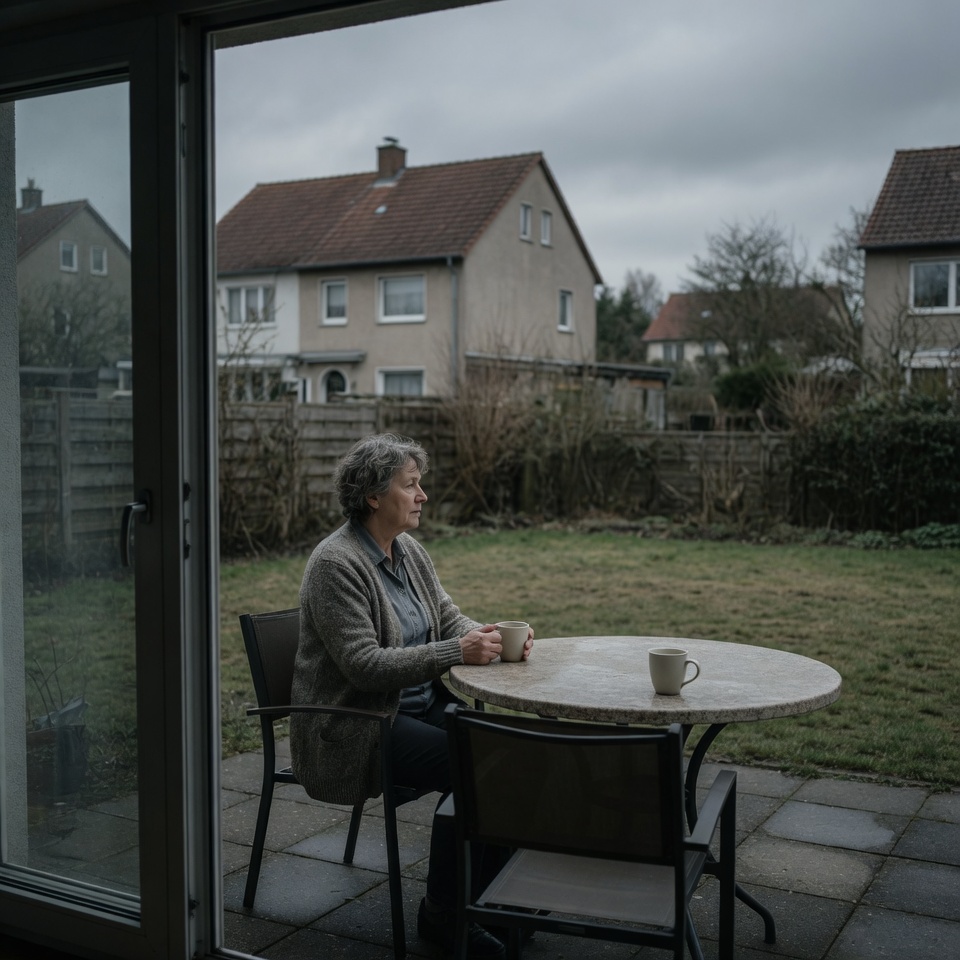
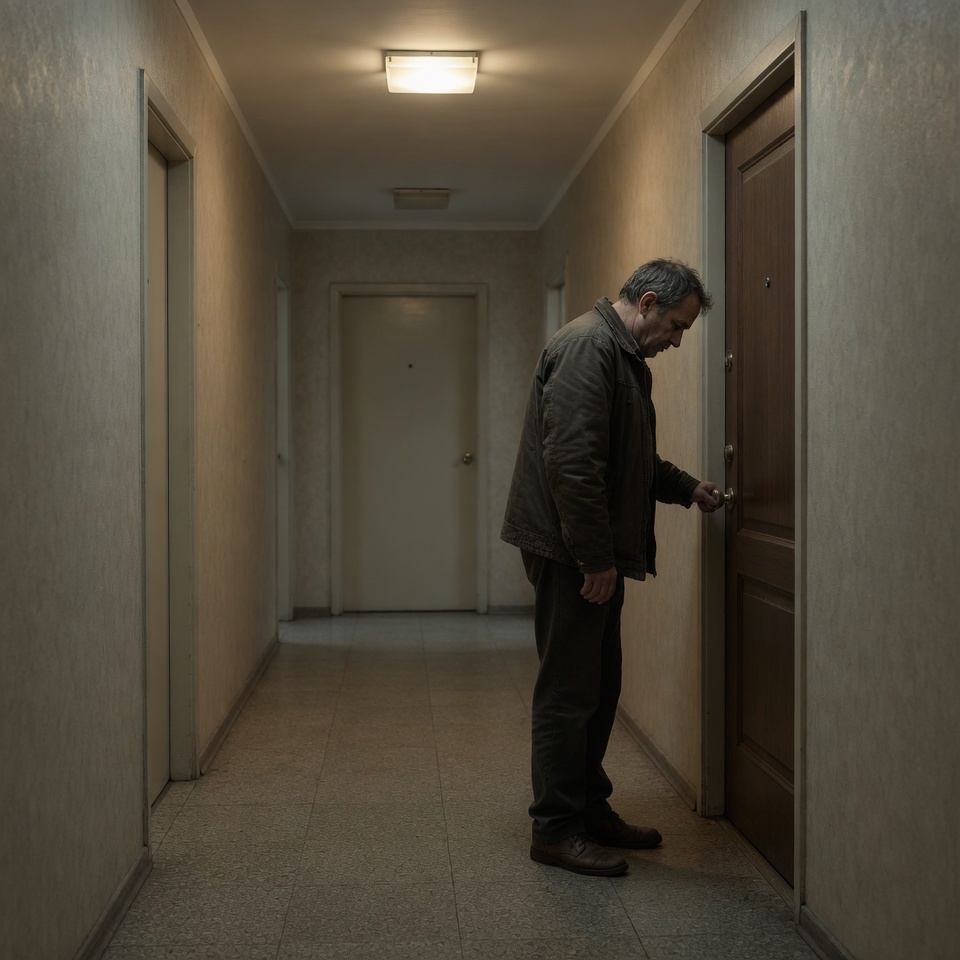
When the world changed without warning. The shock, the replaying, the moment everything became before and after — and the grief that has no clean place to land.
Traumatic loss is grief that arrives through sudden, violent, or shocking circumstances — an accident, a homicide, an unexpected cardiac event, a death witnessed or discovered without warning. It is grief layered over trauma. The mind and body are processing two things at once: the loss of the person, and the experience of how they died. These are not separate problems. They live in the same moment.
You didn’t get to prepare. There was no goodbye, no time to brace yourself — just the moment everything became before and after.
Traumatic grief is not just sadness. It’s the image that won’t leave. The strange calm that makes you think something is wrong with you. The way your body keeps bracing for something that has already happened. The anger that has nowhere reasonable to land. The moments when you forget for half a second — and then remember all over again.
What you’re experiencing isn’t a breakdown. It’s a response to something that should never have happened the way it did. You don’t need to explain the circumstances or justify why this one hit differently.
Grace is here to listen.
You Know This Feeling
The Things That Come With This Grief.
You found out in a single moment. Time split into before and after — and you are still standing at that line.
You keep replaying what happened, looking for the moment it could have gone differently.
People keep saying you’re strong. You have no idea what they’re talking about.
Your body is still braced for impact even though it’s already happened.
You feel nothing. And that frightens you just as much as the grief does.
The world kept going. You genuinely cannot understand why.
There are images you can’t stop seeing. You don’t know how to tell anyone that.
You were there. Or you weren’t — and you wonder if it would have changed something if you had been.
The shock made you calm in the first days. Now you wonder if something is wrong with you.
You can’t explain what happened to God right now. You’re not sure you want to try.
There was no goodbye. You are carrying the weight of everything that was left unsaid.
You didn’t know grief could feel like this. You didn’t know your body could hold this much.
Tell Grace
You Don’t Have to Start With the Whole Story.
You can say as little or as much as you need to. Grace isn’t waiting for you to explain what happened in the right order, or to make sense of it before you begin.
Start with the part that’s loudest right now — the image, the question, the silence, the anger. Traumatic grief doesn’t move in a straight line, and Grace doesn’t expect it to.
If you feel you are in crisis, please call or text 988.
There is a version of Christian comfort that tries to make traumatic loss make sense — that looks for the lesson, the plan, the silver thread. If that is what you need right now, that is okay. But if you cannot get there yet, that is also okay.
The psalms were not written by people who had found peace. Many of them were written in the middle of devastation, by people whose theology didn’t have room for what was happening to them. “My God, my God, why have you forsaken me?” is not a failure of faith. It is faith being honest about where it is.
God is not asking you to arrive at an explanation before you’re allowed to grieve. The promise is that He is near — right here, in the shock and the silence and the moment you don’t have words for.
Scripture does not shy away from sudden loss. Job lost everything in a single day. Lamentations was written by someone living inside devastation with no resolution in sight. The promise of Psalm 34:18 was not written for easy grief. It was written for exactly this.
You can bring all of it to Grace.
The Theological Foundation
He Is Near to the Brokenhearted.
The promise at the center of 1800DearGod is not that God will explain what happened. It is that He is present — in the wreckage, in the questions, in the moments that have no language yet.
Grace was built on that foundation. It doesn’t offer explanations for why traumatic loss happens. Grace listens, stays, and brings God’s nearness into the conversation — not as a conclusion, but as a presence.
What People Ask About Grief After Traumatic Loss.
What counts as traumatic loss?
Traumatic loss includes any death that was sudden, violent, unexpected, or witnessed — an accident, homicide, sudden cardiac event, natural disaster, or a death that happened without warning or goodbye. It also includes losses where you were present, or where the circumstances were disturbing or hard to process. You don’t have to qualify your grief by comparing it to someone else’s.
Why does my grief feel different from other people’s grief?
Traumatic grief often includes trauma symptoms alongside grief — intrusive images, hypervigilance, numbness, a sense that the world is no longer safe. This combination makes it different from grief after an expected loss. Both are real grief. Yours is not more or less valid — it is simply shaped by what happened.
Is it normal to feel nothing right after a traumatic loss?
Yes. Shock is the nervous system’s way of managing what it cannot yet absorb. Feeling numb, disconnected, or strangely calm in the first hours, days, or even weeks after traumatic loss is a common and protective response. It does not mean you didn’t love the person. It means your body is doing what it can.
What if I keep replaying what happened?
Intrusive replaying of traumatic events is a normal trauma response. Your mind is trying to process something it cannot yet make sense of. Grace can sit with you in that without telling you to stop or move on. If replaying is significantly impairing your daily life, a trauma-trained counselor can help — Grace can be part of that support, not a replacement for it.
Can I talk to Grace if I’m not sure what I believe right now?
Yes. Grace does not require you to have faith, to be okay with God, or to have any settled beliefs. You can be angry, silent, confused, or completely undone. Grace meets you where you are, not where it thinks you should be.
Does the Bible say anything about sudden loss?
Scripture does not shy away from sudden loss. Job lost everything in a single day. David received news of death without warning. Lamentations was written by someone living inside devastation. The promise of Psalm 34:18 — that God is near to the brokenhearted — was not written for easy grief. It was written for moments exactly like yours.
“The Lord is close to the brokenhearted, He saves those who have lost all hope.”