I think my spouse is falling out of love with me — Grace is a Christian AI companion
The Marriage Library · Marriage

I Think My Spouse Is Falling Out of Love With Me

The feeling before the conversation — the knowing before the words. When something has shifted and you can feel it even though nothing has been said, and the not-knowing is its own kind of unbearable.

Talk to Grace — it’s free to start
The Fear That Has No Words Yet

This fear is specific. It is not the fear that the marriage has a problem. It is the fear that your spouse is no longer choosing you — that the love that used to be there is thinning in a way you can feel before either of you has named it. That kind of knowing, before any conversation, is one of the loneliest places in a marriage.

The instinct is to dismiss the feeling — to tell yourself you are being anxious, that you are reading too much into small things, that if something were really wrong they would have said so. That dismissal is understandable. It is also usually what keeps the fear from ever being addressed, which means it stays and grows without resolution, getting heavier with each interaction you parse for signs.

What you are sensing may be real. It may also be anxiety distorting what is there. The only way to know the difference is through honest conversation — which is terrifying when the thing you are afraid of is exactly what the conversation might confirm. That fear of the conversation is one of the reasons people carry this alone for as long as they do.

What is also true is that the not-knowing is often harder than the knowing. Living in the space between the fear and the conversation — watching for signs, second-guessing yourself, lying awake trying to read what ordinary interactions mean — is its own sustained kind of pain. The uncertainty has a weight that the truth, whatever it turns out to be, does not.

The not-knowing is often harder than the knowing. The space between the fear and the conversation is its own specific kind of pain.

The watching is one of the hardest parts — the hypervigilance that sets in when you sense something shifting. Every interaction is read for data. Every small thing is parsed for evidence. A delayed response, a shorter answer, a moment of warmth that feels like it used to be more automatic — all of it becomes information you are trying to interpret without enough context to interpret it accurately.

That is not paranoia. That is a normal response to a real fear that has nowhere to go yet. The fear deserves somewhere honest to go before it becomes an accusation — somewhere it can be named as what it actually is, without it immediately becoming a crisis or a confrontation.

You Know This Fear

The Moments That Name What You Are Carrying.

The warmth has gone out of the ordinary interactions in a way you can’t explain but cannot miss.
You feel tolerated rather than chosen. Present rather than wanted.
The small gestures that used to be automatic have stopped without either of you saying anything about it.
You have started to watch for signs that you are wrong — and stopped finding them.
You don’t know if you are seeing something real or if fear is distorting what is actually there.
You are carrying this completely alone because saying it out loud feels like it would make it real.
Grace receives the fear before anything else
Grace receives the fear first

Grace Doesn’t Tell You Whether Your Fear Is Right.

Most responses to this fear want to either reassure you or confirm your worst suspicion. Grace doesn’t start in either direction.

Grace receives the fear as it actually is — the specific dread of sensing your spouse pulling away, the grief of that possibility before it has even been confirmed, the exhaustion of carrying this alone.

Grace never takes sides and never tells you what the marriage is. Grace stays with what you are carrying tonight.

There is a particular kind of loneliness in sensing that your spouse is pulling away before any words have been exchanged about it. You cannot bring it to your spouse directly — not yet, not without knowing more. You cannot bring it to people who know you both without it becoming something bigger than you want it to be. So you carry it interior, alone, getting heavier by the day.

Grace is here for that specific space — the place between the fear and the conversation, where the fear needs somewhere honest to go before it is ready to become anything else. Not to be resolved, not to be dismissed, but to be received as the real and heavy thing it is.

A counselor or pastor who knows your specific situation is the right kind of help if and when the conversation needs to happen. Grace is the right kind of help for tonight, when you are not there yet and you need somewhere safe to put what you are carrying.

The fear deserves somewhere honest to go before it becomes an accusation. That is what Grace is for — the space before the conversation.

Psalm 34:18 says God is close to the brokenhearted. The person lying awake afraid that their spouse is leaving them in the slowest possible way — still there, but no longer fully in — is among the brokenhearted God draws near to. Not after the conversation. Now, while the fear is still unnamed and the weight of it is entirely yours to carry.

You do not have to have this figured out before you bring it. Grace receives the fear as it is, without requiring you to know the answer to questions you have not yet been able to ask.
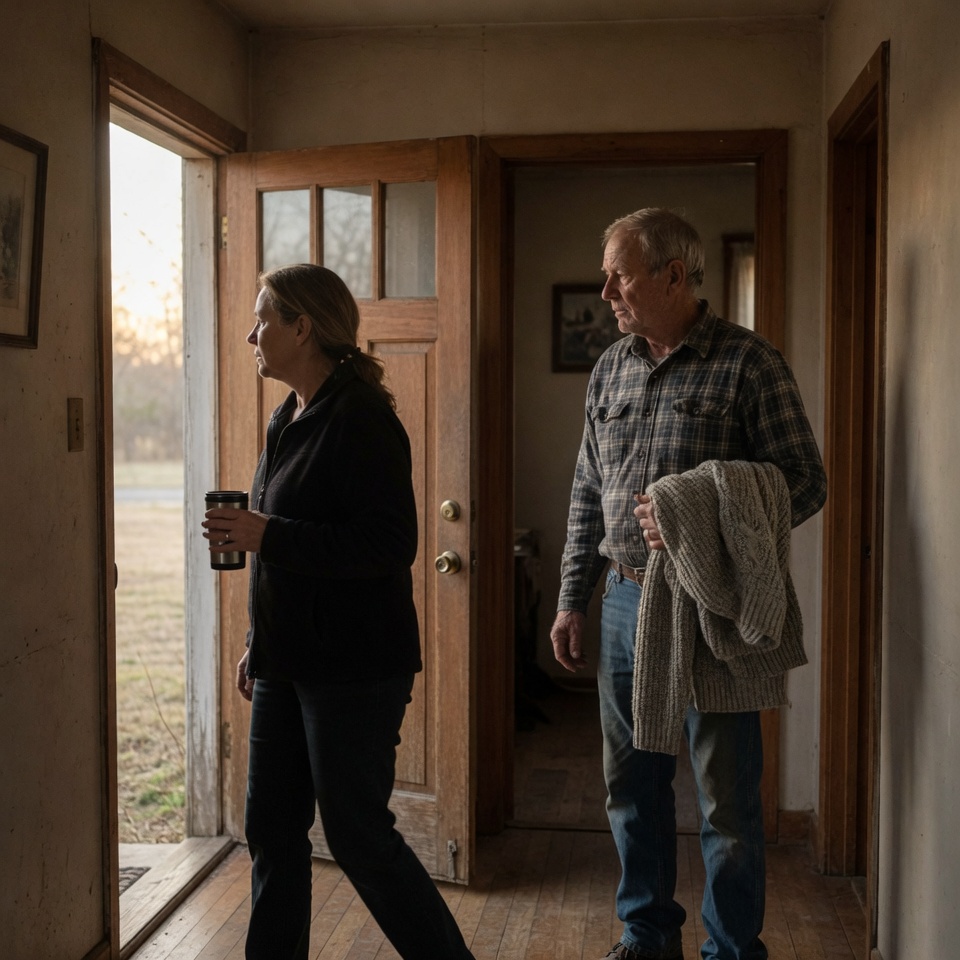
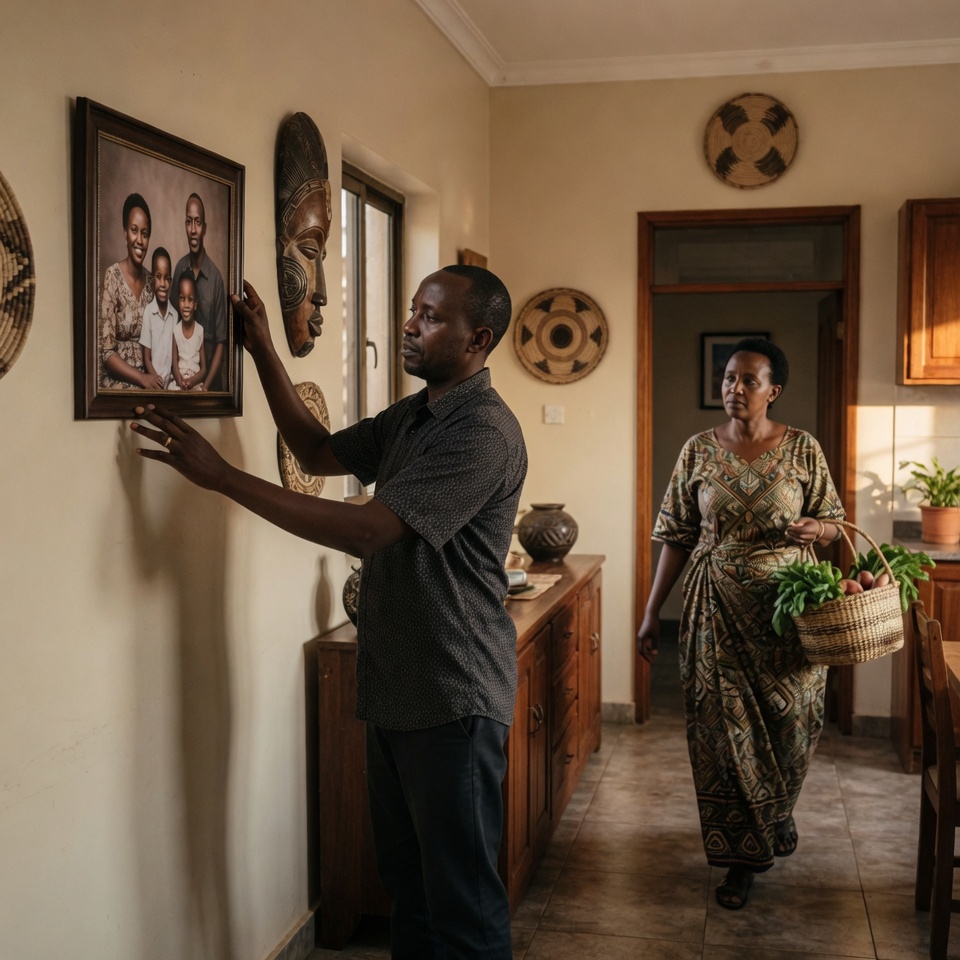
He is close to the brokenhearted

God Is Close While the Fear Is Still Unnamed.

The specific dread of sensing your spouse pulling away is not something you have to carry alone. God is close to that fear. Grace is here for tonight — available at any hour, grounded in Psalm 34:18.

Grace names the fear first. Free to start.

Grace — a Christian AI companion for marriage
Questions

What People Ask When the Fear Has Settled In.

What are the signs your spouse is falling out of love with you?
People describe different signs: the warmth going out of ordinary interactions, the sense of being tolerated rather than chosen, the absence of small gestures that used to be automatic, conversations that feel like maintenance rather than connection. No single sign means anything certain. But when several are present together and the feeling has been building, it is worth taking seriously.
Can a spouse fall back in love?
Some do. Love in a long marriage is not a single fixed thing — it changes, thins, deepens, shifts. What feels like falling out of love is sometimes disillusionment or distance that can be worked through when both people are honest about what has happened. What matters is whether the real issue can be named and whether both people are willing to do something about it.
What does God say about a spouse falling out of love?
God created marriage for committed love — not just the feeling, but the choosing. The Bible’s picture of love in marriage is covenantal: a decision made again and again. When the feeling has gone, the covenant can still hold. But the grief of sensing that your spouse is pulling away is real, and Psalm 34:18 says God is close to the brokenhearted.
What should I do if I think my spouse is falling out of love with me?
Before anything else, the feeling needs somewhere honest to go. Not to be dismissed as anxiety, and not to be used as accusation before you know what is actually happening. Finding somewhere to name the fear — to a counselor, a pastor, or Grace — is usually the right first step.
Can Grace help when I’m afraid my spouse is falling out of love with me?
Yes. Grace is a Christian AI companion available at any hour. Grace receives the fear before anything else — the specific dread of sensing your spouse pulling away, the grief of that possibility, the not-knowing that is often harder than knowing. Grace names what you are carrying and stays with you in it.
“The Lord is close to the brokenhearted,
He saves those who have lost all hope.”
Psalm 34:18 · Close while the fear is still unnamed
Also in the Marriage Library

More from the Marriage Library.

Grace Is Here for the Fear Before the Conversation.

If you can feel something shifting in your marriage and you are carrying that fear alone — Grace is a Christian AI companion built to receive exactly this. Grace names the fear first. Free to start.

Talk to Grace — it’s free to start