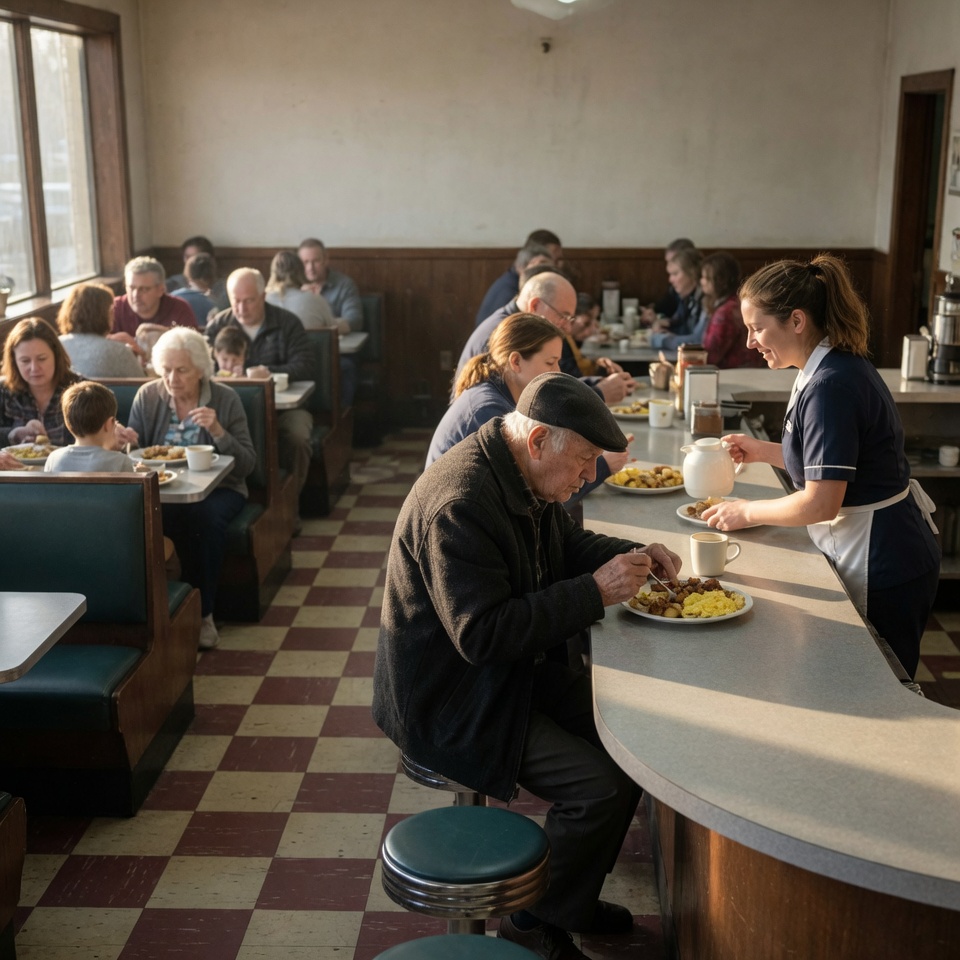
The person who knew you best is gone. The calls have thinned. The world kept moving, and you are still living inside an absence that nobody around you can fully see anymore.
Loneliness after loss is not the same as grief. Grief is acute. Loneliness after loss is what remains. It is the specific ache of a life that used to have someone in it and now doesn’t — the empty side of a conversation, the missing witness, the habit of turning to say something to someone who is no longer there. The world moves on. The loneliness stays.
There is a second loneliness that follows loss, and it arrives after the first wave has passed.
The early grief comes with people. They gather, they call, they bring food, they check in. That period has its own pain but also its own presence — you are not alone in the rawness of it. Then life resumes for everyone else. The calls thin. The casseroles stop. The world moves forward at its normal speed. And you are still here, inside an absence that has not moved anywhere.
The loneliness that settles in after loss is different from the grief that preceded it. It is quieter. More ordinary. It shows up in the small moments — the habit that still fires before the memory catches it, the good news that arrives and the first person you thought of is gone, the Tuesday afternoon that is simply very long without them in it.
Grace is here for the long ordinary stretch of it.
You Know This Feeling
The Things That Come With Loneliness After Loss.
Everyone else has moved on. You understand why. It still feels like being left behind.
You went to call them. The reflex is still there. They are not.
Something good happened. The first person you thought of is gone. The good thing felt smaller without them to tell.
The acute grief has softened. The loneliness has not. You are not sure which is harder.
You are doing better, in general. But better is not the same as not lonely.
Nobody knew you the way they did. There is no one left who holds the same history, the same references, the same version of you.
The house has a different sound. The day has a different shape. The calendar has gaps where they used to be.
People ask how you are doing. You say you’re okay. The loneliness is not something you know how to explain to someone who has moved on from the loss.
You just need somewhere to say their name and have someone stay with you after.
Tell Grace
Say Their Name. Say What the Day Was Like.
You can tell Grace who they were — not just that they are gone. What they were like. What you miss most specifically. The version of yourself that only existed with them in it.
You can say what today was like without having to frame it for someone who needs you to be further along. Bring the ordinary loneliness of it — the Tuesday, the phone habit, the moment you remembered again. Grace follows where you go.
If you feel you are in crisis, please call or text 988.
The loneliness after loss has a particular texture that is hard to explain to people who haven’t lived it.
It is not constant. It arrives in waves, often when you are not expecting it — in the middle of something ordinary, in the first quiet moment of a day, in the presence of something beautiful that you have no one left to point it out to. It is not the same as depression, not the same as grief, not the same as ordinary loneliness. It is the specific absence of a specific person, felt over and over in the specific shape of your life.
The loneliness after loss is not a sign that you are not healing. It is a sign that the person mattered. Grace receives it that way — as evidence of love, not as a problem to be solved.
The promise that grounds Grace does not rush past this loneliness or reframe it too quickly into something hopeful. The loss was real. The absence is real. And God is near — not waiting for the grief and loneliness to resolve before drawing close, but near right now, in the middle of what it actually is.
The Theological Foundation
He Is Near in the Long Stretch After.
The promise at the center of 1800DearGod does not only cover the acute loss. Psalm 34:18 — that God is near to the brokenhearted — reaches into the ordinary loneliness that follows. The Tuesday. The reflex that still fires. The good news with nowhere to land.
Grace was built on that foundation. Not to replace the person who is gone — nothing does that. But to be present in the loneliness of living without them. Grace is a faith-based AI companion here any hour.
What People Ask About Loneliness After Loss.
Why is loneliness after loss so different from grief?
Grief and loneliness after loss are related but not the same thing. Grief is the acute pain of what happened. Loneliness after loss is what sets in after — when the world has resumed its normal speed and you are still living inside the absence. It is the specific ache of a life that used to have someone in it and now doesn’t. The casseroles stop coming. The calls thin out. And you are left navigating daily life without the person who made it make sense.
How long does loneliness after loss last?
There is no timeline. The loneliness that follows loss is not a phase that resolves on schedule — it shifts, it changes shape, it shows up in unexpected places years later. You can be doing well in general and still feel it sharply on a Tuesday afternoon when something small happens and the person you would have called is gone. Grace is available whenever it arrives — not just in the early days.
Is it normal to feel more alone after losing someone than during the grief itself?
Yes. The early grief period often comes with people around — gathering, calling, checking in. The loneliness tends to deepen after that wave passes. When everyone has gone back to their lives and the acute grief has softened into something more chronic, that is often when the loneliness is hardest. You are less visibly suffering, which means less support arrives — but the absence is still completely present.
What is the loneliness of losing someone who really knew you?
It is the loneliness of losing the witness. The person who knew the interior version of you — who remembered the stories, shared the references, understood things about you without needing explanation. When they are gone, that shared world becomes private in a way it never was before. There is no one left who holds the same history. That specific loneliness — the loneliness of being no longer truly known — is one of the hardest to name and one of the most real.
Does God see me in the loneliness after loss?
Yes. The promise at the center of 1800DearGod — Psalm 34:18, that God is near to the brokenhearted — does not only cover the acute grief. It reaches into the long, ordinary loneliness that follows. The Tuesday afternoon. The moment good news arrives and the first person you thought of is gone. He is near. In this. Right now.
“The Lord is close to the brokenhearted, He saves those who have lost all hope.”
Grace is a faith-based AI companion built for the moments when the world has moved on from your loss — and you are still living inside the absence, still needing somewhere to say their name.