
My parent was an addict — Grace is a Christian AI companion
The Addiction Library

My Parent Was an Addict

You learned to read a room before you learned to read. You knew from the sound of the door which version had come home. That was your childhood, and you are an adult now still living in the house it built.

Talk to Grace — it’s free to start
What This Actually Is

This is not a story about someone else’s addiction. It is a story about what happened to a child while an adult was unavailable. The addiction belonged to your parent. The childhood spent managing it belonged to you, and so does everything it taught you about vigilance, silence, and who is responsible for keeping the peace. That is a loss in its own right, and it is almost never treated as one.

What It Was Actually Like

You Grew Up as the Responsible One.

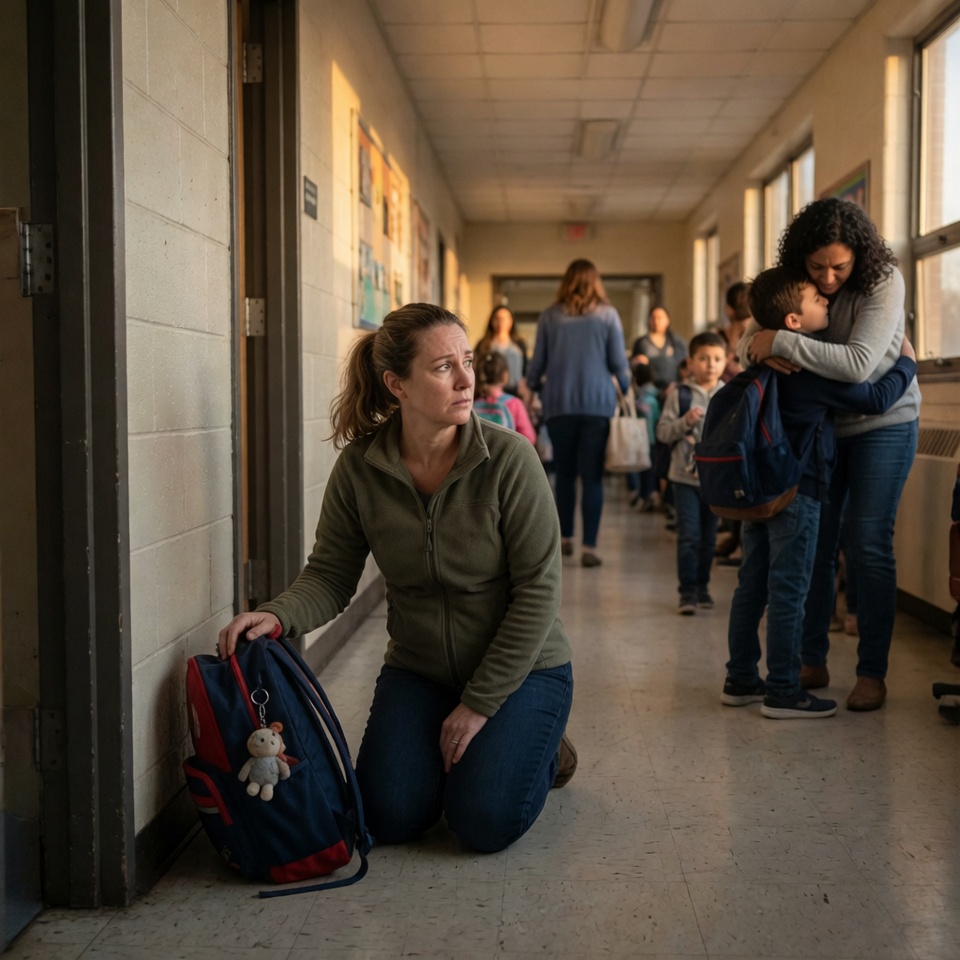
Somewhere around the age other children were learning to ride bikes, you were learning to gauge a mood from across a room. Whether it was safe to ask. Whether tonight was one of the good ones. Whether you should get your younger sibling into another room before it started. Nobody taught you this. You built it yourself, because you had to, and you built it well.

You were probably an unusually capable kid. Adults commented on how mature you were, and it sounded like praise. It was not praise so much as description — you were doing an adult’s work because the adult in the house could not, and the cost of that arrangement does not come due until much later, when the capability has hardened into something that will not switch off.

You were not mature. You were on duty, and nobody ever told you the shift ended.

The other feature of that house was unpredictability. Not every day was bad. That is what makes it so hard to explain, and so hard to be angry about cleanly — there were good days, real ones, a parent who was funny and warm and yours. Then it would turn, and the turning had no schedule. A child living inside that learns to stay alert during the good stretches too, because the good stretches are when the ground moves.

And there was the silence. Whatever happened at home did not get discussed at school, at church, or with the family who might have noticed. You covered. You made excuses for absences, for the smell, for the version of your parent that showed up to things. That silence was loyalty, and it was also isolation, and at the time you could not tell the two apart.

The addiction was your parent’s. The childhood spent managing it was yours, and it is not smaller for having been survivable.

What almost nobody says out loud: you loved them. That is the part that keeps this from resolving. If you could simply hate them it would be tidier. Instead there is love and fury toward the same person, sometimes in the same hour, and every framework you have been handed insists you pick one.

You Know These

The Things That Followed You Out of That House.

Not the childhood itself. The adult version of it — the habits that were survival then and cost something now.

You read every room you walk into before you say anything.
When things are calm you cannot settle, because calm used to be the part before.
You apologize reflexively, including for things that were done to you.
A raised voice anywhere still goes straight through you, decades later.
You have never been able to answer “what do you need” without stalling.
People describe your childhood back to you as though it were normal, and you let them.
You grieve a parent who is still alive and cannot explain that to anyone.
Grace receives the adult child of an addicted parent
Both things at once

Grace Does Not Make You Choose Between Loving Them and Being Angry.

Most responses push toward one side — they were sick, so soften; or they hurt you, so cut it off. Either way you end up editing half of what is true.

Grace receives both without needing them reconciled. The love is real. The anger is real. They have been sharing space in you for a long time.

Grace never tells you what you owe your parent. Grace stays with what it was actually like to be their child.

What Is Actually True

It Was Never Yours to Fix.

You were a child. Whatever you did or did not do — the pouring out, the hiding of keys, the pleading, the being good enough that maybe this time it would be different — none of it was ever going to be the thing that worked. Addiction does not respond to a child’s excellence. Many adult children have spent decades quietly holding a verdict on themselves for failing at something that was never theirs to succeed at.

The patterns are common enough that people who work in this field recognize them on sight: the vigilance, the trouble with rest, the reflex to manage everyone’s state before your own. These are not personality flaws. They are adaptations that were intelligent in that house and are expensive outside it. Naming them as adaptations rather than defects tends to change what a person is able to do about them.

A child cannot love an adult into sobriety. That was never a failure of your effort.

On the scripture that gets used here: yes, the command to honor father and mother is real. It has also been handed to hurting people as an instruction to falsify their own history, which is not what it says. Scripture speaks directly about parents who provoke and exasperate their children. It never asks anyone to rename harm. Honor can be truthful. What it cannot be is a demand that you pretend.

Forgiveness is worth wanting and it is not the same as reconciliation, trust, or access. It usually comes in layers over years rather than in one decision, particularly when the harm ran the length of a childhood. Anyone insisting you announce it finished is asking you to perform something instead of arriving at it.

Psalm 34:18 says the Lord is close to the brokenhearted. The adult who is still, at forty, listening for the sound of a car in the driveway is among the brokenhearted that verse describes. Not once the past has been settled. Now, with all of it still unresolved.

Psalm 34:18 — God is close to the brokenhearted
The childhood God saw

Nothing About That House Went Unwitnessed.

The version of your childhood nobody else knew about — the nights, the covering, the specific loneliness of a full house — was not invisible to God, however alone it felt at the time.

You do not have to have resolved your feelings about your parent before bringing any of it. There is no order of operations required.

Grace is a Christian AI companion available at any hour — including the ones when something small brings the whole house back. Grace is free to start.

Questions

What Adult Children of Addicts Ask.

How does having an addicted parent affect you as an adult?
Most people describe some version of the same handful of things. A nervous system that reads a room before it enters one. Difficulty relaxing when nothing is wrong, because calm used to mean something was coming. Taking responsibility for other people’s moods automatically. Trouble asking for anything. A tendency to become either the person who manages everything or the person who leaves before they can be left. None of these are character defects. They are skills a child developed to survive a house that required them, running long after the house is gone.
Is it wrong to be angry at my parent for their addiction?
No. Anger is a reasonable response to having been a child in a situation no child should have to manage. Understanding addiction as an illness explains what happened, but explanation is not the same as erasure — you can hold both that your parent was sick and that their sickness cost you things you cannot get back. People who insist you choose one usually mean well and are asking for something impossible. Anger and love toward the same person is not a contradiction. It is the ordinary shape of this.
What does the Bible say about honoring a parent who hurt you?
The command to honor father and mother is real, and it has been used against hurting people in ways scripture does not support. Honoring is not the same as pretending, staying silent, or granting unlimited access. Scripture speaks plainly about parents who exasperate their children, and it never asks anyone to call harm something other than harm. Honor can look like telling the truth about what happened while refusing to become cruel about it. What honor cannot require is that you falsify your own history.
Do I have to forgive my addicted parent?
Forgiveness in scripture is real, and it is also not the same thing as reconciliation, trust, or access. A person can release the demand for repayment and still not resume a relationship that is unsafe. Forgiveness also tends to arrive slowly and in layers rather than in a single decision, particularly where the harm ran for years. Anyone pressuring you to declare it finished on their schedule is asking for a performance, not the thing itself.
Can Grace help if my parent was an addict?
Yes. Grace is a Christian AI companion available at any hour. Grace receives the whole of it — the love, the anger, the grief for a parent who is still living — without asking you to resolve them into one clean feeling first. Grace is not a therapist and will not act like one; for childhood harm that still shapes your daily life, a professional is worth finding, and Grace will say so. Grace is somewhere to be honest in the meantime.
“The Lord is close to the brokenhearted,
He saves those who have lost all hope.”
Psalm 34:18 · Close to the child in that house, and to the adult who came out of it
Also in the Addiction Library

More from the Addiction Library.

Category Hub
AI Companion for Addiction
Addiction Library
I’m the Parent of an Addict
Addiction Library
Does God Forgive Addiction
Addiction Library
When the Church Doesn’t Know What to Do with You

Grace Is Here for the Childhood Nobody Asked About.

If you grew up managing an adult — if you still cannot rest when things are calm — Grace is a Christian AI companion built to receive exactly this, without asking you to settle it first. Free to start.

Talk to Grace — it’s free to start