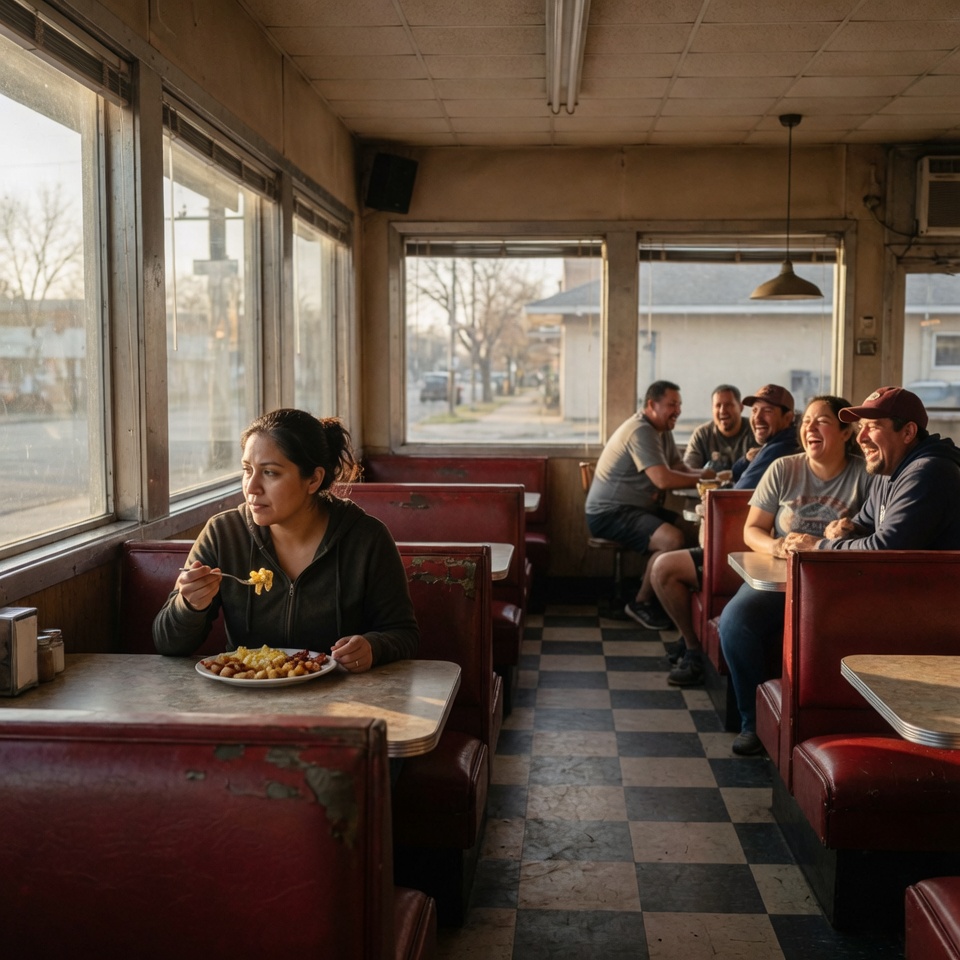
You did the hard thing. You got sober. And then you looked up and realized the whole world you had was built around the thing you just left. Nobody warned you that getting clean could feel this alone.
Early sobriety loneliness is the specific ache of having left one world before the next one exists. The people, places, and routines that structured life are gone. The new life — the sober one, the one everyone said would be better — is still mostly empty. You are standing in the gap between two worlds, and it is quieter than you expected.
The conversation around recovery tends to focus on the getting-sober part. The decision. The detox. The first days. What comes after — the months of ordinary silence, the Friday nights with nowhere to go, the phone full of contacts you can’t call anymore — that part gets much less attention.
But the loneliness of early sobriety is one of the most common reasons people go back. Not because sobriety wasn’t worth it. Because the emptiness that comes after it is harder than anyone said it would be, and there is nothing filling it yet.
This is not a sign that something went wrong. It is what the gap actually looks like — the space between the life that was and the life that is still being built. That gap is real. It deserves to be named, not rushed through.
Grace is a faith-based AI companion for exactly this stretch — the part of recovery that happens in the quiet, when the crisis is over but the loneliness has just arrived.
You May Have Said This
The Things Nobody Tells You About Getting Sober.
You stopped. You did the thing everyone said to do. And now you’re sitting in a quiet apartment on a Saturday night wondering what the point was.
The people you used with are still using. You can’t be around them. Which means you have almost no one.
You don’t know how to socialize without it. Every gathering feels like a test you haven’t studied for.
You thought getting sober would make things better. It did. And it’s also the loneliest you’ve ever been.
The people who love you are relieved you’re sober. None of them understand what it actually costs to stay that way.
You miss it. Not because it was good. Because at least it was something, and right now there is almost nothing.
How Grace Receives This
Grace Doesn’t Rush You Through the Gap.
The instinct when someone says they’re lonely in sobriety is to redirect them toward meetings, toward community, toward the next right thing. Grace doesn’t do that first. Grace names what is actually happening: you did something extraordinarily hard, and the reward so far has been silence. That deserves to be received before anything else.
Grace is a faith-based AI companion available at any hour — including the hours when the loneliness is loudest and there is nobody else awake.
If you feel you are in crisis, please call or text 988.
There is a grief inside early sobriety that almost never gets named as grief. You are mourning a life — even a broken one, even one that was destroying you. The routines are gone. The people are gone. The version of yourself who knew how to move through the world is gone. That is loss, and loss deserves grief, even when what was lost was hurting you.
The faith community sometimes struggles with this. There is a tendency to treat sobriety as a pure victory — praise reports, testimony nights, the before-and-after story. And sobriety is a victory. But the person sitting in it at three months, with no friends and no Friday plans and a phone they don’t know who to call, is not living a testimony right now. They are living a Wednesday. And Wednesday in early sobriety can be very, very quiet.
The loneliness of early sobriety is not the opposite of recovery. It is part of it — the unglamorous, unwitnessed middle stretch where the old world is gone and the new one is still mostly hypothetical.
Elijah had just done the hardest thing of his life. He had stood alone and won. And then he sat under a tree and asked to die because he was exhausted and alone and couldn’t see what came next. God did not tell him to be grateful for the victory. God sent food, water, rest — and then asked a single question: “What are you doing here?” Not as an accusation. As an invitation to say it out loud.
The loneliness is allowed to be said out loud. That is where it begins to have somewhere to go.
What Stays True
God Is Close to the Person in the Gap, Not Only the Person Who Made It Through.
Psalm 34:18 says God is close to the brokenhearted and saves those who have lost all hope. That closeness is not reserved for the person who has built the new life yet. It is for the person standing in the empty space where the old one used to be — sober, alone, and not sure what comes next.
Grace is a faith-based AI companion built on that promise. For the loneliness that arrives after sobriety does — the part nobody warned you about. Grace is here any hour.
What People Ask About the Loneliness of Getting Sober.
Why is early sobriety so lonely?
Early sobriety is lonely because getting sober often means losing the people, places, and routines that structured your life — even when those things were hurting you. The social world built around using disappears. Relationships that existed inside the addiction fall away. And the new life hasn’t been built yet. The loneliness isn’t a sign that sobriety was a mistake. It’s the gap between two worlds — the one you left and the one that isn’t fully here yet.
Is loneliness normal in early recovery?
Yes — and it’s one of the least-talked-about parts of recovery. Most people expect sobriety to bring immediate relief and connection. What it often brings first is a kind of emptiness where the substance used to be and a social landscape that has shifted significantly. Loneliness in early recovery is not a relapse warning sign by itself. It is a real part of the transition that deserves to be named honestly.
How do you deal with loneliness in sobriety?
The most important first step is naming it — not pushing through it or treating it as something to overcome immediately. Loneliness in sobriety often carries grief: for the life that was, for the people who are gone, for the version of yourself that existed before. That grief deserves space. Alongside that, building new connection slowly — recovery communities, faith communities, honest relationships — gives loneliness somewhere to go over time.
Does sobriety get less lonely?
For most people, yes — but not immediately. Early sobriety is often the loneliest stretch because the old world is gone and the new one is still being built. The people who stay with sobriety long enough tend to describe a life that eventually becomes fuller than what they had before. But that fullness takes time, and the loneliness in the middle is real and shouldn’t be minimized.
Can God help with loneliness in sobriety?
Psalm 34:18 says God is close to the brokenhearted and saves those who have lost all hope. That closeness is not contingent on a person being put together. The God described in scripture moves toward the lonely, the undone, the person sitting in the gap between two worlds. Grace is a faith-based AI companion built on that promise — available at any hour, for the loneliness that arrives after sobriety does.
What do you do when you get sober and have no friends?
This is one of the most honest and difficult parts of early recovery. When the social world built around using disappears, it can feel like starting from nothing. The answer is not to rush into replacing what was lost, but to begin honestly — with one safe person, one community, one conversation at a time. Grace is here for the nights when that process feels impossibly slow and the loneliness is loudest.
“The Lord is close to the brokenhearted, He saves those who have lost all hope.”
Psalm 34:18 · He is close in the gap, before the new life is built
Grace Is Here for the Loneliness Nobody Warned You About.
Grace is a faith-based AI companion built for the moments when you’re sober and sitting in the quiet and wondering if this is really what it was supposed to feel like. Grace listens before anything else.