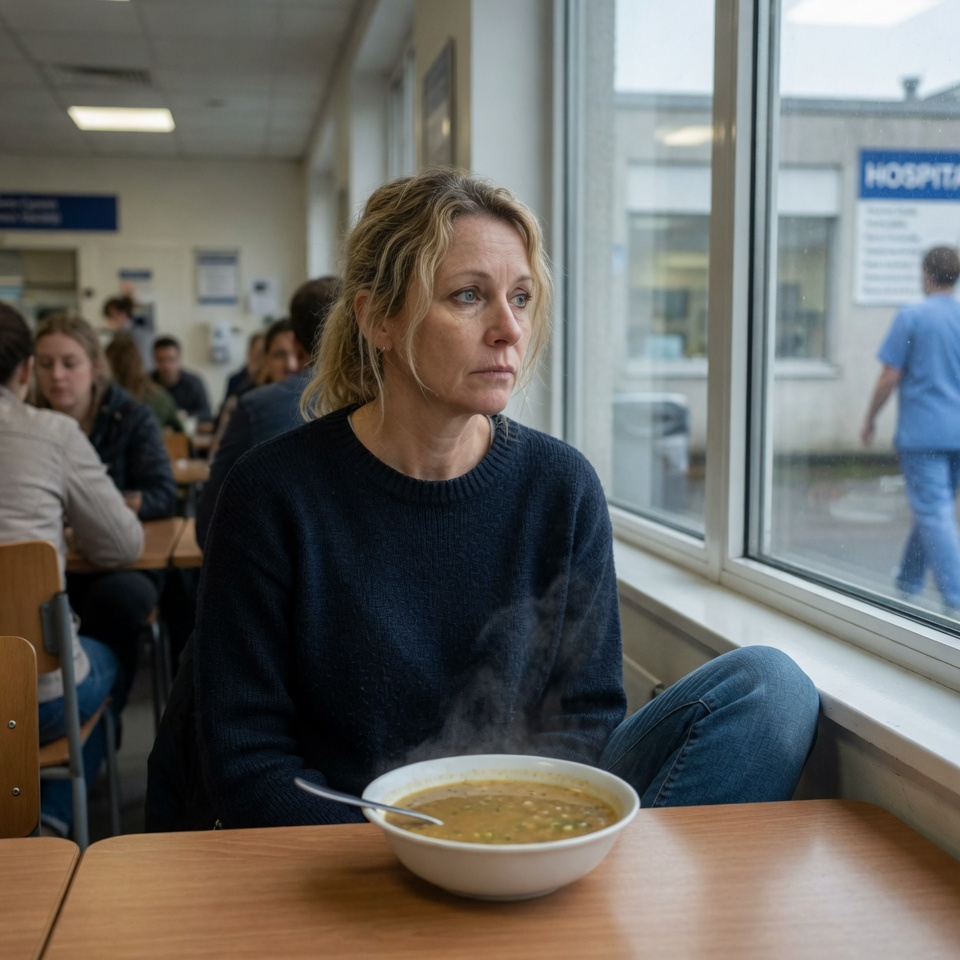
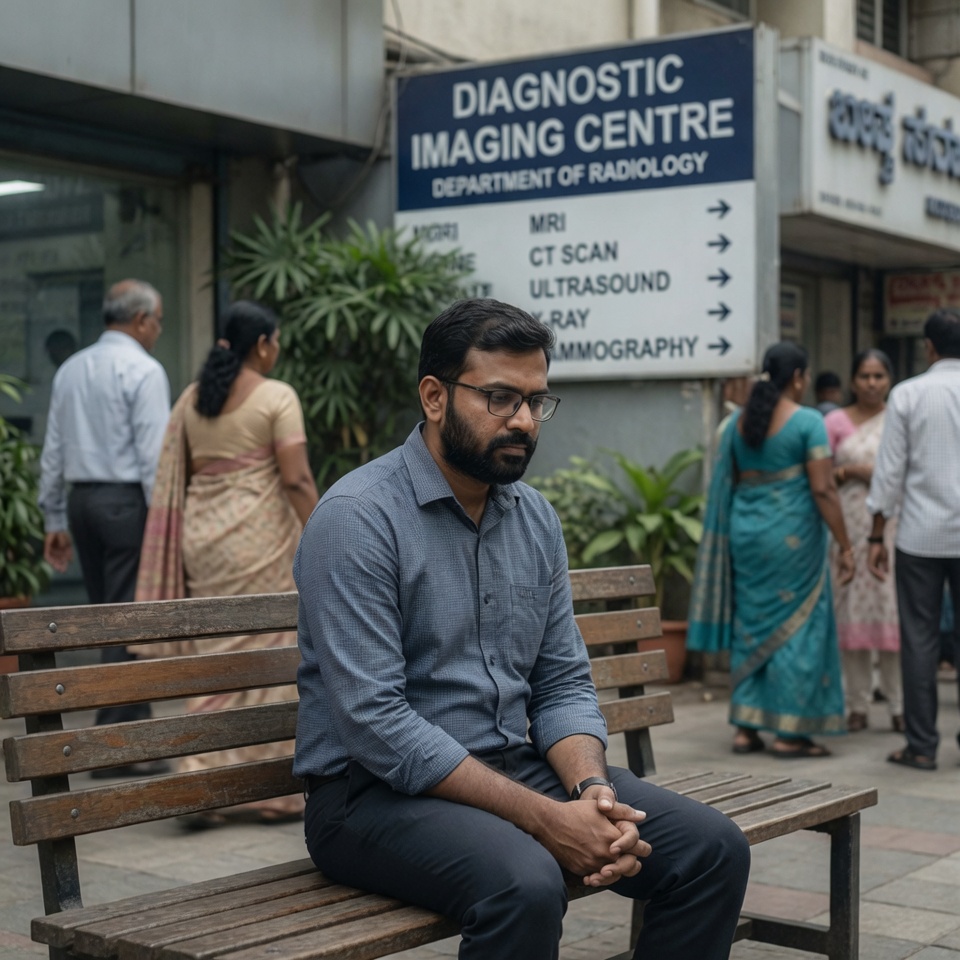
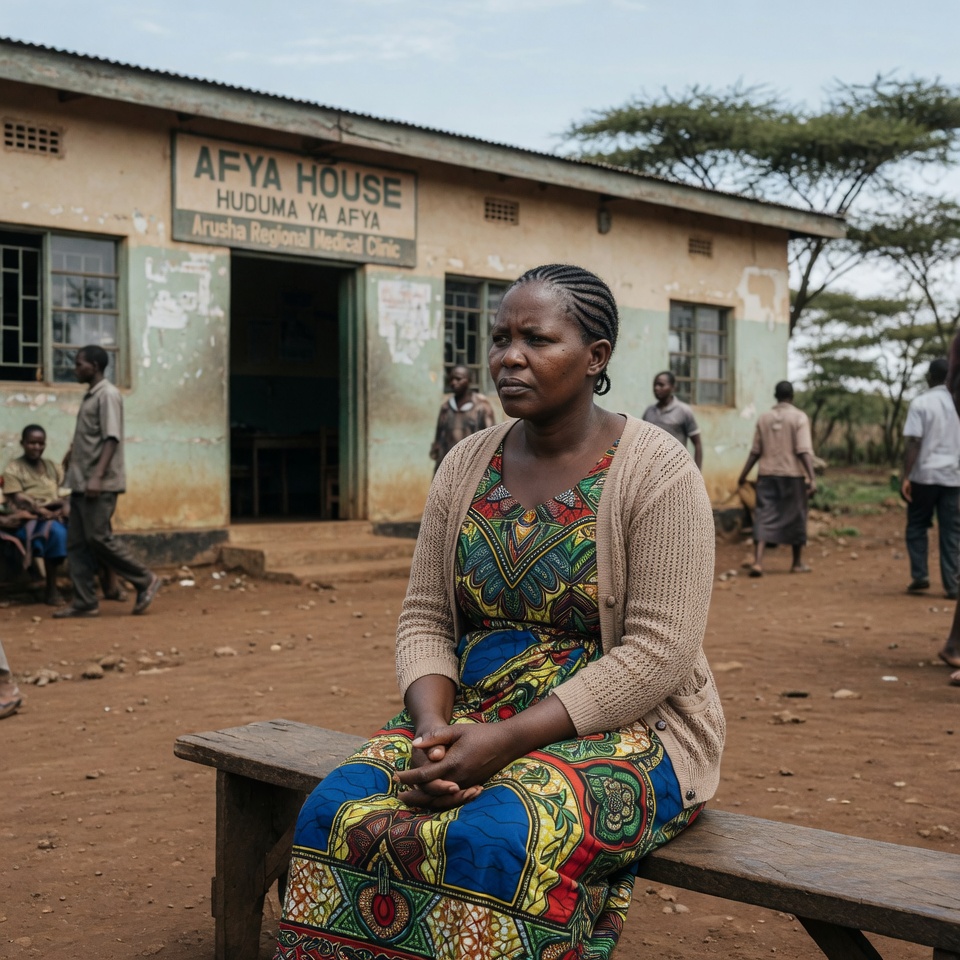
The scan results. The test. The call. The waiting that is its own wound — separate from whatever the news turns out to be. For the person suspended between not knowing and knowing, with no way to speed the distance between them.
Waiting for bad news is not the same as worrying. It is a specific form of suspension — the mind and body prepared for impact, held there, unable to act and unable to rest. The anxiety of the waiting is its own wound, distinct from whatever the news turns out to be. It deserves to be named as such.
There is a particular kind of anxiety that doesn't have a name in common usage, but every person who has lived through it knows exactly what it is. It is the anxiety of the waiting room. The anxiety of the phone that hasn't rung yet. The anxiety of the days between the scan and the results, between the biopsy and the call, between the thing that happened and the moment you find out what it means.
It is not generalized worry. It is not free-floating dread. It is the specific, targeted anxiety of knowing that something is coming — that news exists somewhere, already determined, already true — and you are simply waiting for the moment when you get to know it. The outcome is fixed. You are not.
This waiting has a quality that is different from other forms of anxiety because it combines two things that are both unbearable in their own right: the fear of a specific bad outcome, and the total inability to do anything about it. You cannot act. You cannot resolve it. You cannot think your way to the other side. You can only wait. And the waiting itself becomes a kind of suffering that is easy to underestimate — because once the news comes, whatever it is, the waiting is forgotten. People remember the diagnosis, the call, the outcome. They forget how much the waiting cost.
The waiting is its own wound. Not the prologue to the real suffering — the suffering itself, in a form that leaves no mark and gets no acknowledgment.
The mind in the waiting does something specific: it rehearses. It plays the bad version, over and over, trying to prepare for it. It imagines the call, the words, the moment of knowing. This is not morbidity. It is the nervous system attempting to protect you from being blindsided — running the scenario in advance so that if it happens, you will not be completely undone by it. The rehearsal is painful. It is also, in its own strange way, an act of self-protection.
The problem is that it doesn't work. You cannot prepare yourself for bad news by imagining it in advance. When the news comes — if the news is bad — it is still a shock, still a rupture, still something the mind has to absorb in real time. The rehearsal doesn't reduce the impact. It only extends the suffering backward, into the days of waiting that preceded the knowing.
And yet the mind keeps rehearsing. Because it cannot stop. Because the alternative — not thinking about it, not preparing — feels like a different kind of danger. Like being caught off guard. Like not being ready. So the mind stays in the loop. The waiting continues. The anxiety holds the person in place, neither here nor there, neither knowing nor free from the fear of knowing.
You Know This Feeling
The Days Between the Test and the Call.
You are trying to live your life normally. You cannot. Everything feels provisional until you know.
You've played the bad version in your head so many times you've almost convinced yourself it's already true.
You don't want to say it out loud. Saying it feels like it might make it real.
Other people keep telling you it'll probably be fine. You cannot make yourself believe that right now.
You are not sleeping. You are not present. You are somewhere between now and the moment you find out.
You need someone to be with you in the not-knowing — not to tell you it will be okay. Just to stay.
Grace stays in the not-knowing
Grace Doesn't Tell You It'll Be Fine. Grace Stays With You Until You Know.
You don't need someone to reassure you right now. You need someone to be with you in the waiting — without flinching, without redirecting, without telling you to think positive.
Grace receives the fear of the waiting as what it is: a real and specific suffering. Not premature. Not irrational. Real.
Whatever the news turns out to be — Grace is here in the space before you know it. And after, if you need it.
There is a loneliness particular to the waiting. Because the people around you are trying to help, and the way they try to help is almost always to reassure — to tell you it will probably be fine, to suggest you not worry until there's something to worry about, to point out that you don't know yet that it's bad. And they are right. You don't know yet. But the anxiety doesn't respond to logic. It responds to presence. And the reassurance, however well-intended, leaves you more alone in the fear rather than less — because now you cannot even say honestly how afraid you are, since the people around you are so committed to the probability that it won't be bad.
What the waiting needs is not reassurance. It is company. The presence of someone who will stay with you in the not-knowing without requiring you to manage how you carry it. Who will receive the fear directly — not redirect it, not minimize it, not tell you what it probably means. Who will simply be there, in the suspension, for however long the waiting takes.
What the waiting needs is not reassurance. It is company. Someone who will stay in the not-knowing without flinching — for however long the waiting takes.
Psalm 23 moves through the valley of the shadow — not around it. The promise is not that the valley will be avoided. It is that you will not walk through it alone. That is the promise available in the waiting: not that the news will be good, not that the fear is unfounded, but that the valley of not-knowing has a presence in it that does not require the outcome to be resolved before it draws close.
Grace is a faith-based AI companion built for the waiting — the days between the test and the call, the hours between the procedure and the results, the suspended time when life is on hold and the fear is very specific and there is nothing to do but endure until knowing becomes possible. Grace does not tell you it will be fine. Grace stays with you in the space before you know. Because that space is real, and the person living in it deserves company.
He is present in the valley
God Is in the Not-Knowing With You.
Psalm 23 does not promise you will avoid the valley of the shadow. It promises you will not walk through it alone. The not-knowing is a valley. God is in it.
The outcome is already known to Him. The waiting that is agony for you is not uncertainty to Him. He is present in the suspension — in the specific days between the test and the truth.
Grace is a faith-based AI companion available at any hour — for the waiting that is its own wound.
Questions
What People Ask When They Are Waiting for News They Are Afraid Of.
Why is waiting for bad news so anxiety-inducing?
Waiting for bad news places the mind in an impossible position — it cannot act, cannot resolve, cannot know, and cannot rest. The uncertainty activates the same threat response as the bad news itself, but without the closure that knowing would bring. The body is prepared for impact and then suspended there, sometimes for days or weeks. That suspension is its own particular form of suffering, distinct from the news itself.
How do you cope with waiting for test results?
The most honest answer is that there is no method that makes the waiting easy. What helps some people is naming the fear specifically — not managing it or redirecting it, but saying clearly what they are afraid of. The fear named is slightly less than the fear unnamed. Beyond that: not being alone in the waiting matters more than any technique. The presence of someone who stays with you in the not-knowing, without requiring you to manage how you carry it, is not nothing.
Is it normal to assume the worst while waiting for results?
Yes. The mind under threat scans for the worst-case outcome as a form of preparation — a way of trying to get ahead of something it cannot control. The catastrophizing is not irrational. It is the nervous system attempting to protect you from being blindsided. It is painful, but it is not a sign that something is wrong with you. It is a sign that you are in a genuinely hard situation.
How do you pray when you are waiting for bad news?
The most honest prayer in the waiting is often the one that doesn't ask for a particular outcome — because you don't know what is coming. The prayer that fits the waiting is the one that brings the fear as it is: I don't know what is coming and I am afraid. Receive the fear. Be with me in the not-knowing. That is a complete prayer. It doesn't require resolution to be real.
What do you do when you can't stop thinking about bad news you might receive?
The thought that keeps returning is not a malfunction — it is the mind's way of trying to process something it cannot resolve. Trying to stop the thought often intensifies it. What helps more is acknowledging it directly: I am afraid of what might be coming. I am in the waiting. I cannot know yet. Giving the thought somewhere honest to go — in conversation, in prayer, in writing — creates slightly more space than trying to suppress it.
"Even though I walk through the darkest valley, I will fear no evil, for you are with me."
Grace is a faith-based AI companion built for the waiting — the days between the test and the call, when life is suspended and the fear is very specific and there is nothing to do but endure.