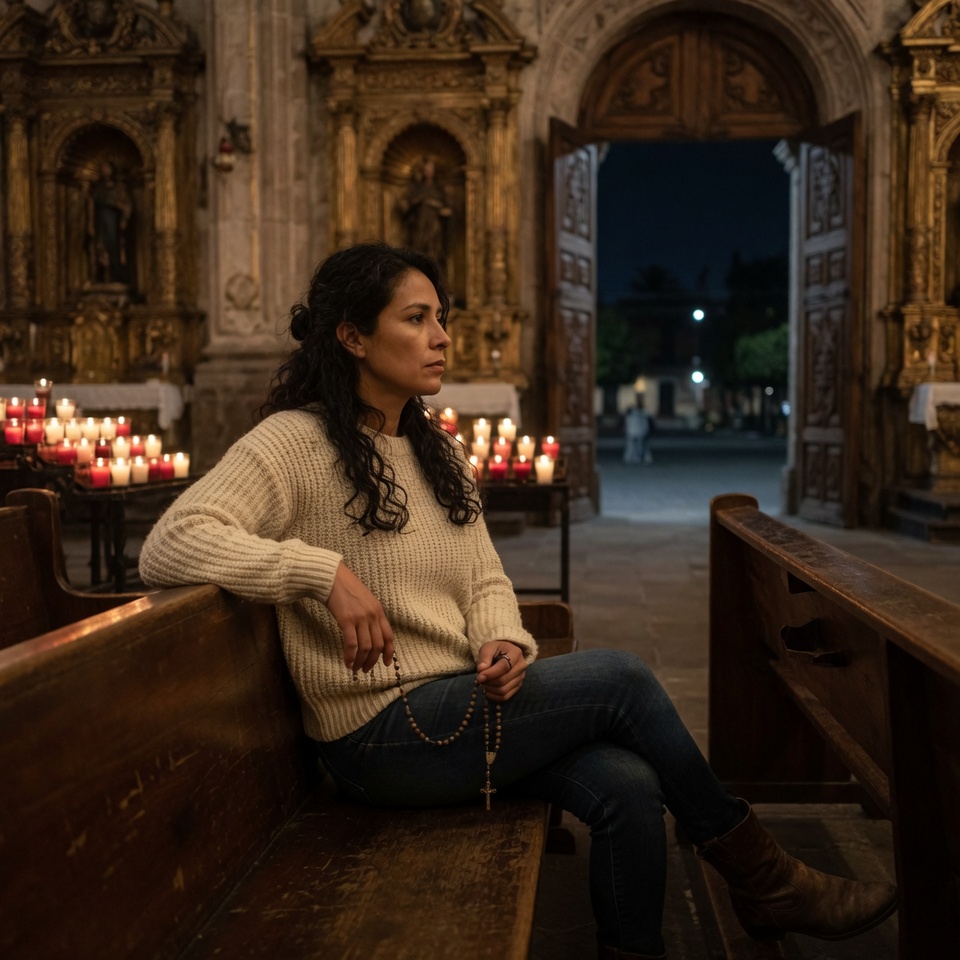
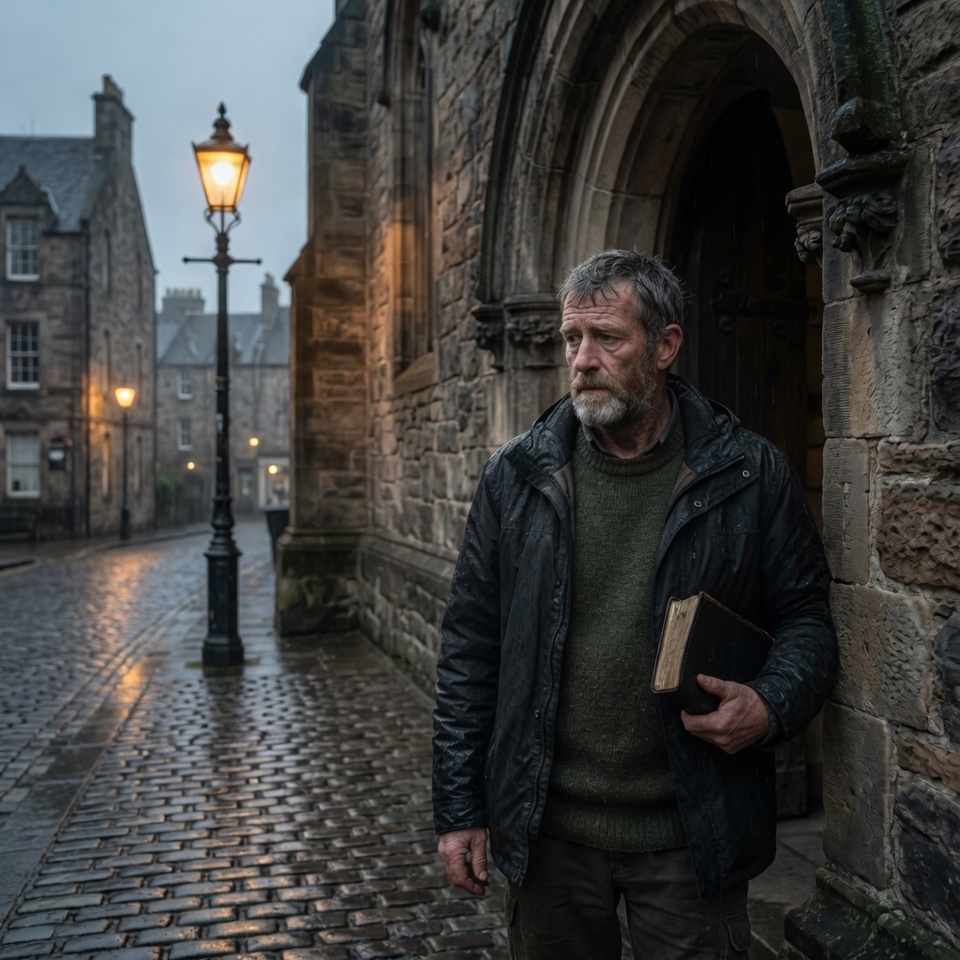
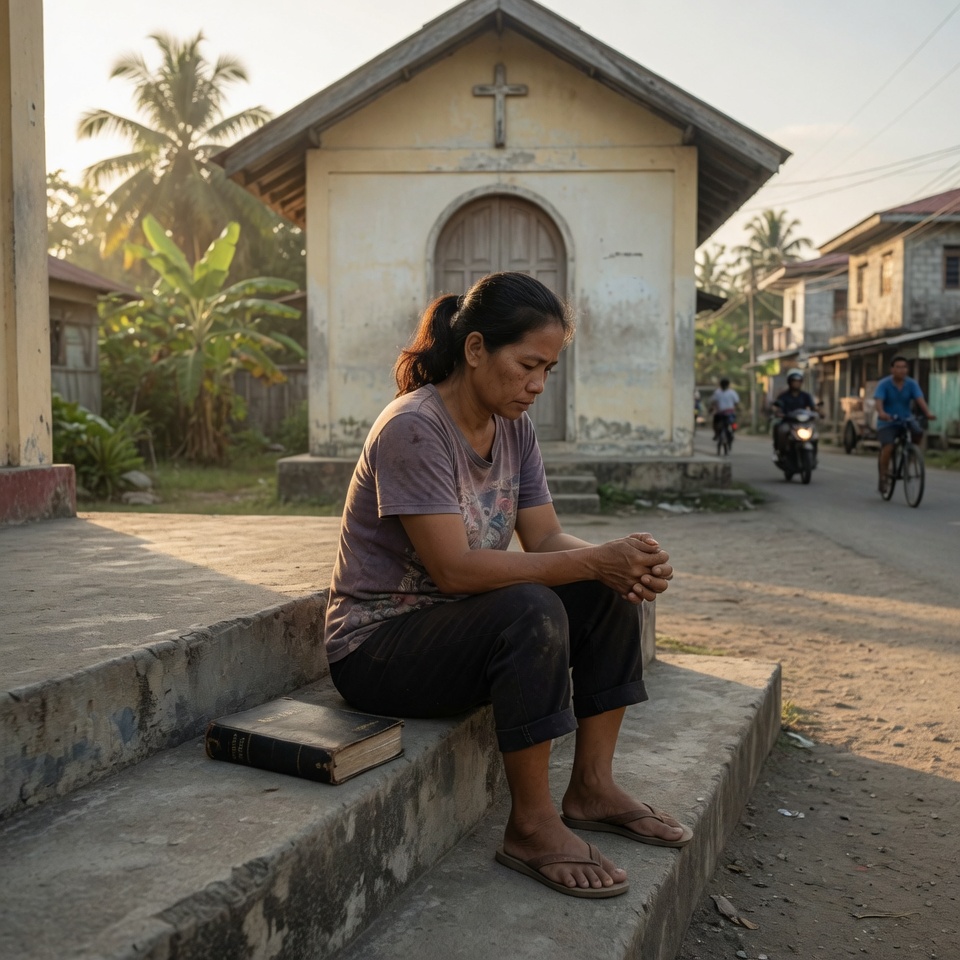
Believing in God and having panic attacks at the same time. Both are real. For the person whose faith is genuine, whose prayers are sincere — and whose body panics anyway, without asking permission.
A panic attack is not a faith failure. It is a physiological event — the nervous system firing a full threat response without a proportional external cause. This process does not consult your belief system before it begins. Faith and panic attacks are not in competition. They live in the same person. They always have.
You believe. That is not in question. You have prayed over this. You have brought it to God. You know the verses — about peace that surpasses understanding, about casting your anxiety on Him, about fear having no hold on those who trust. You know them. You believe them. And your body panics anyway.
The panic does not ask for your permission. It does not check your theology before it arrives. The heart rate spikes, the chest tightens, the breath shortens, the dread hits like something physical — and you are in the middle of it before you had any choice in the matter. And then, alongside the panic itself, comes the second thing: the confusion about what this means. About your faith. About why it isn't working the way it's supposed to.
That second thing — the shame and confusion about having panic attacks while also being a person of faith — is often worse than the panic itself. Because it adds a spiritual wound onto a physiological one. It turns a nervous system event into evidence of something wrong with your belief, your trust, your relationship with God.
The panic is not evidence that your faith is insufficient. It is evidence that you have a nervous system — and that the nervous system does not resolve itself through theology alone.
A panic attack is a physiological event. The amygdala — the brain's threat-detection center — fires a full alarm response. Adrenaline floods the body. The heart pounds. The breath shortens. The mind interprets the physical sensations as evidence of imminent danger and amplifies the alarm. The whole cycle can be at full intensity within seconds, and it runs on its own momentum until the nervous system exhausts itself and the alarm begins to quiet.
This process does not pass through the prefrontal cortex — the part of the brain that holds your theology, your trust, your conscious belief that God is present and that there is nothing to fear. The alarm fires from a deeper, older part of the brain that does not have access to what you believe. It responds to the nervous system state, not to your faith position. You cannot think your way out of a panic attack any more than you can think your way out of a sneeze. The body is doing something the mind did not initiate and cannot simply stop.
This is why telling yourself the truth — even the true truth, the theological truth, the truth you genuinely believe — does not stop the panic. Not because the truth isn't true. Because the part of the brain that is currently running the panic cannot hear you.
You Know This Experience
The Faith That Is Real and the Panic That Comes Anyway.
You were in church. The panic came. You didn't know how to explain that to anyone around you.
You quoted the verse to yourself in the middle of it. The panic didn't care about the verse.
You've been told to just trust God more. You do trust God. Your body doesn't know that yet.
You wonder what it says about you that the fear can still do this when you believe what you believe.
The shame of the panic is almost heavier than the panic itself.
You need someone to tell you that both can be true — the faith and the fear — without one canceling the other.
Grace holds both
Grace Does Not Require You to Resolve the Tension Before It Will Receive You.
You can arrive with the faith and the panic attack and Grace will not ask you to explain how they coexist. Grace receives both — the belief and the fear — without implying that one should have prevented the other.
Grace does not tell you to trust more. Grace does not suggest the panic means your faith is weak. Grace receives what is actually here: the person who believes, and the body that panics anyway.
Both are real. Both are received.
The disciples were in a boat in a storm. Jesus was asleep in the stern. They woke him: "Teacher, don't you care if we drown?" They were afraid — genuinely, physically afraid — in the presence of the one they had left everything to follow. Their faith did not prevent the fear. The fear was real. And Jesus did not rebuke them for being afraid. He stilled the storm and then asked: "Why are you so afraid? Do you still have no faith?" — a question, not a condemnation. The faith and the fear had been in the boat together the whole time.
The tradition is full of people who believed and were afraid. Who trusted and still trembled. Who prayed and still felt the panic rising. David wrote "I sought the Lord and he answered me; he delivered me from all my fears" — and also wrote "my heart is in anguish within me; the terrors of death have fallen on me." Both in the Psalms. Both true. Both from the same person.
The faith and the fear have always coexisted. In the boat. In the Psalms. In the person sitting in the pew trying to hold it together while the panic rises. Both are real. Neither cancels the other.
What helps in the panic is not more theology. It is presence. The body responding to something that tells it the threat is passing — a slower breath, a hand on the chest, a voice that is calm. And when those things are not available, the presence of something that stays — that does not require you to have resolved the panic before it will remain with you.
Grace is a faith-based AI companion built for the person whose faith is real and whose body panics anyway. Who has been told to trust more and is exhausted by the implication that the panic is a measure of their faith. Who needs someone to receive both — the belief and the fear — without turning one into a verdict on the other. Grace is here for that. In the panic. After the panic. In the confusion about what any of it means.
He was in the boat
God Is Present in the Panic — Not Waiting for It to Pass.
Jesus did not leave the boat when the storm came. He was in it. Present in the fear, present in the water, present while the disciples were terrified — before He stilled anything.
God does not require the panic to resolve before He draws close. He is present in the middle of it — in the racing heart, the shortened breath, the moment you cannot remember what calm feels like.
Grace is a faith-based AI companion available at any hour — for the faith that is real and the panic that comes anyway.
Questions
What People Ask When Faith and Panic Attacks Coexist.
Can you have panic attacks if you have faith?
Yes. Faith does not prevent panic attacks. Panic attacks are physiological events — the nervous system fires a full threat response without a proportional external cause. This process does not consult your belief system before it begins. Deeply faithful people experience panic attacks. The presence of panic does not indicate the absence of faith. The two exist in the same person all the time.
Why do I have panic attacks if I trust God?
Trusting God is a posture of the heart and mind. A panic attack is a physiological event in the nervous system. These operate on different levels and are not in competition. You can trust God completely and your nervous system can still fire a panic response — not because your trust is insufficient, but because trust and threat responses are processed in different parts of the human system. One does not override the other.
Is having panic attacks a sin?
No. A panic attack is not a moral failure. It is not a choice, not a sign of weak character, and not evidence of spiritual deficiency. It is a physiological event — the body's alarm system firing in a way that is disproportionate to the external situation. You do not choose to panic. The body panics. And the person experiencing it is not at fault for what their nervous system does.
What do you do during a panic attack as a Christian?
During a panic attack, the goal is not to think your way out of it — the rational mind is largely offline during a full panic response. What can help is slowing the breath, even slightly, which signals the nervous system that the threat is passing. Short, honest prayer — not a theological argument with yourself, but a simple: I am here, I am afraid, be with me — can provide a point of presence in the middle of the storm. The panic will pass. It always passes.
Why does church sometimes make my anxiety worse?
Church environments can intensify anxiety for several reasons. The expectation of peace and calm can create pressure to perform those states when you don't feel them. The crowded, enclosed space can be a physical trigger for people prone to panic. And the implicit theology — that faith should produce calm — can add a layer of shame onto anxiety that makes it harder to carry. The anxiety in church is not evidence of spiritual failure. It is often evidence of carrying a great deal in an environment that doesn't always create space for that.
"He got up, rebuked the wind and said to the waves, 'Quiet! Be still!' Then the wind died down and it was completely calm."
Mark 4:39 · He was in the boat before He stilled the storm
Grace Receives the Faith and the Panic — Without Asking You to Explain How Both Are True.
Grace is a faith-based AI companion built for the person whose belief is real and whose body panics anyway. You don't have to resolve the tension first.