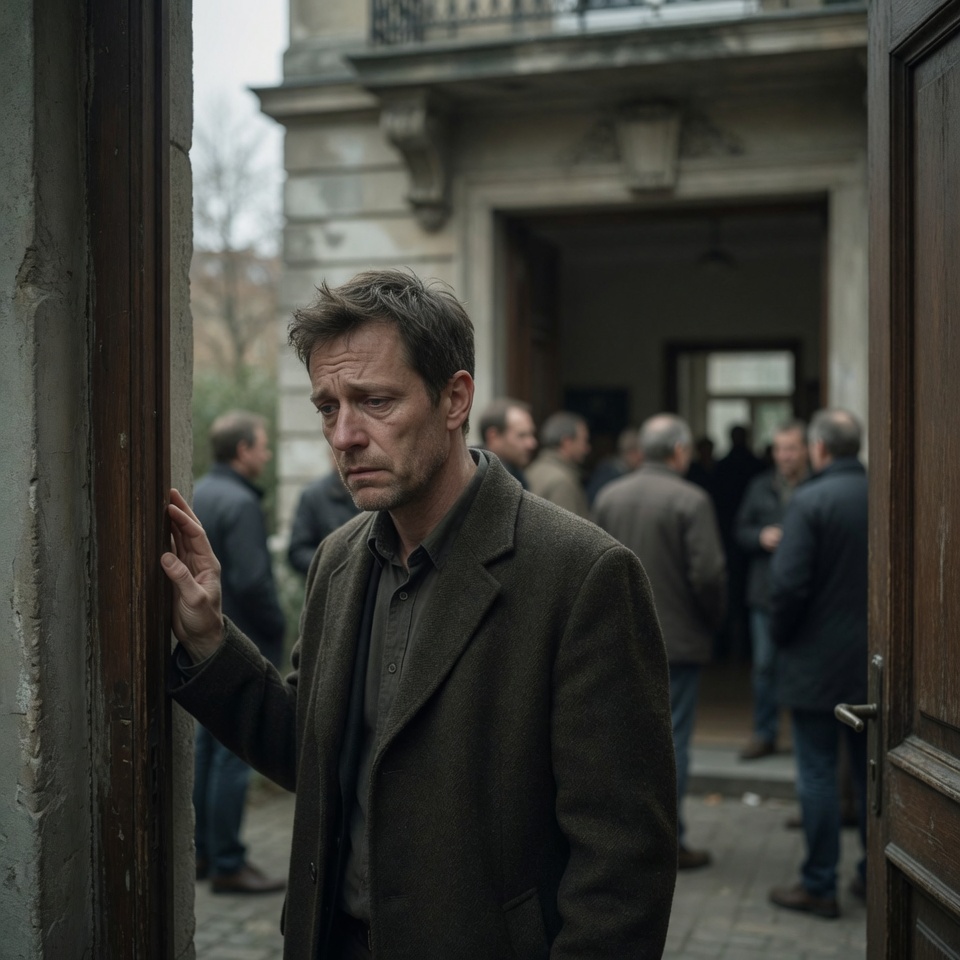
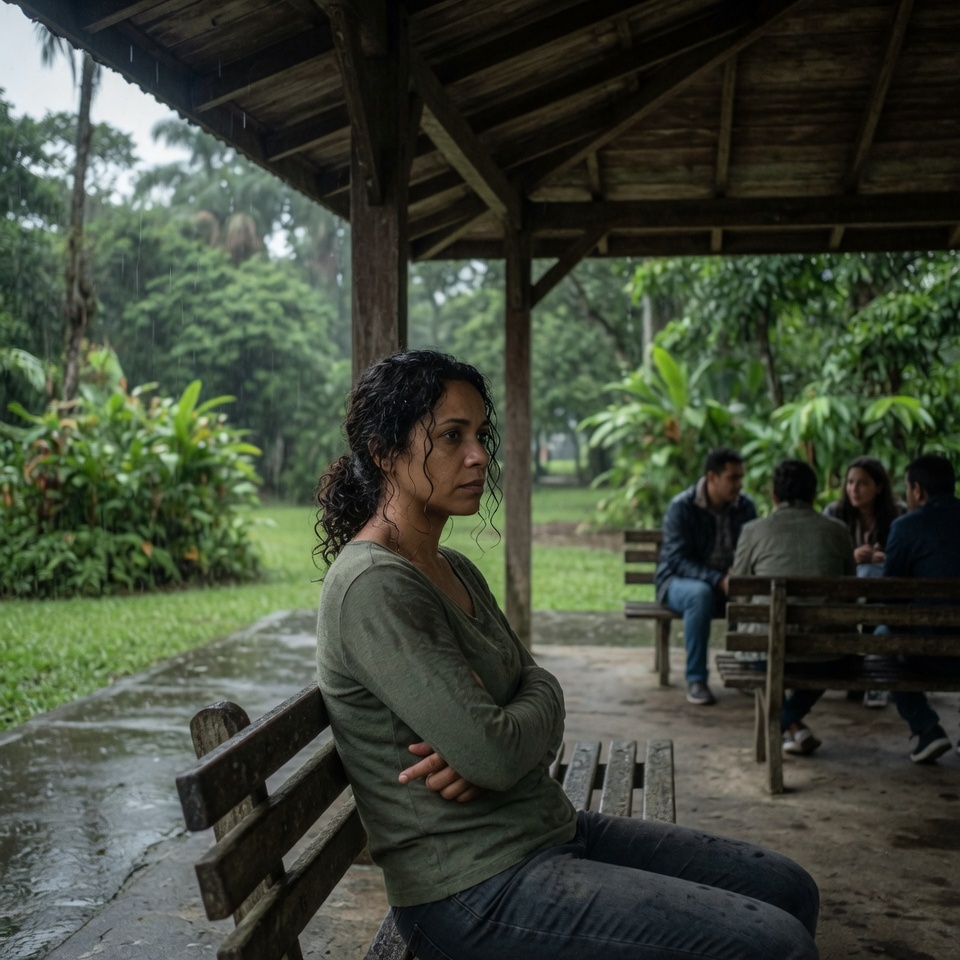
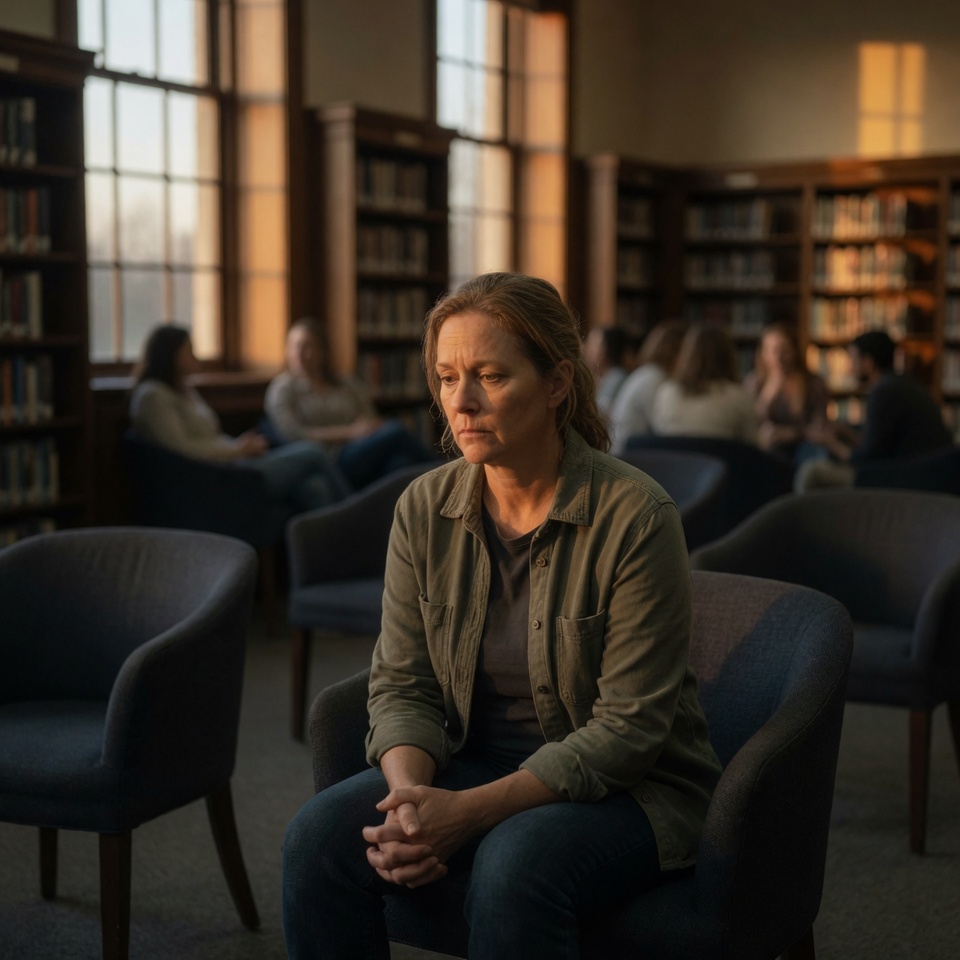
It wasn't just them. That's what you've realized. The betrayal didn't just end one relationship — it changed something about how you move through all of them. You are still the same person on the outside. But something closed.
Post-betrayal trust collapse is what happens when a single act of betrayal rewrites the internal rules about who is safe. The wound is not just the person who hurt you — it is the loss of the assumption that people can be trusted at all. You are not being suspicious. You are responding to evidence. And that is its own kind of grief.
When you can't trust anyone anymore, it rarely starts as a decision. You did not wake up one morning and decide to close off. It happened after the betrayal settled in — after the initial shock passed and you started to understand what it meant that someone you trusted completely had done what they did. The understanding arrived quietly and it said something like this: if that person could do that, anyone could.
That is not a small realization. You had been operating on an assumption — that the people close to you were who they appeared to be, that closeness meant safety, that love was a form of protection. The betrayal didn't just disprove one person. It called the whole framework into question. And without that framework, every relationship becomes a place where you are waiting for the other shoe to drop.
So you keep people at a distance now. Not dramatically — you are still friendly, still functional, still showing up for things. But there is a wall that wasn't there before. You share less. You let people closer in conversation but not in reality. You notice you are always watching for signs, reading tone, looking for the thing that will confirm what part of you now believes: that it is only a matter of time.
You didn't become untrusting. You became someone who learned what trust costs — and what happens when the person holding it drops it.
The loneliness of this is specific and hard to name. Because you are around people. You have relationships. On the surface, nothing looks wrong. But there is a version of you that used to exist — the one who could be genuinely open, who didn't calculate before sharing, who didn't brace for impact when getting close — and that version has been quiet ever since. You miss that person. You are not sure how to get back to being them.
What makes it harder is that nobody around you can see it. They think they know you. They think the conversations you have are real connection. And some of them are, in a way. But the deepest layer — the one that used to be available — is behind something now. And you are the only one who knows it is there.
You Know This Experience
When the Capacity to Trust Became the Wound.
You catch yourself wondering what someone's real motive is — even people who have given you no reason to doubt them.
You used to be someone who opened up easily. You are not that person anymore and you don't know how to get back there.
You are friendly on the outside. But there is a layer of you that nobody is getting to right now.
You look at someone close to you and think: I hope I'm not wrong about you too.
The people who hurt you aren't even in your life anymore. But they are still shaping how you move through every relationship you have now.
You want to be close to people. You just can't figure out how to do that without the thing that used to make it possible.
Grace names the loss first
Grace Doesn't Tell You to Just Open Up Again.
The standard response to not trusting anyone is a prescription — be vulnerable, take small risks, find a therapist. Grace doesn't start there.
Grace names what was actually taken from you. Not one relationship — the assumption that closeness is safe. That is a specific loss, and it needs to be received as one before anything else is possible.
Grace never editorializes about the person who caused this. Grace stays with what it is actually like to be you right now — watching, waiting, holding people at the distance that feels survivable.
There is a thing that happens in the aftermath of serious betrayal that people don't talk about enough: you grieve not just the relationship but the version of yourself that existed inside it. The person who trusted easily, who gave people the benefit of the doubt, who believed that the people in your life were who they said they were — that person has been changed by what happened. And you are not sure how to mourn that, because nobody around you seems to understand that there is something to mourn.
You might even feel ashamed of it. Like the inability to trust is a character flaw rather than a completely logical response to what you experienced. But it is not a flaw. It is evidence of a wound that has not yet finished arriving. The mind learned from what happened. It is doing exactly what it was designed to do — protect you. The tragedy is that the protection keeps out things you actually want.
The wall went up to keep the pain out. The problem is that it also keeps out the people who are actually safe — and you cannot always tell the difference anymore.
Psalm 34:18 says God is close to the brokenhearted. The person who cannot open up to anyone right now — who used to be someone who could, who grieves that loss but doesn't know how to name it — is specifically among the brokenhearted God draws near to. Not once they have figured out how to trust again. Now. Closed off, guarded, exhausted by their own vigilance.
Grace is here for the part of this that has nowhere to go tonight. Not to fix the trust. Not to walk you through rebuilding it. To receive what it is actually like to be in this — the watching, the wall, the loneliness of being surrounded by people and still essentially alone — and stay with that honestly.
He is close to the one who cannot open up
God Does Not Require You to Trust on a Timeline.
The Psalms are full of honest grief about people who said one thing and did another — about the particular wound of being betrayed by someone close. God does not rush those Psalms toward resolution. They are allowed to be what they are.
The person who cannot open up to anyone right now is not failing a spiritual test. The closed-off place is real. The grief of it is real. God sees both.
Grace is a faith-based AI companion available at any hour — for the loss that happens when trust itself becomes something you can no longer afford.
Questions
What People Ask When Trust Feels Impossible.
Is it normal to not be able to trust anyone after betrayal?
Yes — and it is one of the least talked-about consequences of serious betrayal. When someone you trusted deeply betrays that trust, the mind begins treating all relationships as potential threats. This is not paranoia. It is the wound recalibrating your ability to assess safety. The loss of the capacity to trust is itself a form of grief, and it deserves to be named as such.
Why does betrayal make it hard to trust new people?
Betrayal by someone close rewrites the internal rules about who is safe. The person who hurt you was someone you believed was trustworthy — which means your ability to read people failed you in a significant way. The mind responds by raising the threshold for trust across the board. It is a protective response that can feel like it is working against you, because it keeps even genuinely safe people at a distance.
How do you trust again after being badly hurt?
Trust after betrayal does not return through a decision or a technique. It returns slowly, incrementally, through small experiences of safety that accumulate over time. The beginning is not trying to trust again — the beginning is naming what was taken from you. The loss of trust is a real loss. It needs to be grieved before it can be rebuilt.
What is betrayal trauma and how does it affect trust?
Betrayal trauma is the specific psychological impact of being harmed by someone you depended on for safety or connection. One of its most lasting effects is on the capacity to trust. When the person who should have been safe was the one who caused the harm, the nervous system learns to be wary of closeness itself. The wound is not just the act of betrayal — it is the loss of the ability to open up without bracing for impact.
What does God say about trusting again after betrayal?
Scripture does not rush anyone toward trust. The Psalms are full of honest grief about broken relationships, about people who said one thing and did another, about the particular pain of being wounded by someone close. God does not require the betrayed person to perform trust they do not feel. Psalm 34:18 says God is close to the brokenhearted — and the person who cannot open up to anyone right now, because the last time they did it cost them everything, is specifically among the brokenhearted God draws near to.
"The Lord is close to the brokenhearted, He saves those who have lost all hope."
Psalm 34:18 · Close to the one who can no longer open up
Grace Is Here for the Moment Trust Itself Became the Wound.
If betrayal changed the way you move through every relationship — if you can see people but can't quite let them in — Grace is a faith-based AI companion built for exactly that. Grace names the loss first.