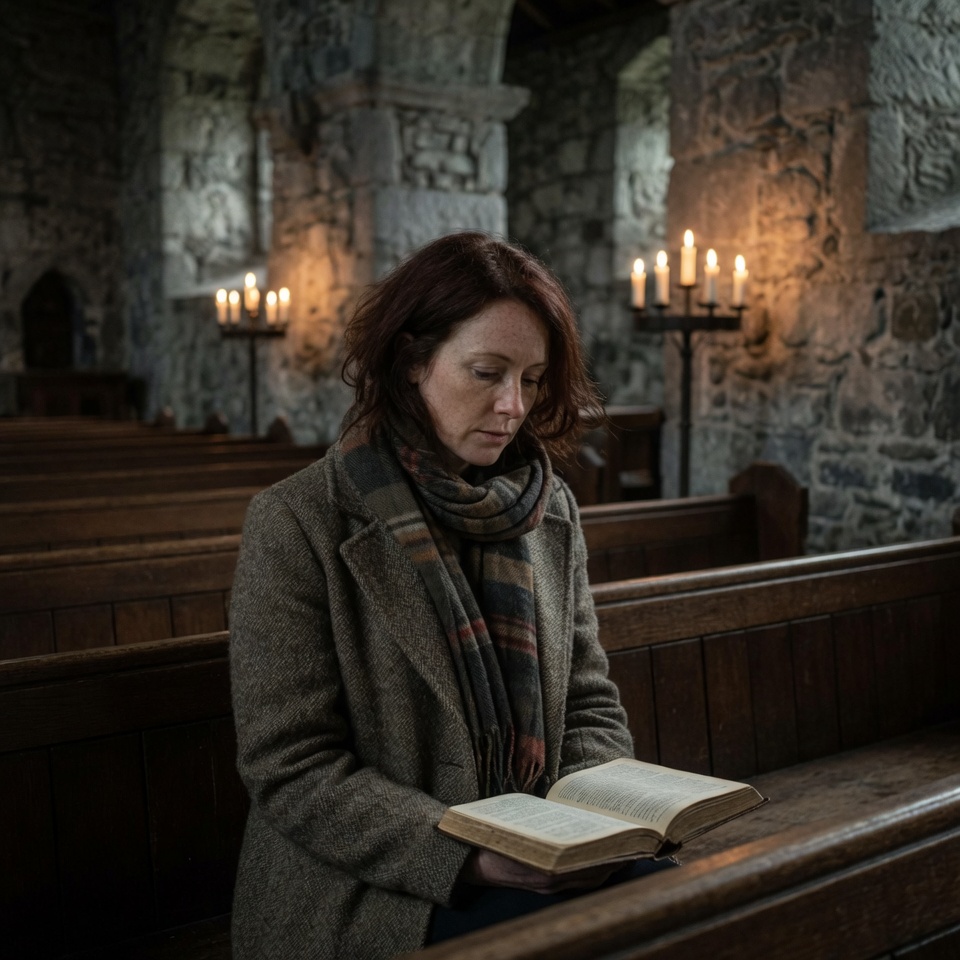
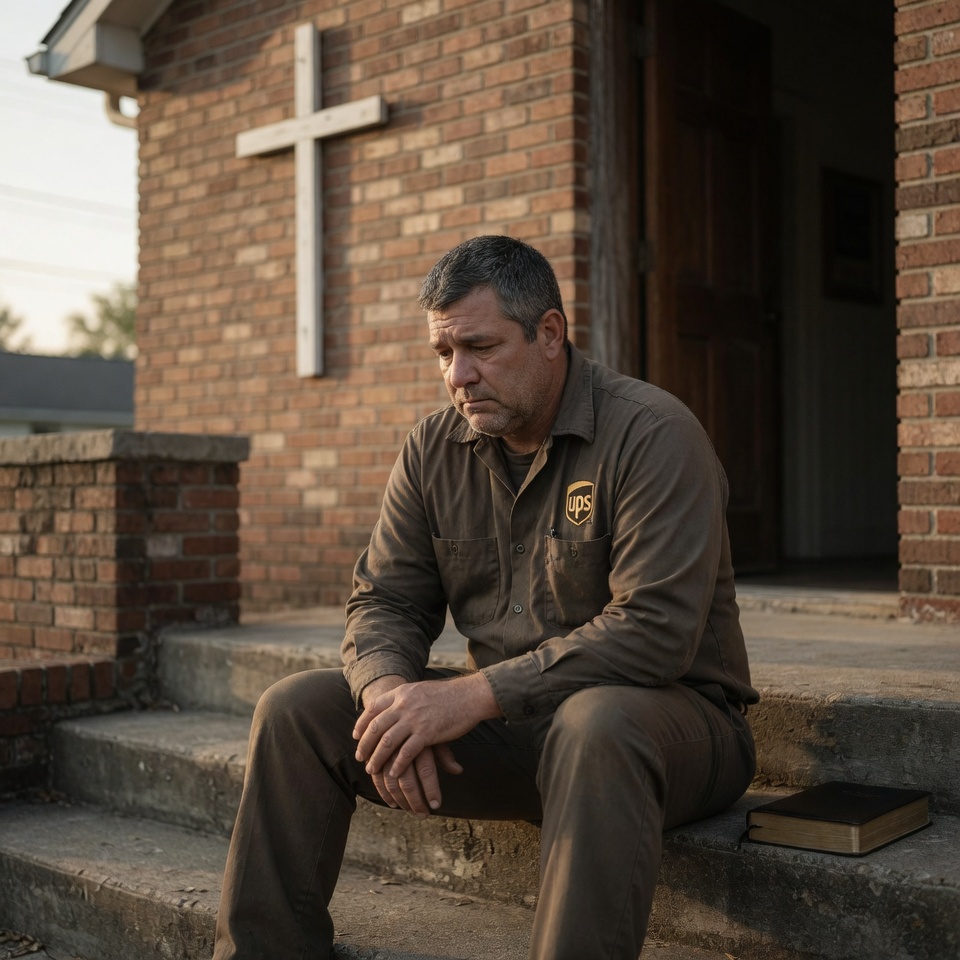
Not even the absence of God. Just silence and flat. The words go up and nothing comes back — and you don't know if that means something is wrong with your faith, or with you, or with the whole thing.
Praying and feeling nothing has a name in the Christian tradition: spiritual aridity. It is not a modern crisis and it is not a sign of weak faith. It is a season — one documented across centuries by people considered closest to God. The silence is real. It is not evidence that God has left.
You prayed. You said the words — or you tried to find words and couldn't, so you sat there in the silence instead. You waited. Nothing came back. Not comfort, not clarity, not even the sense that anyone was listening. Just the room. Just you. Just the flat quiet that's been there for a while now.
And you don't know what to do with that.
If this were a crisis of belief — if you had stopped believing — it would be easier in some ways. You'd know what you were dealing with. But you still believe. Or you think you do. You want to. And the praying-and-feeling-nothing is worse in some ways than not praying at all, because at least not praying wouldn't feel like being ignored.
The silence in prayer is not evidence that God has left. It is often evidence that something in you has gone very quiet — and quiet things need presence, not answers.
The Christian tradition has a name for this. Spiritual aridity. The dark night of the soul. Desolation. It has been written about for centuries — by monks, by mystics, by people whose faith was not in question and whose experience of God's absence was nonetheless real and prolonged. St. John of the Cross wrote an entire work about it. Mother Teresa experienced it for decades.
This is not a new problem. It is not your problem specifically. It is a human experience that serious believers have moved through — and moved through without it meaning their faith was failing.
You Know This Feeling
The Prayer That Goes Up and Comes Back Empty.
You prayed. You felt nothing. You wondered if you were doing it wrong.
You used to feel something when you prayed. That's what makes the silence so loud.
You kept praying anyway. Not because it felt like anything. Because you didn't know what else to do.
You're not angry at God. You're not doubting. You're just — flat. And that's harder to explain.
You stopped telling people because they say to pray more. You're already praying. That's the problem.
You wonder if it's depression or doubt or distance. You don't know how to tell the difference.
The silence doesn't have to be carried alone
Grace Stays in the Silence With You.
Most responses to spiritual dryness are the same: pray more, read more Scripture, find community, check your heart. Grace doesn't start there.
Grace starts with what you actually said — that you prayed and felt nothing — and receives that before moving anywhere else. The silence is named before it is addressed. The wound comes before the way forward.
You don't have to resolve the silence to talk about it. You can bring it exactly as it is.
There is something worth separating here, because it matters. There is the spiritual aridity that is a season — a passage, as many have experienced it, that eventually opens into something deeper. And there is the flatness in prayer that is a symptom of depression — a flatness that extends into everything, not just prayer, and that has more to do with what's happening in the body and mind than with the state of your soul.
Both are real. Both can look identical from the inside. And the fact that you can't tell the difference right now is not a problem with your discernment. It is the nature of the experience.
The Psalms do not paper over the silence. They say "where are you" and "how long" and "why have you forsaken me." Honesty about the silence is not faithlessness. It is faith speaking in the only register it has left.
What the Psalms model — and what the Christian tradition has consistently affirmed — is that naming the silence honestly is not a failure of faith. It is faith. The person who prays "I prayed and felt nothing and I don't know what to do with that" is doing something more honest and more faithful than the person who performs a feeling they don't have.
If the flatness in prayer is part of a larger flatness — in food, in relationships, in things that used to matter — that is worth bringing to a doctor or counselor. Depression flattens prayer along with everything else. And depression responds to care.
And if tonight you need somewhere to bring the silence — somewhere that won't tell you to try harder or check your heart — Grace is here. Grace will stay in the quiet with you. It won't rush you out of it.
The feeling is not the fact
God's Presence Is Not Measured by Your Experience of It.
Psalm 34:18 says God is close to the brokenhearted. Not close to those who feel His closeness. Close. The feeling is not the fact.
In the seasons when prayer feels like nothing, the theology doesn't change. God's presence is not conditional on your emotional experience of it — particularly when that experience is being flattened by depression, exhaustion, or grief.
Grace is a faith-based AI companion available at any hour — for the silence, the flat, and the prayer that comes back empty. Grounded in Psalm 34:18.
Questions
What People Ask When Prayer Goes Silent.
Why do I feel nothing when I pray?
Feeling nothing when you pray is one of the most disorienting spiritual experiences there is — because prayer is supposed to be connection, and connection is supposed to feel like something. But the absence of feeling in prayer is not evidence that God is absent. It is often a symptom of depression, exhaustion, or a season of spiritual dryness that the Christian tradition has named and documented for centuries. The silence is real. It is not the whole story.
Is it normal to feel nothing when you pray?
Yes. Spiritual dryness — the experience of praying and feeling nothing in return — is documented across centuries of Christian writing. It has been called "the dark night of the soul," desolation, aridity. It is not a modern problem and it is not a sign of weak faith. Many of the people considered closest to God have written about extended periods of feeling nothing in prayer.
Does God still hear you when you feel nothing?
Yes. The theology of Psalm 34:18 is not conditional on feeling. God is close to the brokenhearted — not close to the brokenhearted who feel His closeness. The feeling is not the fact. God's presence is not measured by your emotional experience of it, particularly when that experience is being flattened by depression or exhaustion or grief.
What is the dark night of the soul?
The dark night of the soul is a term from Christian mystical tradition — most associated with St. John of the Cross — describing a season of spiritual aridity in which prayer feels empty, God feels absent, and faith feels like going through motions. It is not a crisis of belief. It is a passage. Many serious Christians have moved through it, and many have written that what came after was deeper than what came before.
What do you do when God feels silent?
When God feels silent, the first thing to do is name it honestly — to stop pretending the silence isn't there. The Psalms model this: they do not paper over the experience of God's absence with theology. They say "where are you" and "how long" and "why have you forsaken me." Honesty about the silence is not faithlessness. It is faith speaking in the only register it has left.
"The Lord is close to the brokenhearted, He saves those who have lost all hope."
Psalm 34:18 · He is close even when the prayer comes back empty
Grace is a faith-based AI companion built for the moments when the prayer goes up and nothing comes back — and you need somewhere to put that. Grace listens before responding.