When your spouse shuts down — Grace is a Christian AI companion
The Marriage Library · Marriage

When Your Spouse Shuts Down

The withdrawal that ends conversations before they start. When your spouse goes somewhere you can’t follow and nothing you say reaches them — and the silence afterward is its own kind of alone.

Talk to Grace — it’s free to start
The Wall That Goes Up

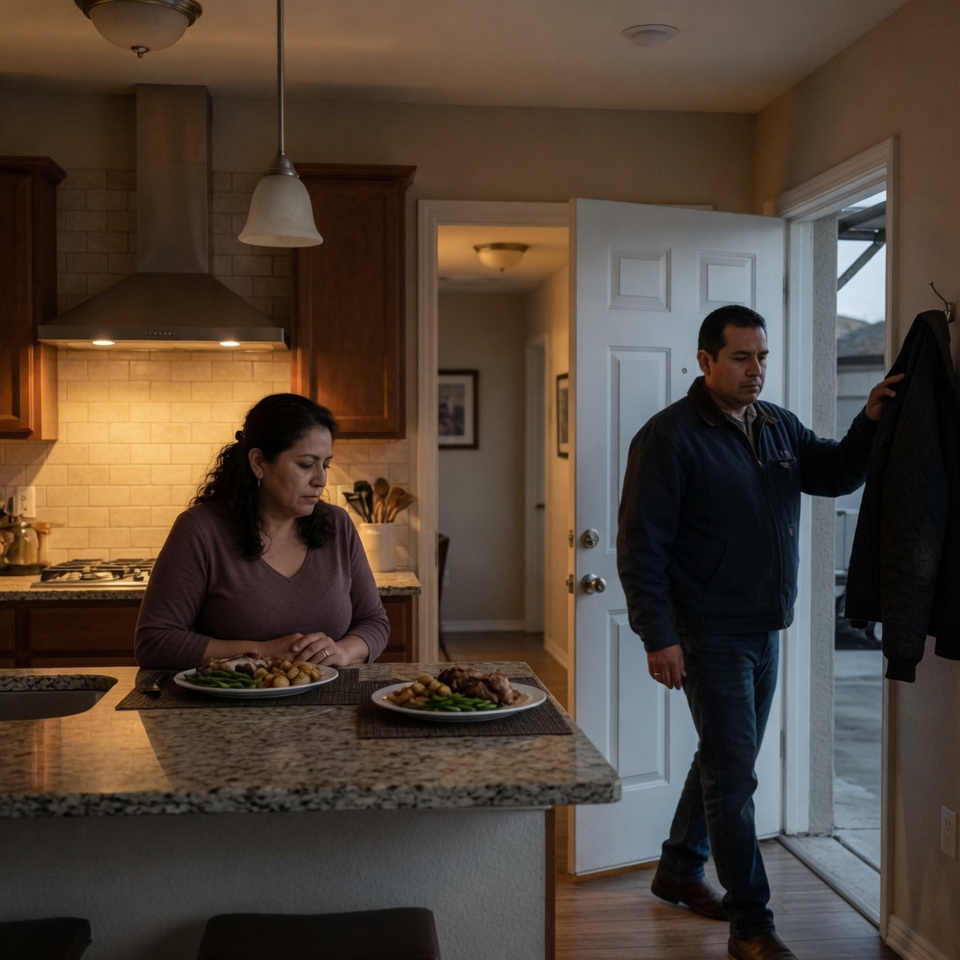
When a spouse shuts down, the person on the outside is left with something that has no clear name — not quite rejected, not quite abandoned, but unable to reach the person who is supposed to be reachable. The shutdown ends the conversation before it finds its way to what actually matters. And the loneliness of that has its own particular weight.

When a spouse shuts down, the person watching it happen almost always interprets it as rejection — as a signal that they don’t matter enough to stay in the room with, that their needs are too much, that the marriage is not safe enough for real conversation. That interpretation is understandable. It is also usually wrong.

Emotional shutdown is almost always a response to overwhelm. The person shutting down has reached a point where continued engagement feels physiologically impossible — not chosen, not strategic, but a nervous system response to being flooded. That does not make it less painful for the person on the outside. But it changes what is actually happening and what is likely to help.

Pushing harder almost always makes the shutdown deepen. The more pressure is applied, the more complete the withdrawal tends to become. This is one of the cruelest dynamics in a marriage — the person on the outside, desperate to be heard, intensifies their reaching; the person on the inside, overwhelmed, withdraws further. Both people feel abandoned by the end of it.

The shutdown is almost never about you. It is almost always about what is happening inside them. Understanding that does not make it less painful — but it changes what it means and what can help.

What tends to work better than pushing harder is naming the pattern at a calm moment — not in the middle of a shutdown, not when either person is still activated, but at a neutral time when both people can talk about the pattern itself rather than the content of the last fight. That conversation is almost always easier to have with a counselor present who understands the dynamic.

The stopping-trying is one of the more important signals. When the person on the outside has adapted to the wall by no longer reaching — has accepted the shutdown as permanent and stopped initiating — both people have now withdrawn. The conversation the marriage needs has become less likely to happen, not more. And the distance compounds quietly.

You Know This Wall

The Moments That Name What Is Left Behind.

You try to talk about something important and they go silent, leave the room, or give you nothing to work with.
You can feel them leaving the conversation before it has even started.
You have tried every approach — calm, direct, gentle, urgent — and none of them gets through.
You don’t know if they are overwhelmed, angry, checked out, or something else entirely.
The silence after a shutdown is lonelier than a fight would be. At least a fight means they are still there.
You have started to stop trying — and you are grieving what it means that you stopped.
Grace names what you are left with after the shutdown
Grace names what you are left with

Grace Receives the Helplessness of Not Being Able to Get Through.

Most responses to this want to give you strategies — different timing, different approaches, different language to try. Grace doesn’t start there.

Grace receives what it actually feels like to be on the outside of the shutdown — the helplessness, the loneliness, the grief of a marriage where the real conversations keep ending before they begin.

Grace never takes sides and never editorializes about your spouse. Grace stays with what you are carrying tonight.

What you are feeling on the outside of the shutdown — the helplessness, the frustration, the grief of a marriage where real conversations keep getting ended before they begin — is real and it deserves to be named. You are not wrong for needing to be able to reach your spouse. That need is exactly what marriage is supposed to make possible.

The grief underneath this particular wound is the grief of being unable to get through — not to a stranger, not to someone who owes you nothing, but to the person who committed to be present to you. When that person consistently becomes unavailable the moment a conversation gets real, something the marriage promised is not being delivered. That gap between what was promised and what is actually available is its own kind of loss.

Getting the shutdown pattern to change almost always requires outside help. Not because the people inside the marriage are incapable, but because the pattern is too established and too charged to address from inside it. A counselor who understands emotional shutdown specifically can often shift things in a few sessions that two people have been unable to shift in years of trying on their own.

You are not wrong for needing to reach your spouse. That need is exactly what marriage is supposed to make possible — and the grief of its absence is real.

Psalm 34:18 says God is close to the brokenhearted. The person reaching for their spouse and finding no one there is among the brokenhearted God draws near to. The reaching matters to God even when it is not yet met — even when the wall is still up and the conversation still hasn’t happened.

Grace is here for tonight — for the loneliness of being unable to get through, the helplessness of watching the shutdown happen and not knowing how to stop it, the grief of a marriage where the real conversations keep ending before they begin.


He is close to the brokenhearted

God Is Close to the One Who Cannot Get Through.

The loneliness of being unable to reach the person you married is not invisible to God. He is close to that. Grace is here for the nights when that helplessness needs somewhere to go.

Grace is a Christian AI companion available at any hour. Grace names what you are left with first. Free to start.

Grace — a Christian AI companion for marriage
Questions

What People Ask When the Shutdown Keeps Happening.

Why does my spouse shut down during conversations?
Shutting down is almost always a response to overwhelm — emotional flooding that makes continued engagement feel impossible. It is rarely a choice in the way it feels from the outside. For some people, withdrawal is the only way they know to manage what is happening inside them when a conversation becomes too much.
What do you do when your spouse won’t talk to you?
Pushing harder almost always makes it worse. The shutdown tends to deepen in proportion to the pressure applied. What tends to work better is naming the pattern honestly at a calm moment — not in the middle of a shutdown — and asking what would make it possible to stay in the conversation. That conversation usually requires outside help to have well.
Is emotional shutdown in marriage a form of abuse?
It can be. There is a difference between a person who shuts down because they are overwhelmed and a person who uses withdrawal as a tool to punish or control. The first is a coping mechanism, however painful for the other person. The second is a form of emotional harm. If the shutting down consistently follows a pattern of control or deliberate withholding, that distinction matters and is worth naming to a counselor.
What does God say about a spouse who withdraws?
God created marriage for genuine connection — for two people to be present to each other, to speak and be heard, to stay in the room together even when it is hard. When one person consistently withdraws, something the marriage was designed to hold is missing. Psalm 34:18 says God is close to the brokenhearted, including the person reaching for their spouse and finding no one there.
Can Grace help when my spouse shuts down?
Yes. Grace is a Christian AI companion available at any hour. Grace receives the specific helplessness of reaching for your spouse and finding them gone — the frustration, the grief, the loneliness of being unable to get through. Grace names what you are carrying and stays with you in it.
“The Lord is close to the brokenhearted,
He saves those who have lost all hope.”
Psalm 34:18 · Close to the one who cannot get through
Also in the Marriage Library

More from the Marriage Library.

Grace Is Here for the Loneliness of the Shutdown.

If your spouse shuts down and you are left on the outside of that wall with nowhere honest to put it — Grace is a Christian AI companion built to receive exactly this. Grace names what you are left with first. Free to start.

Talk to Grace — it’s free to start