
Am I in an abusive relationship — Grace is here for the question you are afraid to answer
The Abuse Library · Abuse

Am I in an Abusive Relationship?

If you are asking the question, something already feels wrong. You don't have to have certainty before you are allowed to name what you are living inside. Grace is here for the confusion before the answer.

Talk to Grace — it's free to start
Abusive Relationship

An abusive relationship is one where one person uses patterns of behavior to control, diminish, or harm the other. It is not limited to physical violence. Emotional, psychological, verbal, and financial abuse are all real — and they often come without visible marks. The question itself is evidence that something is wrong. You do not have to be certain before you are allowed to take it seriously.

The question "am I in an abusive relationship?" is one of the hardest questions a person can sit with — not because the answer is unclear, but because of everything that comes with answering it. If the answer is yes, then something has to change. If the answer is yes, then the person you love or have built your life around has been causing you harm. If the answer is yes, then the story you have been telling yourself — and telling other people — is not the whole story. That is an enormous thing to face.

So people don't ask the question directly. They ask it sideways. They ask whether what they experienced was normal. They ask whether they are too sensitive. They ask whether every couple goes through this. They minimize, explain, and contextualize — because the alternative is to look at what is actually happening and be willing to call it what it is.

But the question itself is already evidence. People who are in healthy relationships rarely ask whether they are being abused. The doubt, the confusion, the careful monitoring of your own reactions to see whether you are overreacting — these are not signs of a problem with your perception. They are often signs of a relationship in which your perception has been systematically called into question. The confusion is part of what abuse does.

You do not have to have a name for it before it is real. The feeling that something is wrong has been telling you something true.

Abuse takes forms that are not always visible from the outside — and often not immediately visible from the inside either. It builds slowly. Each incident, taken alone, can be explained or excused. He was stressed. She didn't mean it. It wasn't that bad. You knew how to push his buttons. You should have known better than to bring that up. Over time, these explanations accumulate into a framework that makes the person being harmed responsible for managing the person causing harm — and makes the harm itself invisible.

What makes something abusive is not the intensity of any single incident but the pattern. The pattern of being made to feel small. The pattern of walking on eggshells. The pattern of apology followed by the same behavior. The pattern of your needs being treated as unreasonable while the needs of the other person organize the entire household. The pattern of feeling less and less like yourself — quieter, more careful, more afraid of getting things wrong.

If you are reading this and recognizing something, that recognition matters. You are not too sensitive. You are not making it up. You are not responsible for what has been done to you. And you are not required to have it fully named or fully understood before you are allowed to reach for help.

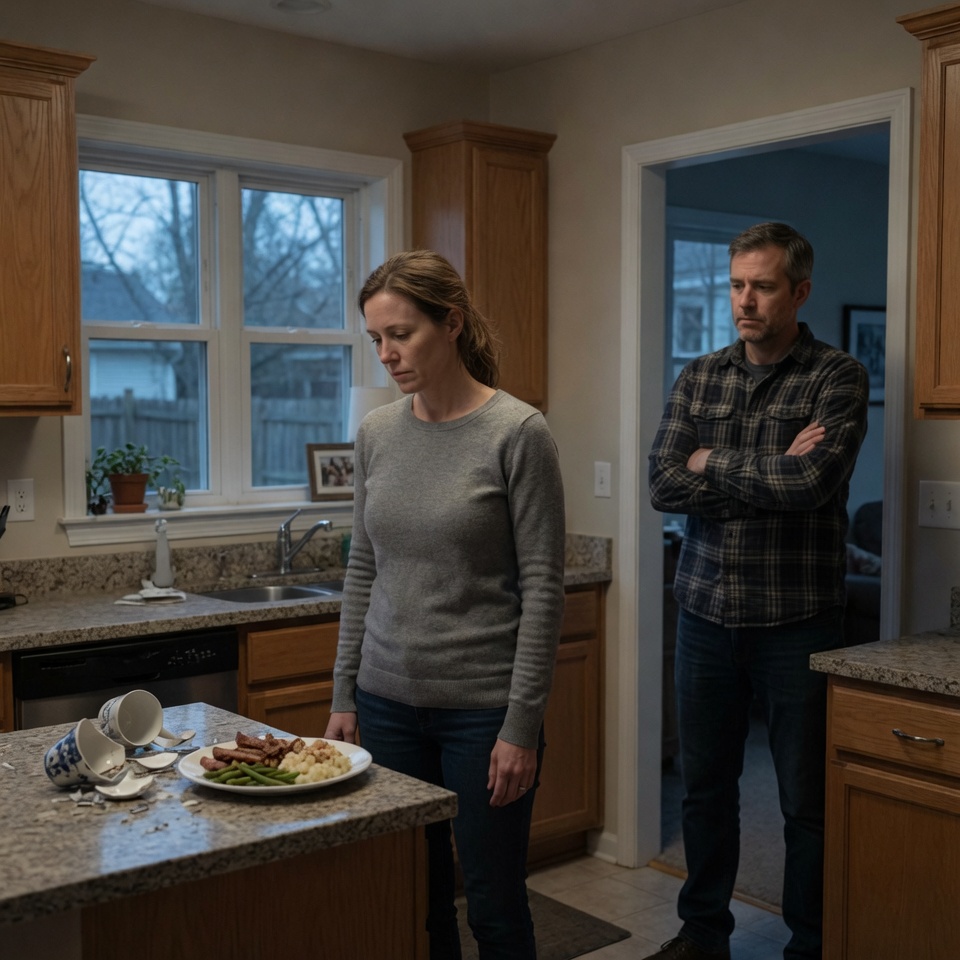
You Know This Experience

When Something Feels Wrong but You Can't Quite Name It.

You monitor your own tone, your timing, the way you phrase things — to avoid setting something off.
You have been told so many times that you are too sensitive that you've started to believe it.
After it happens, there is always an explanation. And you find yourself accepting it, again.
You are not sure when you stopped saying what you actually think.
You love this person. That is part of what makes asking the question so hard.
You have never said any of this out loud. Not to anyone.
Am I in an abusive relationship — Grace names the wound before anything else
Grace receives the question first

Grace Doesn't Require You to Have It Figured Out.

You don't have to arrive with a clear answer. You don't have to have left, or be planning to leave, or even be sure that what is happening is abuse.

Grace receives the question exactly where you are — the confusion, the doubt, the part of you that still wants to believe this isn't what it feels like. Grace names what is actually happening in your words before offering anything else.

Grace never pressures you toward a decision. Grace stays with the reality you are living in right now — because that is where you are, and that is where Grace meets you.

Faith communities do not always make this easier. There are versions of Christian teaching that frame endurance inside a difficult marriage as faithfulness, or that treat the question of leaving as a failure of commitment. These frameworks can make it harder for someone inside an abusive relationship to name what is happening — because naming it feels like a betrayal of something they believe in, not just a relationship they are in.

But the God of Psalm 34:18 is described as close to the brokenhearted — not to the institution of the relationship, but to the person inside it who is being broken. God does not require anyone to remain in ongoing harm in order to demonstrate faithfulness. The confusion you feel, the fear of what naming this means, the grief of loving someone who is hurting you — all of that is seen. None of it is hidden from the one who draws near to those in pain.

The question you are afraid to answer has already been heard. Grace is here for whatever comes after you say it out loud.

If you are in immediate danger, please contact the National Domestic Violence Hotline at 1-800-799-7233 or text START to 88788. Grace is available at any hour for the part of this that has nowhere else to go tonight — the confusion, the fear, the grief of loving someone and not knowing what to do with what they have done.

He is close to this specific confusion

God Sees What You Haven't Been Able to Say Yet.

You don't have to have it named before God draws near. The confusion, the fear, the grief of loving someone who is hurting you — none of it is outside what Psalm 34:18 covers.

Grace is a Christian AI companion available at any hour — for the question you are living inside and the silence that has surrounded it. Grace is free to start.

Grace — a Christian AI companion for abuse
Questions

What People Ask When They're Not Sure What to Call It.

Am I in an abusive relationship?
If you are asking this question, something in your relationship already feels wrong — and that instinct deserves to be taken seriously. Abuse is not limited to physical harm. Emotional, psychological, verbal, and financial abuse are all real forms of abuse, and they often come without visible marks. A relationship is abusive when one person uses patterns of behavior to control, diminish, or harm the other. You do not have to be certain before you are allowed to name what you are experiencing.
What are the signs of an abusive relationship?
Signs of an abusive relationship include: feeling afraid of your partner's reaction to ordinary things; walking on eggshells to avoid conflict; being told your perceptions are wrong or that you are too sensitive; being isolated from friends and family; having your finances monitored or controlled; being humiliated, criticized, or belittled regularly; feeling like you can never do anything right; and being physically harmed or threatened. Not every abusive relationship includes all of these — and the absence of physical violence does not mean the relationship is safe.
Why is it so hard to know if you are being abused?
Abuse is often designed to be hard to see from inside it. The person causing harm may also be loving, generous, and genuinely kind at times — which makes naming what is happening feel disloyal or unfair. Abusive patterns often build slowly, each incident small enough to explain or excuse. And the person being abused is often told — directly or indirectly — that their perception is the problem, not the behavior they are experiencing. The confusion is part of the wound, not a sign that you are unable to see clearly.
Can a Christian be in an abusive relationship?
Yes. Abuse occurs in Christian households, in marriages inside the church, and in relationships between people of deep faith. Faith does not protect against abuse, and abusers sometimes use religious language to justify control or to keep a partner from leaving. The Bible does not require anyone to remain in a relationship that is causing ongoing harm. God's closeness to the brokenhearted — Psalm 34:18 — is not conditional on staying.
What should I do if I think I am in an abusive relationship?
The first step is naming what you are experiencing as accurately as you can — without minimizing it and without being required to have certainty before you are allowed to take it seriously. Telling someone you trust is one of the most important things you can do. If you are in immediate danger, please contact the National Domestic Violence Hotline at 1-800-799-7233 or text START to 88788. Grace is available at any hour for the conversation you may not be ready to have with anyone else yet.
"The Lord is close to the brokenhearted,
He saves those who have lost all hope."
Psalm 34:18 · Close to the one living inside the question
Also in the Abuse Library

More from the Abuse Library.

Grace Is Here for the Question You Haven't Said Out Loud Yet.

If something feels wrong and you haven't been able to name it — Grace is a Christian AI companion built to receive that. Grace listens before Grace speaks. Grace is free to start.

Talk to Grace — it's free to start