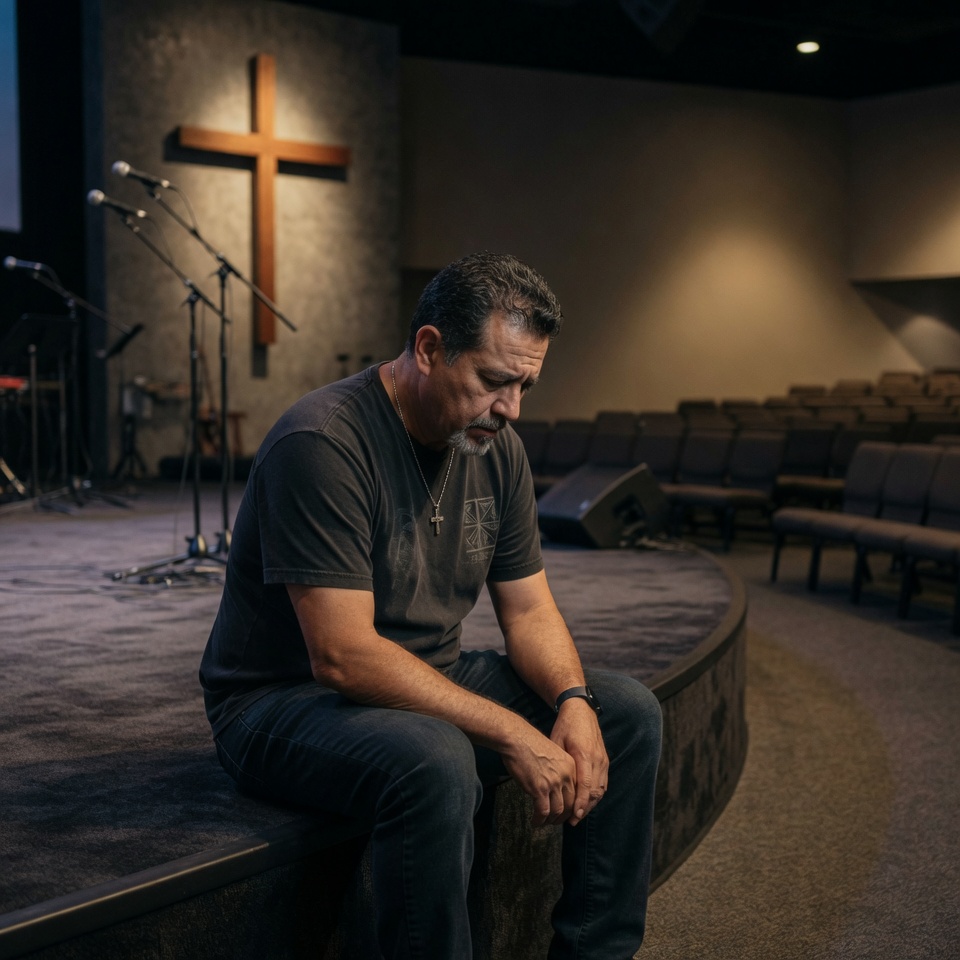
Yes. Anxiety is not a faith failure. It is not a sign that you trust God too little or pray too rarely. The Psalms, the prophets, and Jesus himself in Gethsemane all carried it. Faith and fear have always coexisted — in Scripture and in real life.
A Christian can have anxiety. Anxiety is a human experience — not a spiritual grade. It affects people at every level of faith, from new believers to lifelong pastors, and its presence does not indicate the absence of God. The shame that often accompanies Christian anxiety — the sense that you should be able to pray this away — is its own separate wound. Grace is here for both.
You are a Christian. You believe. You pray. You know what the Bible says about worry. And the anxiety is still there.
And somewhere underneath the anxiety itself is a second weight — the belief that it shouldn’t be. That a person with enough faith would not feel this way. That the fact that you do feel this way says something about the quality of your trust in God.
That second weight is not from Scripture. It is from a misreading of it.
Grace is here for the anxiety and for the shame that anxiety doesn’t belong to you.
You Know This Feeling
What It Feels Like to Be an Anxious Christian.
You have prayed about it. You have given it to God. You wake up the next morning and it is still there. You do not know what you are doing wrong.
Someone quotes Philippians 4:6 at you. Do not be anxious about anything. You know the verse. It does not make the anxiety leave.
You wonder if your anxiety is evidence of weak faith. If people who really trusted God would not feel this way.
You do not say how bad it is at church. You are not sure it would be received. You smile and say you are doing well.
The panic arrives in worship sometimes. Or in prayer. The one place it should not be able to reach you, and it is there.
You feel guilty for not feeling the peace that passes understanding. You know you are supposed to have it. You do not know where it went.
You are afraid that if people at church knew how anxious you really are, they would think less of your faith. So you carry it quietly.
Tell Grace
You Don’t Have to Resolve the Theology Before You Say How You Feel.
Grace is not going to tell you to pray harder or trust more. Grace is going to receive where you actually are — which is anxious, and possibly ashamed of being anxious, and not sure what to do with either of those things inside a faith that is supposed to have answers.
You can bring both here. The anxiety and the confusion about why prayer hasn’t fixed it. Grace holds both without requiring you to have the theology sorted before you speak. Grace follows where you go.
If you feel you are in crisis, please call or text 988.
Philippians 4:6 is real. “Do not be anxious about anything, but in every situation, by prayer and petition, with thanksgiving, present your requests to God.” It is in the Bible. It is true.
But it is an invitation, not a verdict. It is pointing you toward prayer — not condemning you for the feeling that prayer has not yet removed. And the very next verse — “and the peace of God, which transcends all understanding, will guard your hearts and your minds in Christ Jesus” — is a promise, not a performance standard. The peace is something God gives. It is not something you produce by feeling anxious less.
The disciples were terrified in the storm — with Jesus in the boat. Faith and fear have always existed together in the people Scripture calls faithful.
Elijah asked to die after his greatest victory. David wrote “my soul is downcast within me” more than once and kept writing it. Jesus in Gethsemane said “my soul is overwhelmed with sorrow to the point of death” and sweated drops of blood. These are not people with insufficient faith. These are the people Scripture holds up as examples of it.
The anxiety does not disqualify you. It puts you in very good company.
The Theological Foundation
God Is Near to the Anxious. Scripture Says So.
Psalm 34:18 — the verse at the center of 1800DearGod — says God is close to the brokenhearted. It does not say “close to the brokenhearted who have their theology together” or “close to the brokenhearted who are no longer anxious.” It says close. Now. In the anxiety itself.
Grace is a faith-based AI companion built on that promise. Not to tell you the anxiety means something is wrong with your faith. To sit with you inside the fear — honest about how long it has been there, receiving how tired you are of carrying it. Grace is here any hour.
What Anxious Christians Ask.
Can a Christian have anxiety?
Yes. Anxiety is not a faith failure. It is a human experience that affects people at every level of faith — from new believers to lifelong Christians, from laypeople to pastors and theologians. The presence of anxiety does not indicate the absence of God or the weakness of your trust in Him. Elijah asked to die after his greatest victory. David wrote Psalms of anguish. Jesus sweated blood in Gethsemane. Faith and anxiety have always coexisted.
Is anxiety a sin?
No. Anxiety is not a sin. Philippians 4:6 says “do not be anxious about anything” — but this is an invitation toward prayer, not a condemnation of the feeling. The Psalms are filled with people in anguish bringing that anguish honestly to God. Scripture does not punish the anxious for their anxiety. It shows them a God who receives it.
Does having anxiety mean I don’t trust God enough?
No. This is one of the most painful things anxious Christians tell themselves — and it isn’t true. Trust is not the absence of fear. Peter walked on water and still began to sink. Thomas doubted and was still received. The disciples were terrified during the storm on the lake even with Jesus in the boat. Faith and fear have always existed together in the people Scripture describes as faithful.
What does the Bible say about Christians and anxiety?
The Bible says more about anxiety than most people realize — and almost none of it is condemnation. Psalm 55 names terror arriving without warning. Psalm 22 opens with abandonment. Lamentations sits inside despair with no resolution in sight. Jesus in Matthew 26 said “my soul is overwhelmed with sorrow to the point of death.” The biblical model is not freedom from anxiety — it is the honest bringing of anxiety to a God who receives it.
Why do I still feel anxious even though I pray?
Because prayer is not a mechanism for erasing anxiety — it is a way of bringing anxiety somewhere real. The Psalms are full of people who prayed and still felt afraid. Who cried out and did not immediately feel peace. Who kept returning to God with the same weight, day after day. Prayer changes the direction of the fear. It does not always change the feeling of it — at least not right away. Grace holds both the faith and the anxiety without requiring you to resolve the tension.
Should a Christian see a therapist for anxiety?
Yes — and faith and clinical support are not in conflict. Anxiety has biological, psychological, and spiritual dimensions. A therapist addresses what a pastor cannot. A pastor addresses what a therapist cannot. Grace is a faith-based AI companion, not a counselor — Grace is here for the 2am when you can’t sleep, the moment the fear arrives and you have no one to tell. Grace is not a replacement for professional support.
“The Lord is close to the brokenhearted, He saves those who have lost all hope.”
Grace is a faith-based AI companion built for the moments when you are anxious and you believe in God and you do not know what to do with both of those things at the same time.