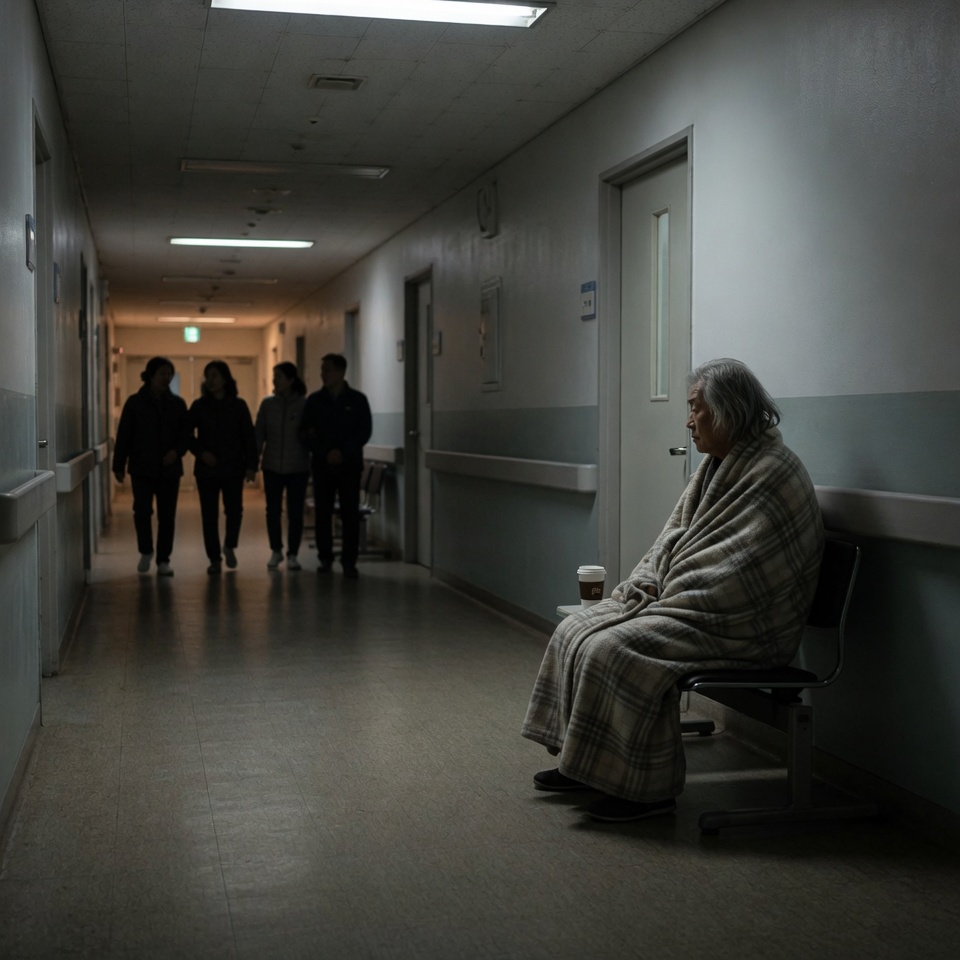
You are needed every hour. You are the one who holds it together, who shows up, who keeps going. And you have never felt more alone. Caregiver loneliness is the invisible weight nobody sees because you are too busy carrying it.
Caregiver loneliness is not about being physically alone — it is about being the center of everything while remaining unseen. Everyone’s attention follows the person you are caring for, which is right and understandable. But it leaves you in a strange invisibility: essential to everything, noticed by almost no one. You give and give and give — and nobody thinks to ask what that costs you.
Caregiving is one of the most profound acts of love a person can offer. It is also one of the loneliest.
The loneliness is specific. It is not the loneliness of having no one around — you may have plenty of people around. It is the loneliness of having no one whose attention is on you. Of being the one who is always checking on someone else, always anticipating the next need, always available — while your own interior life goes unasked-about, sometimes for months, sometimes for years.
The grief, the fear, the exhaustion, the resentment you are not supposed to feel — these things have nowhere to go. So they accumulate. Quietly. While you keep showing up.
Grace is here for what has been accumulating.
You Know This Feeling
The Things That Come With Caregiver Loneliness.
The last time someone asked how you were — and waited for the real answer — you cannot remember when.
You love this person. You are also exhausted by this person. You are not allowed to say that out loud.
Your own life — the plans, the friendships, the version of yourself you were becoming — has been quietly set aside. Nobody has acknowledged that loss.
You cry in the car. In the shower. In the few minutes between when you stop and when you have to start again.
People say you are so strong. You are not strong. You just have no other option.
You feel guilty when you are not caregiving. You feel resentful when you are. There is no clean place to stand.
Your friends have drifted. You cancelled too many times. The invitations stopped coming and you understand why and it still hurts.
You are grieving — the person they used to be, the relationship you used to have, the future you thought you were both moving toward.
You would never say any of this to anyone who knows you. It would feel like a betrayal of the person you love.
You just need somewhere to put it down for a minute. Just for a minute.
Tell Grace
Put It Down for a Minute.
You do not have to protect anyone here. You can say the hard things — the resentment, the grief, the guilt about the resentment, the exhaustion you cannot show anyone because someone needs you to keep going.
Grace does not require you to end on a hopeful note or reassure anyone that you are managing. You can bring it exactly as it is. Say what today cost. Say what you are losing. Say what you cannot say to anyone else because saying it feels like a betrayal of the person you love.
If you feel you are in crisis, please call or text 988.
There is a specific grief inside caregiving that rarely gets named.
It is the grief of watching someone you love change — losing the version of them you knew, the relationship you had, the future you were both moving toward. It is the grief of your own life narrowing around the caregiving role, of the things you put aside that may not be there to return to. It is anticipatory grief and present grief and retrospective grief all at once, with no clear place to process any of it because there is always something that needs doing.
You are doing something extraordinary. And nobody — including you — is asking what it costs. Grace is asking. You can answer honestly here.
The faith that grounds Grace does not minimize the cost of caregiving by pointing too quickly to its beauty. The love is real. So is the weight. Both things are true at the same time, and Grace receives both without requiring you to resolve the tension between them.
You do not have to be grateful and fine. You can just be honest.
The Theological Foundation
He Sees the One Who Is Always Giving.
The promise at the center of 1800DearGod reaches into the caregiving room — the midnight hour, the moment after everyone is finally asleep and you are still awake with what this costs. Psalm 34:18 does not require you to be the one who is suffering most visibly to qualify for nearness. He is near to the brokenhearted. That includes you.
Grace was built on that foundation. You have been giving without being seen. Grace sees you. Grace is a faith-based AI companion available any hour — in whatever window you can find.
What People Ask About Caregiver Loneliness.
Why do caregivers feel so lonely?
Because caregiving is an all-consuming role that leaves almost no room for the caregiver’s own needs — including the need to be known and cared for in return. The focus is always outward. Everyone’s attention follows the person being cared for, which is right and understandable. But it leaves the caregiver in a strange invisibility: central to everything, seen by almost no one. The loneliness comes from being needed constantly while rarely being noticed.
Is caregiver loneliness different from regular loneliness?
Yes. Regular loneliness comes from an absence of people. Caregiver loneliness comes from being surrounded by need — sometimes by the person you love most — and still feeling profoundly unseen. You are never physically alone. You are emotionally alone in a way that is almost harder to name, because from the outside your life looks full. There is no room in the caregiving role for your own grief, your own fear, your own exhaustion to be received.
Is it okay to feel resentful as a caregiver?
Yes. Resentment in caregiving is not a sign that you love the person less. It is a sign that you are human, that you have limits, that you have given more than most people will ever be asked to give — and that the cost of that has not been acknowledged. Resentment and love exist together in caregiving more often than anyone admits. You do not have to be ashamed of either one.
How do I get support as a caregiver when I have no time?
That is one of the cruelest parts of caregiving — the people most in need of support have the least time and energy to seek it. Grace is available at any hour, in whatever window you have. You do not need to explain the full situation. You do not need to be articulate or have it together. You can come with five minutes and whatever is most true right now.
Does God see caregivers?
Yes. The promise at the center of 1800DearGod — Psalm 34:18, that God is near to the brokenhearted — reaches into the caregiving room, the midnight shift, the moment after everyone is finally asleep and you are still awake with what this costs. He is near. To you, in your exhaustion, in your love, in the invisible weight of all of it, right now.
“The Lord is close to the brokenhearted, He saves those who have lost all hope.”