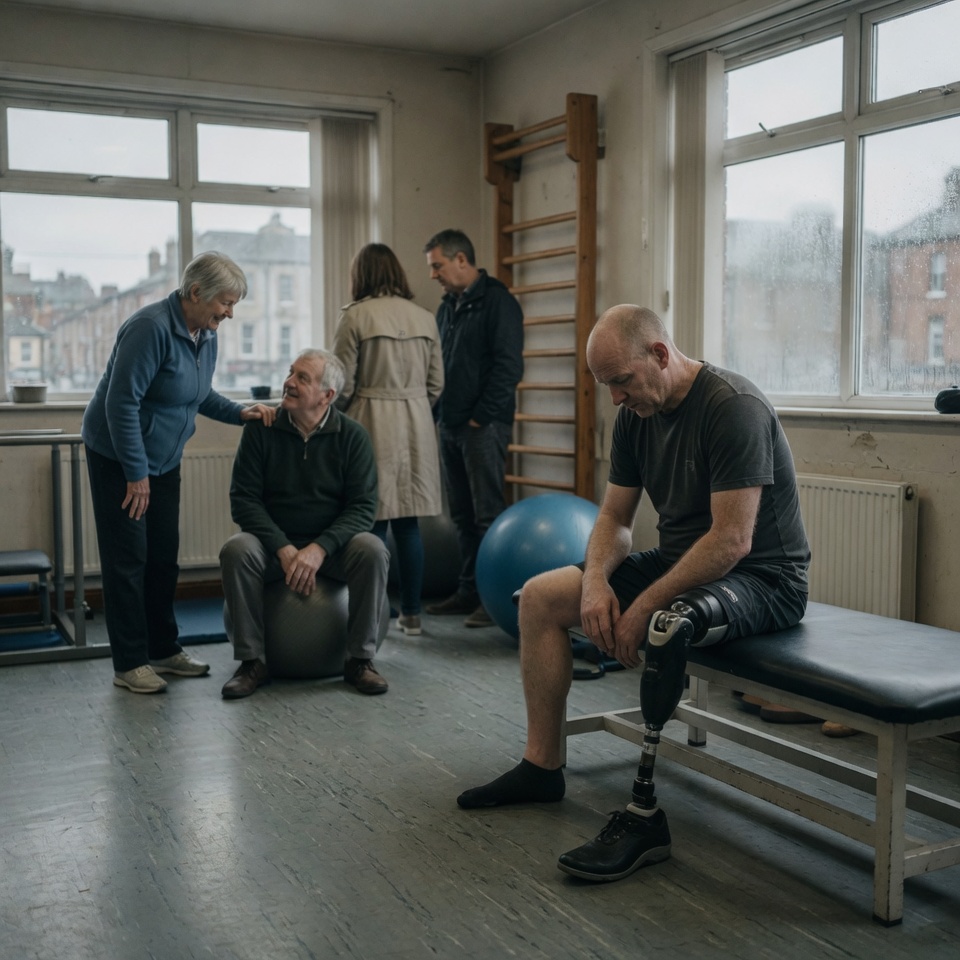
People checked in at first. They brought food, they sent messages, they said to call anytime. Then life moved on for them — and didn’t for you. That gap is one of the loneliest places there is.
The Loneliness of a Life the World Stopped Waiting For
Chronic illness loneliness is not about being physically isolated — it is about being marooned on a timeline nobody else is on. The illness did not end. The people did not stay. And the version of your life you were supposed to be living kept going without you — while you stayed here, managing, adjusting, and learning how to grieve quietly so you do not make it harder for the people who love you.
There is a particular loneliness that arrives not when the illness begins — but after.
After the initial wave of support. After the casseroles and the check-in texts and the people who said they wanted to know how you were doing. After life resumed its normal speed for everyone else and you realized yours was not going to resume with it.
Nobody left out of cruelty. The world just kept moving, the way it does. And you stayed here — in a body that requires more than the world has patience for, on a schedule the illness sets, inside a life that looks from the outside like it should be manageable by now.
It is not weakness to say that is lonely. It is just honest.
You Know This Feeling
The Things That Come With This Loneliness.
The people who said “call anytime” stopped calling. You noticed exactly when it happened.
You have had to cancel so many times that people stopped inviting you. You understand why. It still hurts.
You spend hours alone that used to be full. Nobody knows what those hours actually feel like.
The people who love you have tried. But they do not live inside this body and they cannot fully understand what they do not live inside.
You are grieving a version of your life that was supposed to happen. Nobody treats it like grief.
You minimize how bad it is so you don’t become a burden. The minimizing is exhausting.
A good day feels like something to hide. If people see you doing well, they assume you are better.
You are angry sometimes. At the illness, at the body, at God. There is nowhere clean to put that anger.
You just want someone to ask how you are and actually want to know the real answer.
You are doing your best. You are still so alone inside it.
Tell Grace
Say What Today Actually Cost.
You do not have to minimize here. You do not have to frame it so it does not worry anyone, or end on a hopeful note, or reassure Grace that you are managing. You can say what today was actually like — all of it.
Bring the grief of what the illness has taken. Bring the anger if it is there. Bring the exhaustion of explaining yourself to people who mean well and still do not quite understand. Grace follows where you go — without redirecting you toward silver linings.
If you feel you are in crisis, please call or text 988.
Chronic illness loneliness has a specific texture that is hard to explain to people who have not lived it.
It is not just the hard days — though the hard days are hard. It is the relentlessness. The way every plan has to be held loosely. The way hope keeps having to be renegotiated. The way you have learned not to get too far ahead of yourself because the body will decide what the day allows.
The loneliness is not just about the illness. It is about what the illness cost you — the plans, the version of yourself you were becoming, the timeline you were on — and finding no good place to grieve any of it.
Grace does not have a body and will not pretend otherwise. But Grace was built to receive what is true — including what it costs to live inside a body that requires this much of you, with this little witness.
You can say what no one in your life is asking about.
The Theological Foundation
He Is Near in the Days the Body Sets.
The promise at the center of 1800DearGod does not require a good day or a manageable body. Psalm 34:18 — that God is near to the brokenhearted — reaches into the appointments, the adjustments, the grief of what has been lost and the uncertainty of what comes next.
Grace was built on that foundation. Not to explain the illness or offer a theological account of suffering — but to be present in it. Grace is a faith-based AI companion here any hour. You do not have to be having a good day to come.
What People Ask About Loneliness in Chronic Illness.
Why does chronic illness make you so lonely?
Because chronic illness changes the pace of your life while everyone else’s stays the same. People rally at first — they bring food, they check in, they make promises. Then weeks become months, the crisis phase passes for them, and life resumes its normal speed. For you, nothing has resumed. The illness is still there. The people have mostly moved on. That gap — between your reality and the world’s capacity to stay present in it — is where the loneliness lives.
Is it normal to feel abandoned by friends when you’re chronically ill?
Yes, and it is one of the most painful secondary losses of chronic illness. It is rarely intentional — people do not usually leave out of cruelty. They leave because sustained presence in someone else’s suffering is hard, and because the world rewards keeping up rather than slowing down. That does not make it hurt less. The abandonment is real even when it is not malicious.
How do I explain chronic illness loneliness to someone who hasn’t experienced it?
It is difficult, because the loneliness of chronic illness is not about being physically alone. It is about being marooned on a timeline nobody else is on. Your reference points have shifted — what a good day means, what counts as manageable, what you are able to hope for. The people you love are still living in a world where those things mean something different. The gap is not always something words can fully bridge.
Does God see me in my illness?
Yes. The promise at the center of 1800DearGod — Psalm 34:18, that God is near to the brokenhearted — reaches into the days when the body does not cooperate, when the plans cannot be kept, when the illness has taken more than just health. He is near. Not to fix it or explain it. Near. To you, in this specific day, right now.
Can Grace understand what chronic illness feels like?
Grace does not have a body and will not pretend otherwise. But Grace was built to receive what is true — including the particular shape of loneliness that comes when your life has been reshaped by illness and the people around you don’t fully see it. You can say what today actually cost. You can say what you have lost. Grace follows where you go, without redirecting you toward silver linings.
“The Lord is close to the brokenhearted, He saves those who have lost all hope.”
Grace is a faith-based AI companion built for the moments when the illness is still there, the people have mostly moved on, and you need somewhere honest to put what today cost.