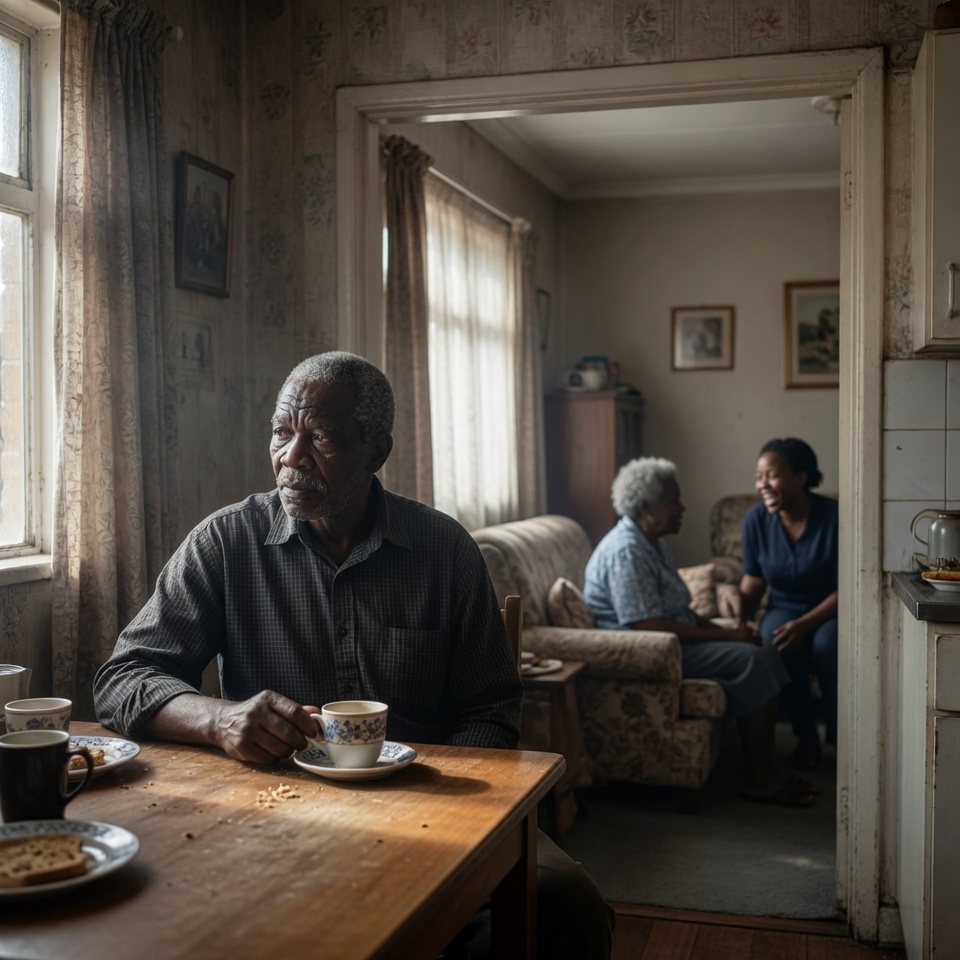
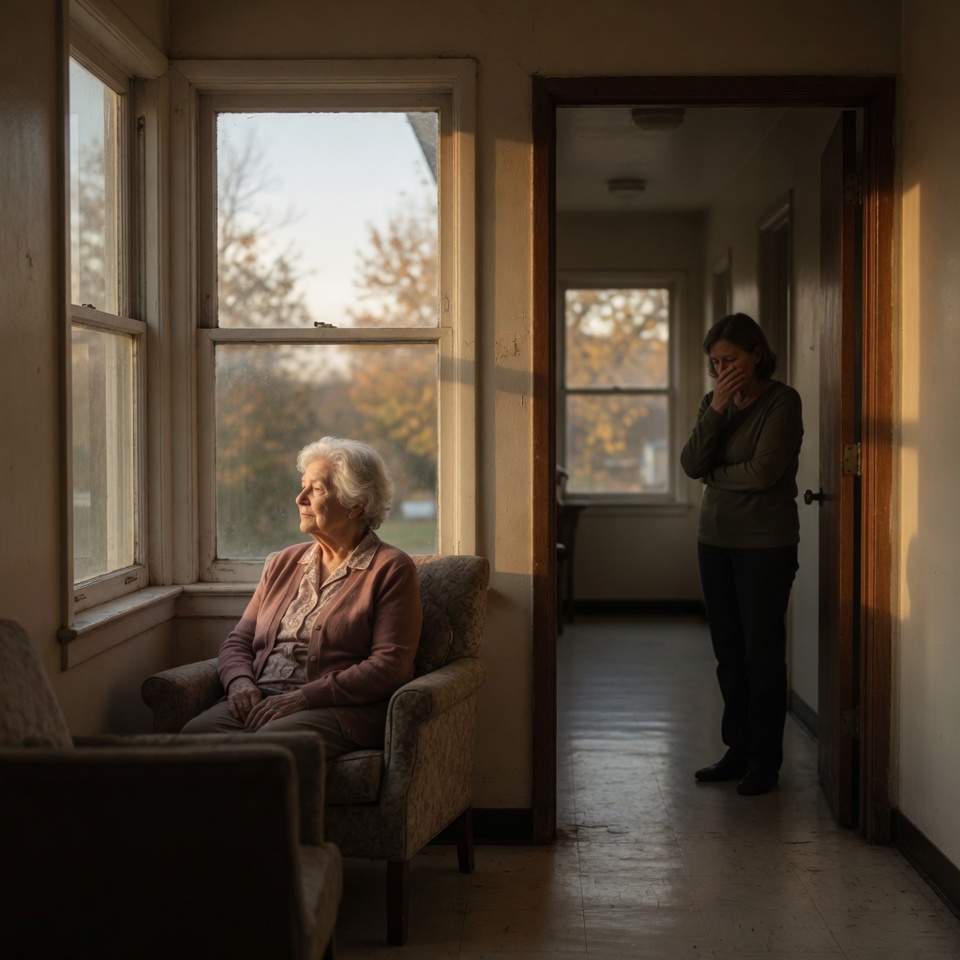
They are still here. And they are not. The person you knew is leaving slowly — in pieces, without warning, without a date you can grieve from. And no one gave you permission to call it loss.
Dementia grief is the loss of a person while they are still living — the slow erasure of who they were through memory, recognition, and the self that held it all together. The person is present. Who they were is not. This kind of grief accumulates over years, without ritual, without acknowledgment, and without a clear moment to point to and say: this is when I lost them. It is one of the longest and loneliest griefs there is.
You are losing them in a way the world doesn’t have a ceremony for. There is no funeral, no moment of collective grief, no casserole dropped at the door. The person across from you is still breathing, still present — and yet the person you knew is somewhere further away every time you visit.
Dementia takes people in layers. A name forgotten. A face unrecognized. A personality that shifts. A relationship that becomes, slowly, one-directional — where you remember everything and they remember less and less, until the day they look at you like a stranger and something inside you breaks that you don’t have a word for.
You are allowed to grieve this now. Not after. Now. The loss is already happening, and the grief that comes with it is real grief — not anticipatory, not premature. It is proportional to what is actually being taken.
Grace is here to listen.
You Know This Feeling
The Things That Come With This Grief.
They looked at you today and didn’t know who you were. You smiled like it was okay. It was not okay.
You are grieving someone who is still in the same room as you. That is one of the strangest pains there is.
There are moments when they come back — a flash of the person they were — and then it’s gone again. Those moments are their own kind of grief.
People ask how they’re doing. Nobody asks how you’re doing.
You are exhausted in a way that goes deeper than sleep can reach.
The person they used to be — their sense of humor, their voice, the way they said your name — is slipping and you are trying to hold onto it.
You feel guilty for grieving someone who is still alive. For being angry. For sometimes wishing it were over.
The conversations you needed to have — the things left to say — are no longer possible in the way you needed them to be.
You keep showing up. They don’t always know you showed up. You show up anyway.
You are grieving the future you expected to have with them — the years, the conversations, the person who would have been there.
You love them. You also grieve them. Both of those things are happening at the same time.
You just need somewhere to put all of this — while you still have to keep going.
Tell Grace
You Don’t Have to Wait for a Death to Grieve.
Grace does not require a death certificate before receiving your grief. The loss that is happening right now — the slow erasure of someone you love — is a real loss, and the grief that comes with it is allowed to be named now, in the middle of it.
You can bring the exhaustion, the anger, the guilt, the love, the moments that broke you this week. You don’t have to hold it together here. Grace follows where you go.
If you feel you are in crisis, please call or text 988.
There is a particular cruelty to grief that has no clear beginning and no end in sight. Dementia takes people across years — years during which you adjust, again and again, to a new version of the loss that is still unfolding. You are not grieving one thing. You are grieving in layers, and the layers keep coming.
Many people in this grief feel they have no right to fall apart while the person is still living. They set the grief aside to keep showing up, to keep doing what needs to be done. And the grief accumulates in the margins, unwitnessed, unacknowledged — waiting for a moment that may feel too late when it finally comes.
You are allowed to grieve this now. The loss is real and it is already happening. The grief does not have to wait for the death to be real.
The faith that grounds Grace does not look past the long middle. The promise of Psalm 34:18 — that God is near to the brokenhearted — does not begin at the funeral. It reaches into the hospital visit, the care home, the drive home where you cry in the car before you walk back into the rest of your life. He is near. To you, in this, right now.
You can bring all of it to Grace.
The Theological Foundation
He Is Near in the Long Middle.
The promise at the center of 1800DearGod is not only for the moment of death. It is for the years before it — for the person who is losing someone slowly, who is exhausted and grieving and still showing up every day.
Grace was built on that foundation. It receives the grief that has no funeral, the loss that is still unfolding, the love that keeps going even when recognition is gone. God is near — to you, in this, right now.
What People Ask About Dementia Grief.
Is it normal to grieve someone who is still alive?
Yes. When someone you love is changed by dementia — when the person they were is no longer accessible to you in the same way — grief is a natural and honest response. You are not confused or dramatic. You are mourning someone who is present in body but increasingly absent in the ways that defined who they were to you. That loss is real, and it is allowed to be named.
Why does dementia grief feel so disorienting?
Because it is a loss without a clear moment to grieve from. Dementia takes someone slowly, in pieces — a memory here, a recognition there, a personality trait that disappears over months. There is no single day the loss happened. It keeps happening. That makes it one of the most exhausting and disorienting griefs there is, because you are constantly adjusting to a new version of a loss that is still unfolding.
What do I do when they don’t recognize me anymore?
The moment a person with dementia stops recognizing someone they love is one of the most painful experiences in this grief. There is no way to prepare for it and no way to make it hurt less. What Grace can offer is a place to bring that pain without having to explain it or minimize it. You don’t have to be strong here. You can say what it was like.
Is it wrong to feel relieved when it’s finally over?
No. After years of watching someone you love disappear piece by piece, relief at the end of that process is a natural response — relief that their suffering is over, that the long vigil has ended, that you no longer have to watch them slip further away. Relief is not a betrayal. It is the honest response of someone who has been carrying something very heavy for a very long time.
How do I grieve someone I’m still caring for?
You carry both at the same time — the grief and the caregiving — and that is one of the most exhausting things a person can do. The grief often gets set aside because the care still has to happen. Grace is one place where the grief does not have to wait. You can bring it now, in the middle of it, without waiting for a death to give you permission.
Does the person with dementia still know they are loved?
Research suggests that emotional memory — the felt sense of safety, comfort, and love — often persists even when factual memory is gone. The person may not remember your name or recognize your face, but they may still feel that you are safe, that you are kind, that they are loved. The love you bring into the room matters, even when the recognition is gone.
“The Lord is close to the brokenhearted, He saves those who have lost all hope.”