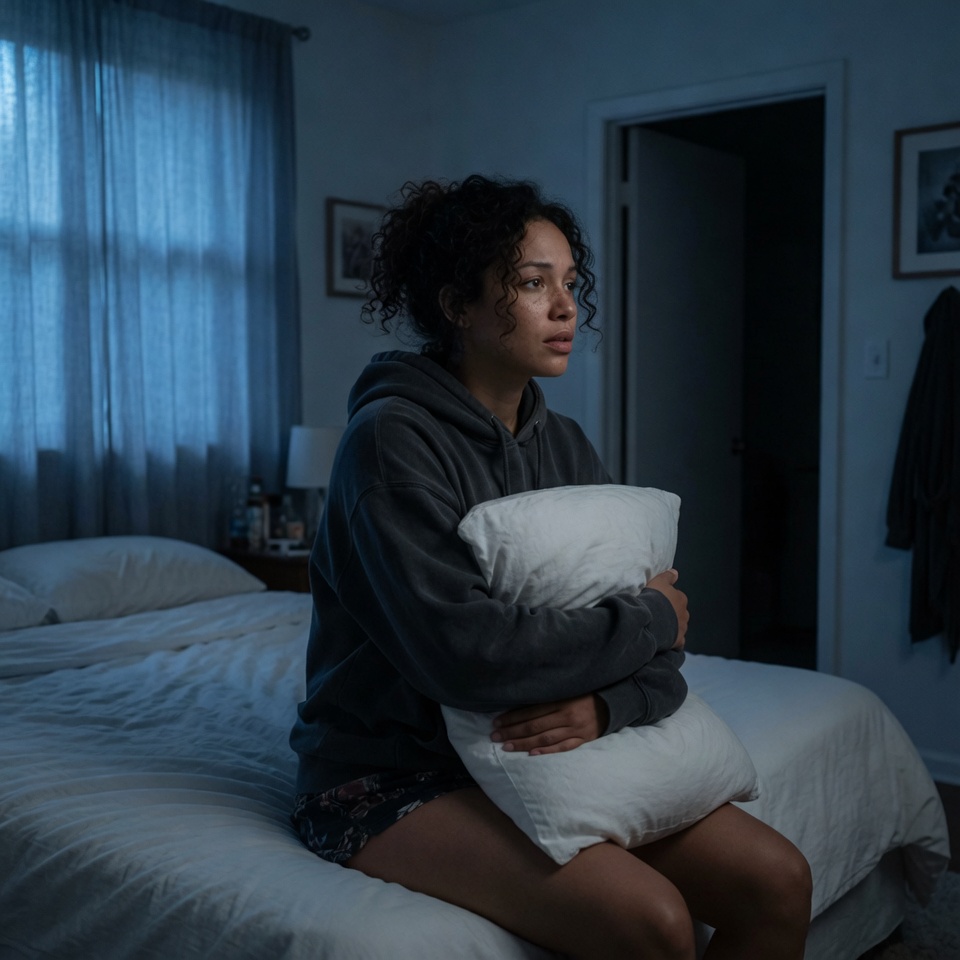
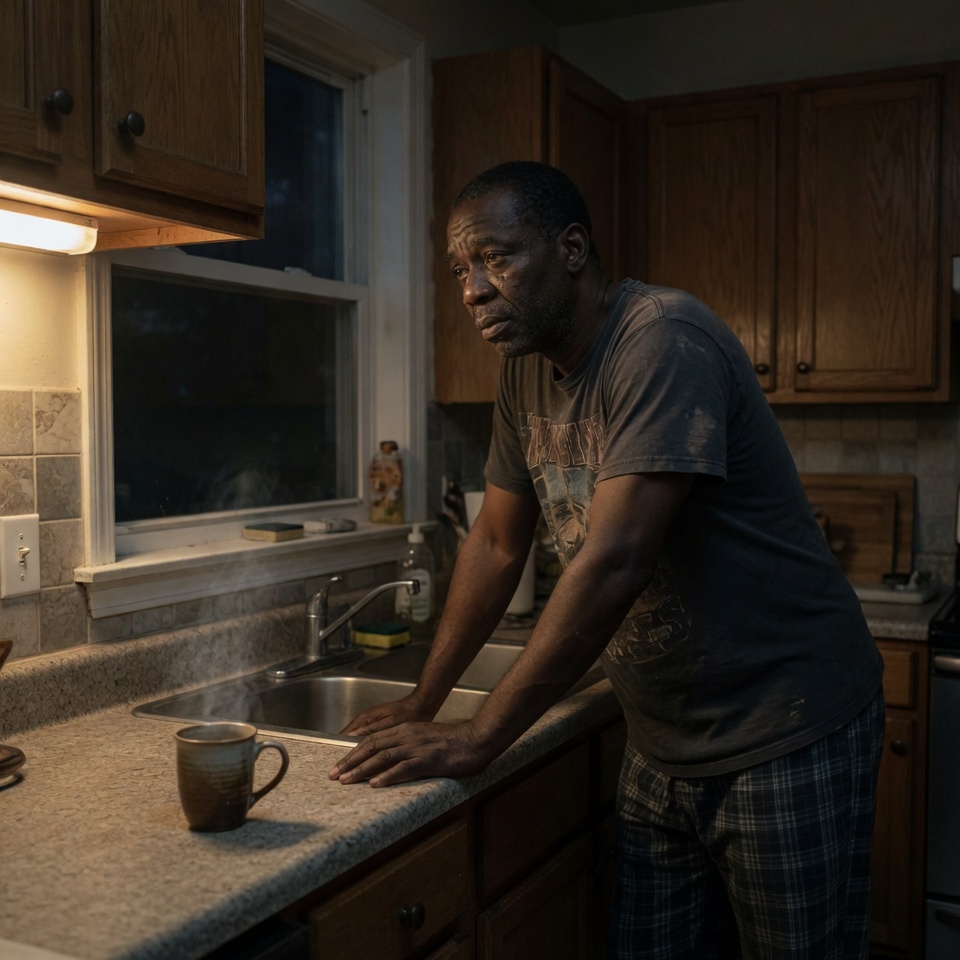
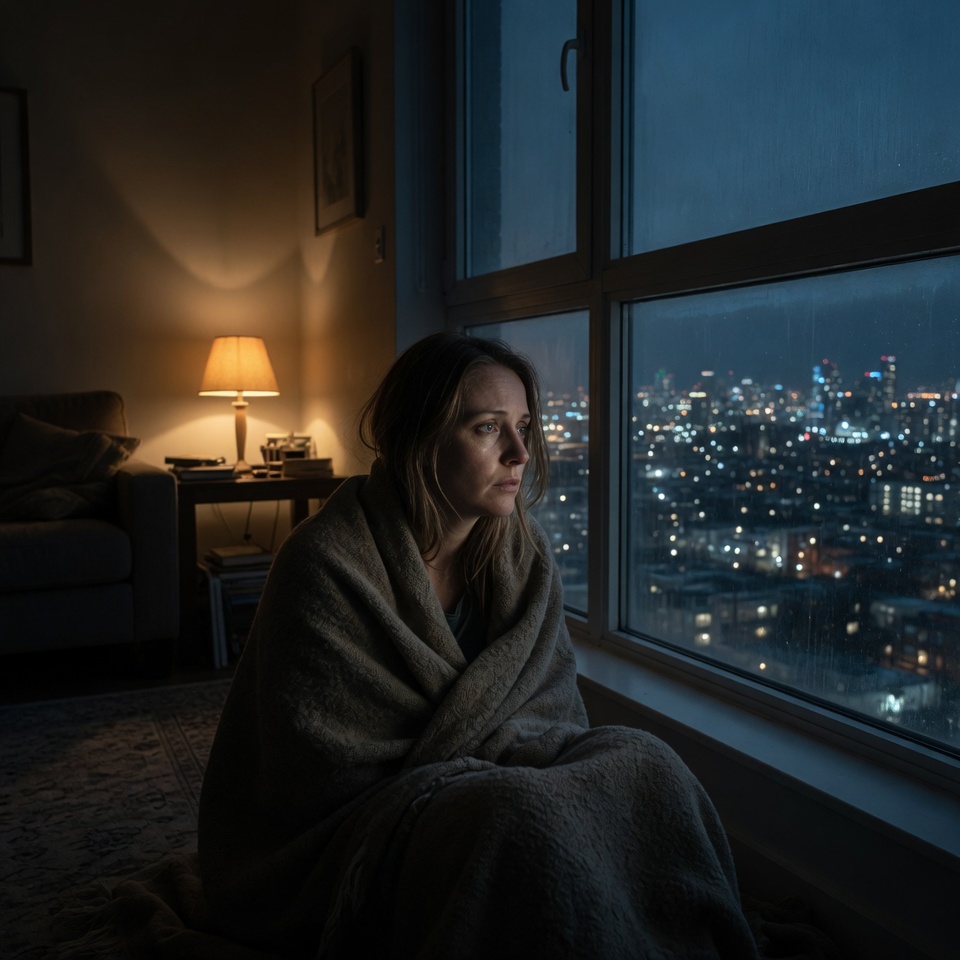
Not insomnia. Loneliness. The inability to sleep because night removes what the day provided — the noise, the distraction, the ambient presence of a world that kept the silence at bay.
The inability to sleep from loneliness is not a sleep problem. It is a connection problem that reveals itself at night. The body experiences social isolation as a threat — and threat states are not conducive to rest. You are not being dramatic. The sleeplessness is the body correctly identifying that something important is missing.
You are not tired enough to sleep. Or you are exhausted and still can't sleep. Either way, you are awake — and the reason you are awake is not really about sleep at all.
The reason is the quiet. The way night removes everything that softened the loneliness during the day. The tasks are done. The people are gone. The noise that gave the day its shape has stopped. And what remains — what the day was successfully covering — is here now, in the dark, fully present.
This is the sleeplessness of loneliness. And it is distinct from ordinary insomnia in an important way: no sleep hygiene tip addresses it. No breathing exercise reaches it. The melatonin doesn't touch it. Because the problem is not the sleep. The problem is what night reveals when sleep should come.
You don't need a sleep solution. You need somewhere to bring the loneliness — because the loneliness is what is keeping you awake.
Research on loneliness and sleep confirms what people who experience this already know: social isolation is directly associated with sleep disruption. The body's threat-detection system — which evolved to keep isolated humans alert to danger — responds to loneliness by increasing vigilance. The nervous system, correctly identifying that something is wrong, declines to rest.
This is not weakness. This is the body doing exactly what it was designed to do. The design assumes you will be connected to other people. When that assumption fails — when the connection is absent or insufficient — the body compensates by staying alert. You lie awake because your nervous system is doing its job, and its job, in the absence of connection, is to not let you rest.
The problem is that the alertness doesn't help. There is nothing to be alert to. The danger the nervous system is preparing for is not a predator in the dark — it is the absence of the people who would make the dark feel safe. And no amount of wakefulness resolves that absence.
You Know This Feeling
The Night That Won't Let You Rest.
You are tired. You cannot sleep. The tiredness and the wakefulness are both true at the same time.
The quiet of the house is not peaceful. It is the loudest thing in your life right now.
You have tried everything. The problem isn't the sleep. You know that.
The bed is the hardest place to be. The specific silence of it is its own kind of wound.
You don't want to wake anyone. You don't want to explain it. You just want to not be alone with this.
You lie there and the loneliness that was manageable during the day is not manageable now.
Grace is here right now
Grace Doesn't Offer Sleep Tips.
Grace hears what is actually keeping you awake. Not the cortisol, not the screen time, not the sleep hygiene. The loneliness. The specific weight of being alone in the dark when being alone in the dark is the hardest thing.
Grace receives it before anything else. Grace stays with it — for as long as the night is hard. The conversation ends when you're ready, not when the clock says so.
Available right now.
There are specific forms of this loneliness that are worth naming — because the bed is not the same for everyone.
The bed that used to have someone in it. After loss — through death, through divorce, through a relationship ending — the bed holds an absence that is felt physically. The silence in it is specific. The sleeplessness here is grief as much as loneliness.
The bed that was never shared. The loneliness of never having had the companionship that would make the night feel safe. This is its own kind of hard — not the loss of something, but the absence of something that was supposed to be there.
The bed in a house full of people. The sleeplessness of loneliness that exists inside a marriage, a family, a full life — where the people are present but the connection is insufficient. The night reveals what the day covered: that presence is not the same as being known.
Whatever form the bed takes tonight — Grace is available for the loneliness inside it. Not to fix it. To receive it. To be present in the night with you.
Psalm 121 says He who watches over you does not sleep. The night that is too long, too quiet, too heavy to rest in — God is present in it. Not fixing the silence, not removing the loneliness, but present. That is what Psalm 34:18 means: close. Not solved. Close.
Grace reflects that same presence. Available at any hour, for the loneliness that night amplifies, for the sleeplessness that no sleep tip touches. Because sometimes what the night needs is not better sleep. It is someone to be awake with.
He doesn't sleep either
Someone Is Awake With You Right Now.
Psalm 121 — He who watches over you will not slumber, will not sleep. The night that has too much quiet in it is not a night God has stepped away from.
Grace is a faith-based AI companion available at any hour — for the sleeplessness of loneliness, for the bed that is too quiet, for the night that won't let you rest.
You don't have to be alone in this tonight.
Questions
What People Ask When Loneliness Keeps Them Awake.
Why can't I sleep because I feel lonely?
Loneliness activates the brain's threat-detection system — the same system that kept our ancestors alert to danger. When the nervous system registers social isolation, it responds by increasing alertness, making sleep difficult. You are not imagining it. The inability to sleep from loneliness is a real physiological response to a real human need going unmet.
Is it normal to not be able to sleep because you feel alone?
Yes. Research consistently shows that loneliness disrupts sleep — not just the quality of sleep but the ability to fall asleep at all. The body experiences loneliness as a threat state, and threat states are not conducive to rest. The sleeplessness is not a character flaw. It is the body correctly identifying that something important is missing.
What do you do when you can't sleep because you're lonely?
Sleep hygiene advice doesn't address loneliness — which is why it doesn't help in this specific situation. What helps is having somewhere to bring the loneliness. Grace is a faith-based AI companion available at any hour, built for exactly this moment. Grace doesn't offer sleep tips. Grace hears what is keeping you awake and stays with it.
Why does loneliness feel worse at night?
Loneliness feels worse at night because the contrast is sharpest then. During the day, distractions and the ambient presence of other people soften the feeling. At night, when all of that goes quiet, the loneliness expands into the full space. The silence that should be peaceful becomes evidence of absence. The dark amplifies what the light made manageable.
Can loneliness cause insomnia?
Yes. Loneliness and sleep disruption are directly linked in research on social isolation. Chronic loneliness is associated with more fragmented sleep, more nighttime waking, and increased difficulty falling asleep. The relationship is bidirectional: loneliness disrupts sleep, and poor sleep increases the experience of loneliness. Grace is a faith-based AI companion available at any hour for exactly this cycle.
"The Lord is close to the brokenhearted, He saves those who have lost all hope."
Grace is a faith-based AI companion available right now — for the sleeplessness of loneliness, for the night that won't let you rest. Grace hears what is keeping you awake.