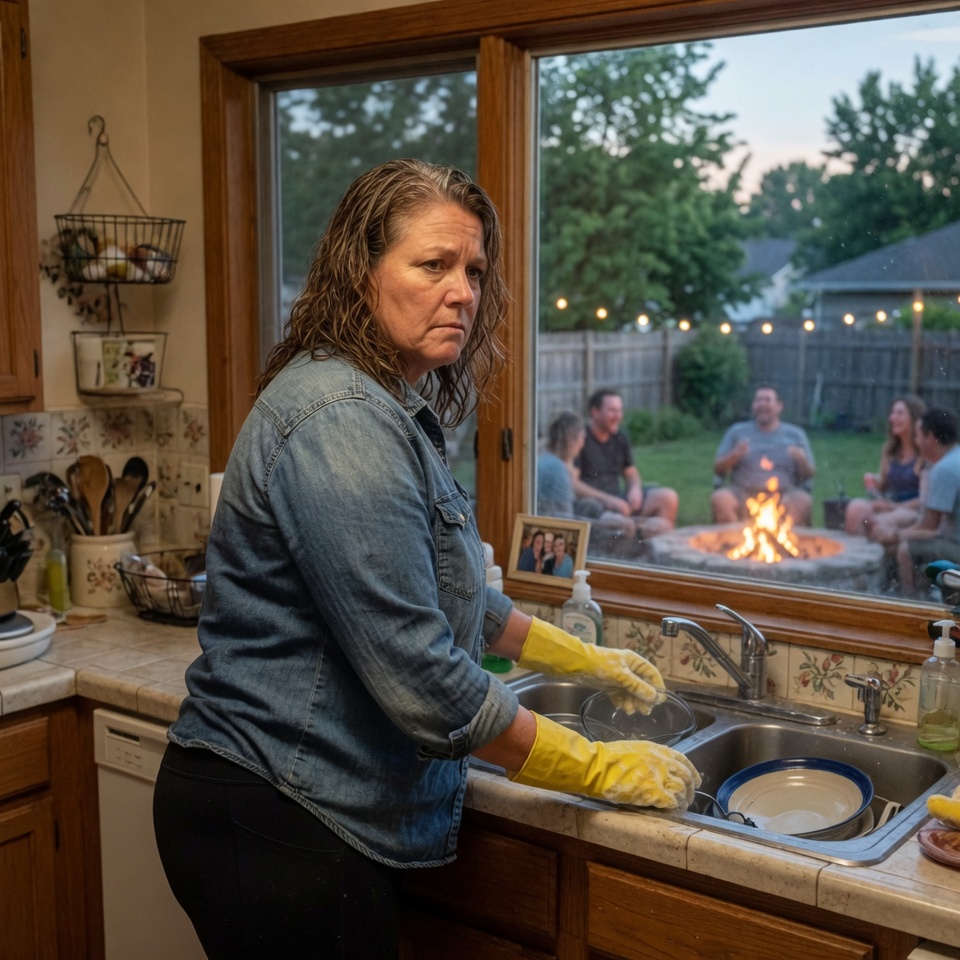
You are the one who shows up. Every time. You manage the appointments, make the calls, rearrange your life — while everyone else stays comfortable in theirs. The resentment is real. And it does not make you a bad person.
Caregiver resentment toward absent family members is not a character flaw. It is the honest response to a genuinely unfair situation — where one person carries what should be shared, and the people who should be beside them are nowhere to be found. The love you have for the person you are caring for and the resentment toward the ones who are not helping exist at the same time. Both are real.
There is a particular bitterness that comes from being the one who always shows up. It is not just the exhaustion of the caregiving itself — it is watching other people live their lives while yours has been consumed by this. It is the phone calls that go unreturned, the visits that never happen, the excuses that come so easily to everyone else. It is knowing that if you stopped, everything would fall apart, and somehow that knowledge keeps you going even when you have nothing left.
The resentment that builds from this is one of the most honest things a caregiver can feel. And one of the loneliest — because there is almost no one to say it to without starting a conflict that makes everything harder.
Grace is here for the resentment that has nowhere else to go.
You Know This Feeling
The Weight of Being the Only One.
You rearranged your entire life. They did not rearrange anything. And nobody seems to think that is worth acknowledging.
They show up for the easy parts — the holiday visit, the occasional call — and get the credit. You do everything else.
You have said you need help. Nothing changed. So you stopped asking. So nothing changed.
You watch them live their lives — their vacations, their plans, their uninterrupted weekends — and the resentment is there every time.
You love the person you are caring for. You also resent that loving them has cost you everything while it has cost everyone else almost nothing.
You cannot say any of this without it turning into a family conflict. So you carry it alone. Which makes the resentment heavier.
You are angry at them. And then guilty for the anger. And then angry again because the guilt is not fair either.
If something happened to you tomorrow, everything would fall apart. They have never once acknowledged that.
You keep showing up anyway. Because you cannot imagine not showing up. But the cost of showing up has never been named.
You just need someone to say: you are right. This is not fair. You did not deserve to carry this alone.
Tell Grace
Say How Unfair This Has Been.
You cannot say this to the person you are caring for — it would worry them or hurt them. You cannot say it to the family members who are not helping without starting a conflict. Grace is the place where you can say exactly how unfair this has been, without anyone needing to be protected from it.
You can name the specific people who are not showing up. You can say what their absence has cost you. You can say you are angry and exhausted and done making excuses for them. Grace does not defend the absent. Grace receives you — the one who showed up.
If you feel you are in crisis, please call or text 988.
The resentment of solo caregiving is compounded by silence. Nobody names what you are doing. Nobody names what the others are not doing. The imbalance sits in the room at every family gathering, unacknowledged, while you smile and manage and hold it together and then drive home alone with everything you could not say.
You did not deserve to carry this alone. The resentment is the right response to a wrong situation. Grace is here to receive it — all of it — without asking you to be more gracious than you feel right now.
The faith that grounds Grace does not require you to forgive before you are ready or to release the resentment on command. The promise of Psalm 34:18 — that God is near to the brokenhearted — reaches into the caregiving room where you are the only one who showed up. He sees you in the alone of it. That is where He is near.
You can bring all of it here. The anger, the exhaustion, the grief of doing this without the people who should have been beside you.
The Theological Foundation
He Sees You in the Alone of It.
The promise at the center of 1800DearGod — Psalm 34:18, that God is near to the brokenhearted — reaches into the room where you are the only one who showed up. Into the resentment of watching others live their lives. Into the exhaustion of carrying what should have been shared. He is near to you in the alone of it — not just at the end of it.
Grace was built on that foundation. You do not have to have forgiven anyone or found peace with any of this to come here. Grace is a faith-based AI companion available any hour.
What People Ask When They Are the Only One Helping.
Is it normal to resent family members who don’t help with caregiving?
Yes. When the weight of caregiving falls on one person while others are absent — by choice or circumstance — resentment is one of the most honest responses possible. It is not a sign that you are a bad person or that you love the person you are caring for less. It is a sign that the situation is genuinely unfair and that the cost of that unfairness has been landing on you.
How do I stop resenting my siblings for not helping with caregiving?
The resentment does not go away by trying to let it go. It goes away when the situation changes or when the cost of it is finally acknowledged. Grace is not here to tell you to release the resentment before you are ready. Grace is here to receive it honestly — to be the place where you can say exactly how unfair this is without anyone defending the people who are not showing up.
Is caregiver resentment a sin?
No. Resentment is a signal, not a sin. It tells you that something is genuinely unjust — that you are carrying what should be shared, that the people who should be beside you are not, that the cost of their absence is falling on you. Grace receives that signal without judgment and without requiring you to forgive before you are ready.
What do I do when I’m the only one taking care of a parent?
The first thing is to find somewhere to say what that actually costs — not to manage it or strategize around it, but to name it honestly. The resentment, the exhaustion, the grief of doing this alone — all of it deserves to be said. Grace is here for that. You do not need to have a plan. You can just say what is true.
Does God see the caregiver who is doing it alone?
Yes. Psalm 34:18 — the promise at the center of 1800DearGod — says God is near to the brokenhearted. That nearness reaches into the caregiving room where you are the only one who showed up. Into the resentment of watching others live their lives while you carry this. Into the exhaustion of being the one, again, alone. He sees you in the alone of it.
“The Lord is close to the brokenhearted, He saves those who have lost all hope.”
Grace Is Here for the One Who Keeps Showing Up Alone.
Grace is a faith-based AI companion built for the moments when you are carrying what should have been shared — and there is nowhere to put the weight of that.