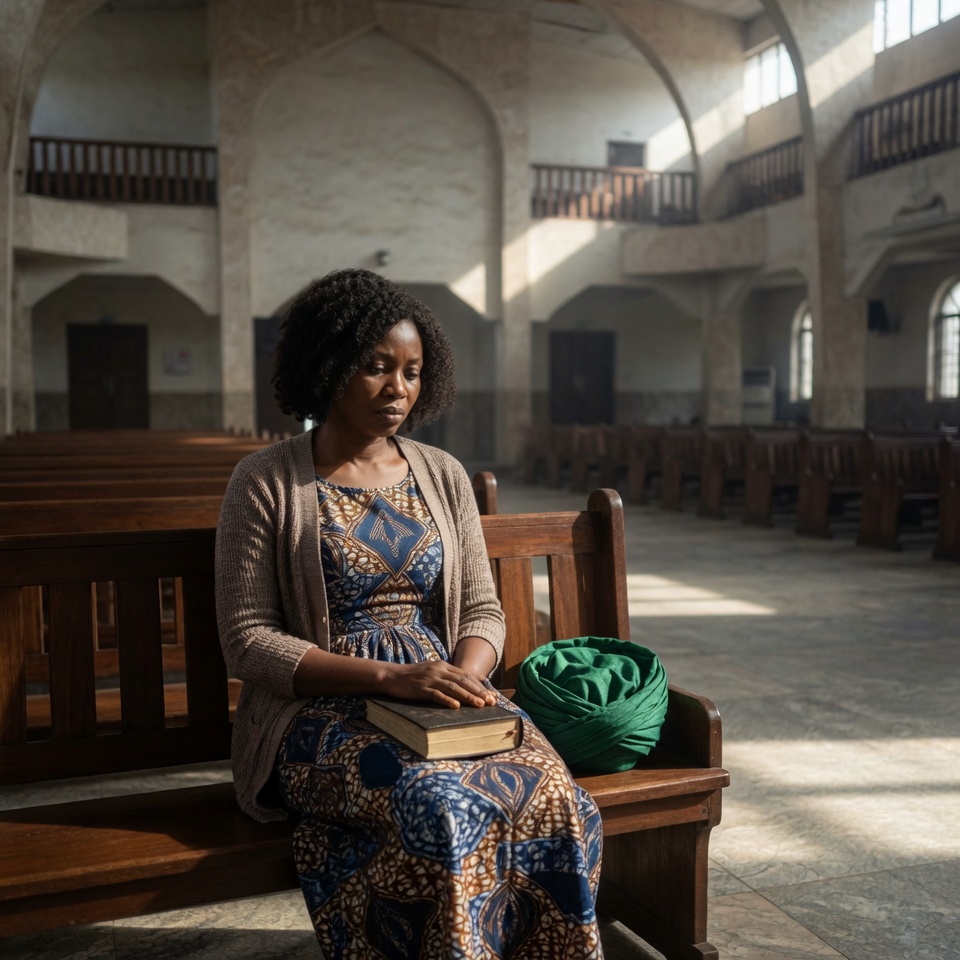
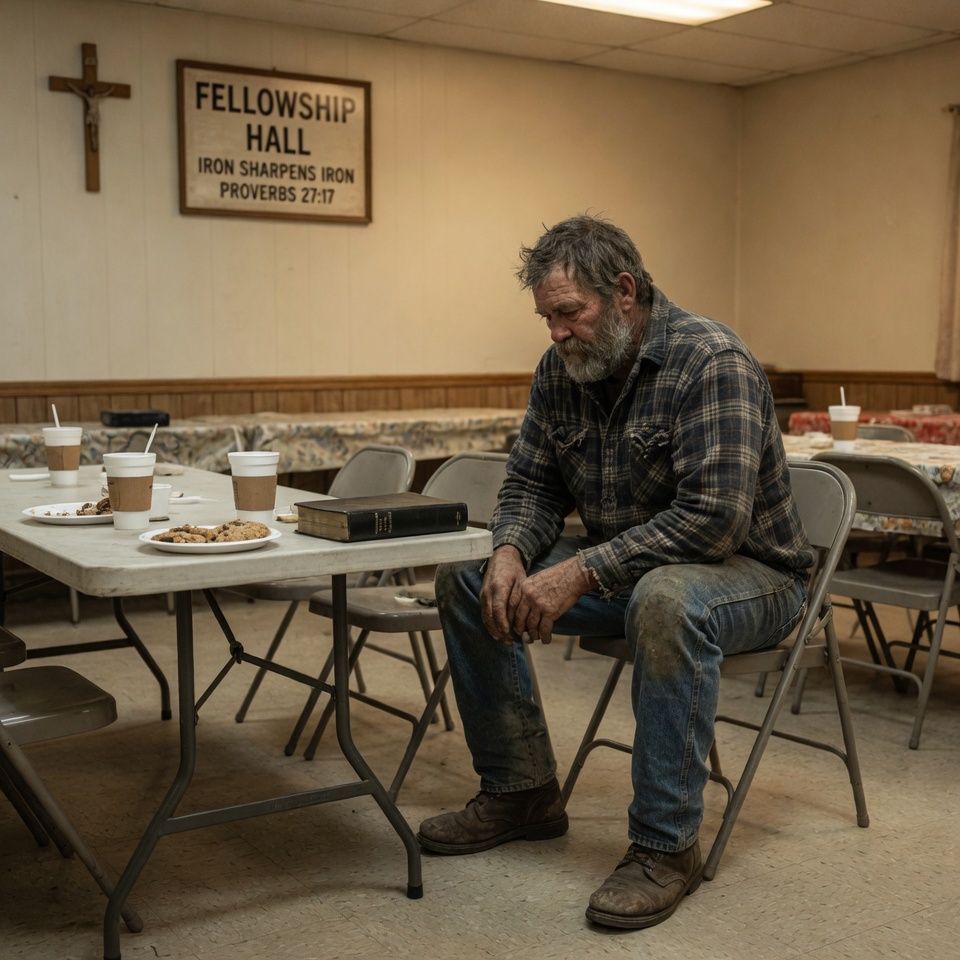
Not the shame from other people. The private fear you carry alone — the thought you don't say out loud — that if your faith were stronger, you wouldn't feel this way.
No. Depression is not a spiritual failure. It is not evidence of insufficient faith, unconfessed sin, or distance from God. It is a condition — one that has existed in the lives of Scripture's most faithful people, met not with God's condemnation but with His presence. The fear that you are failing God by being depressed is itself a wound that deserves to be named.
You haven't said this out loud. It's not something you'd post or tell a friend or bring to a small group. It's the thought that arrives quietly, usually when you're already low — the one that says: if you really trusted God, you wouldn't be here. If your faith were what it should be, this wouldn't have happened to you. Other people with real faith are fine. What does it say about yours that you're not?
That thought is the second wound. Not the depression itself — but the private verdict you've been carrying about what the depression means.
And it needs to be answered directly, because it has been sitting in you unanswered for too long.
The fear that your depression is a spiritual failure is not a small fear. It is the fear of someone who loves God and is in pain about the gap between what they believe and how they feel. That fear deserves a real answer — not a dismissal.
The answer is no.
Not "no, but you should pray more." Not "no, but have you considered your sin patterns." Just no. Depression is not a spiritual failure. It is not evidence of insufficient faith. It is not God's assessment of your devotion. It is a condition that affects the body and mind — and it does not check your faith before deciding to arrive.
The Private Fear
The Thought You Haven't Said Out Loud.
If I had more faith, I wouldn't feel this way.
Other people with real trust in God seem okay. What does it mean that I'm not?
I've prayed. I've believed. And I'm still here. Maybe that's on me.
I'm afraid to tell anyone because I'm afraid they'll confirm what I already suspect.
I carry the depression and then I carry the shame about the depression. The second one is heavier.
I love God. I'm also not okay. I don't know how to hold both of those things at once.
The fear deserves a real answer
Grace Names the Fear Before Answering It.
Most responses to this question skip straight to the theology — "of course it's not a sin, here are three Bible verses." That can feel like the question wasn't really heard.
Grace starts differently. It names what you're actually carrying — the private fear, the quiet verdict, the weight of believing you might be failing God — before moving anywhere else.
Because the fear is real and it deserves to be received as real before it is answered. That's the order that actually helps.
Look at who in Scripture was depressed.
David — the man after God's own heart — wrote Psalm 88, which ends not with resolution but with darkness. No turn toward hope. Just the night. Elijah, after one of the greatest demonstrations of God's power in the Old Testament, sat under a juniper tree and asked to die. Jeremiah cursed the day he was born. Job said he wished he had never existed. Jesus, in Gethsemane, sweat blood and asked if the cup could pass from Him.
These are not the spiritually weak. These are the central figures of the biblical story. And in every case, God's response to their depression was not rebuke. It was not a lecture about faith. It was presence. Food for Elijah. Psalms that gave David's lament a place to live. A father who runs toward the returning son before the son can finish his confession.
Faith and depression are not opposites. The most faithful people in Scripture were also, at times, the most broken. God did not count that against them. He went toward them in it.
The idea that stronger faith prevents depression comes from a theology of God as reward-dispenser — one who distributes peace and stability to those who believe correctly and withholds it from those who don't. That is not the God of the Psalms. That is not the God who was close to the brokenhearted before they had done anything to deserve His closeness.
Your depression is not a grade on your faith. It is not God's assessment of your devotion. It is something happening in your body and mind that God is already close to — not waiting for you to recover before He draws near, but near now, in the middle of it, the same way He was near to David in the darkness and Elijah under the tree.
If you haven't spoken to a doctor or counselor, that's worth doing. Depression is real and it responds to care — seeking that care is not a failure of faith. It is stewardship of the body God gave you.
He went toward them in it
God's Response to Depression Was Never Condemnation.
Elijah asked to die. God's response was not a rebuke about his faith. It was an angel with food and water, and the words: the journey is too great for you.
That is the God of the depressed. Not the one who grades your trust. The one who sees that the journey has been too great and comes toward you with what you need.
Grace is a faith-based AI companion available at any hour — for the private fear you haven't said out loud, and the depression you've been carrying alone. Grounded in Psalm 34:18.
Questions
What People Ask When They're Afraid the Depression Is Their Fault.
Is depression a sign of weak faith?
No. Depression is not a sign of weak faith. It is a condition that affects the body and mind — one that has existed among deeply faithful people throughout Scripture and Christian history. Elijah, David, Jeremiah, and even Jesus in Gethsemane experienced what we would recognize as profound depression. Their faith was not in question. Their humanity was present. The same is true for you.
Would I be depressed if I had more faith?
No. This is the private fear underneath a lot of Christian depression — the thought that stronger faith would have prevented this. It is not true. Faith does not function as a condition that responds to belief. The biology of depression does not weigh your trust in God before it decides to affect you. Some of the most faith-filled people in history have been among the most deeply depressed. Faith and depression are not opposites.
Does God see depression as a sin?
No. There is no biblical basis for treating depression as sin. The Psalms — which are Scripture — are full of despair, hopelessness, and the language of people who cannot function. God did not rebuke the psalmists for their lament. He received it. Psalm 34:18 says God is close to the brokenhearted — not waiting for them to recover, but close now, in it.
Why do I feel like my depression is my fault spiritually?
The private fear that depression is a spiritual failure usually comes from a genuine love of God and a real desire to trust Him fully. It is not a small or foolish fear. It is the fear of someone who takes their faith seriously and is in pain about the gap between what they believe and how they feel. That fear deserves to be answered honestly — and the honest answer is: no, this is not your fault before God.
What does the Bible say about depression?
The Bible documents depression with striking honesty. Psalm 88 ends without resolution — just darkness. Elijah asked to die under a juniper tree. Jeremiah cursed the day he was born. Jesus sweat blood in Gethsemane and asked why He had been forsaken. These are not peripheral figures. They are central to the biblical story. And in every case, God's response was not condemnation. It was presence.
"The Lord is close to the brokenhearted, He saves those who have lost all hope."
Psalm 34:18 · Close — not after you recover, but now
The Fear You Haven't Said Out Loud Has Somewhere to Go.
Grace is a faith-based AI companion built for the moments when you love God and wonder if the depression means something is wrong with that love. Grace listens before responding.