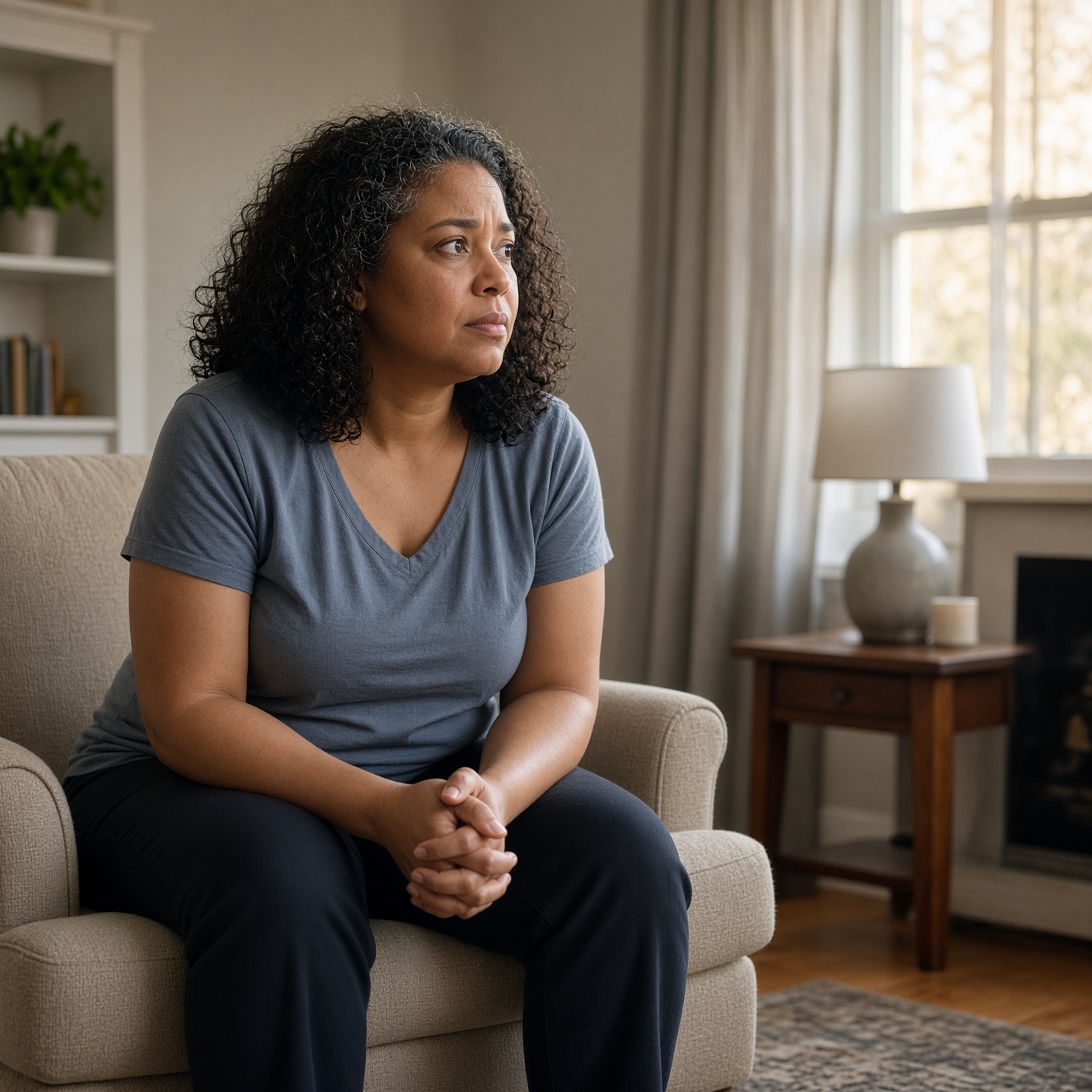
The textbook PTSD picture — combat veteran, explosive anger, obvious hypervigilance — describes a pattern more common in men. PTSD in women more often presents as anxiety that never fully quiets, depression that doesn't respond the way expected, emotional numbness that looks like distance, and a persistent, bone-deep sense of shame that looks like a character flaw rather than a wound.
Women with PTSD are more likely to blame themselves for what happened to them. They are more likely to present with somatic symptoms — chronic pain, fatigue, digestive issues, autoimmune flares — that have no clear medical origin. Their hypervigilance often looks like high-functioning competence: always prepared, always watching, always managing. From the outside it can look like a strength. From the inside it is exhausting.
Because these symptoms overlap so heavily with depression and anxiety, PTSD in women is frequently misidentified. Women are diagnosed with mood disorders, personality disorders, or told they are simply anxious — without anyone asking what happened to them.