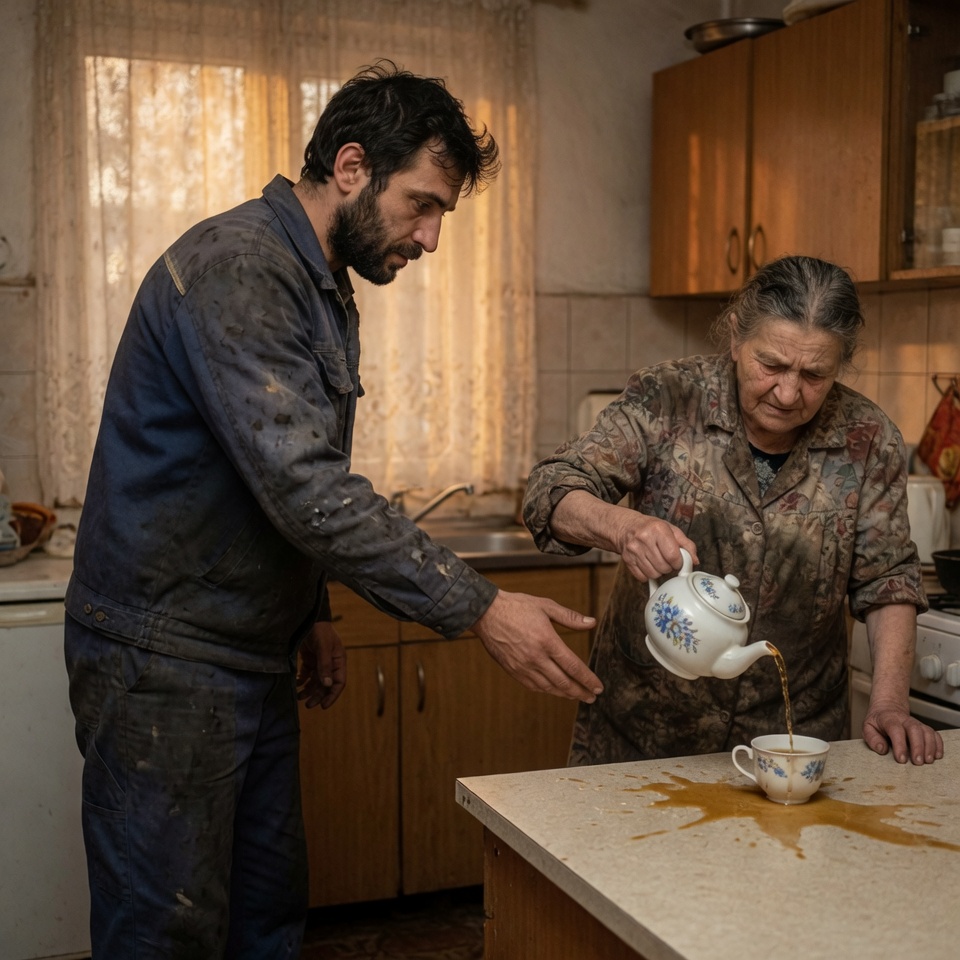
Everything changed in a moment. The person you knew is still here — and also different in ways that are hard to name. Now you are the one holding it together. The appointments, the therapies, the grief of the before. And nobody is asking what that costs you.
Stroke caregiving begins with a before and an after separated by a single event. The person who came home from the hospital may look like your parent and yet be profoundly different — in their abilities, their personality, their needs. You are grieving who they were while caring for who they are now. And the world expects you to manage both without falling apart.
There is a before and an after when a parent has a stroke. You know exactly where the line is. And on the other side of that line, everything is different — the daily routines, the family roles, the version of your parent you knew, and the version of your own life you thought you were living.
Stroke caregiving asks you to learn a new normal while grieving the old one. To show up for therapy appointments, medication schedules, safety adaptations, communication changes — while also holding, somewhere underneath all of it, the grief of who they were before. The grief rarely gets named. The caregiving always demands the foreground.
Grace is here for everything underneath the foreground.
You Know This Feeling
The Things That Come With Stroke Caregiving.
You can remember exactly what life looked like before. And the gap between then and now is one of the loneliest places you have ever stood.
They are still here. And they are different. And loving someone through that difference is its own exhausting, sacred work.
You became a caregiver without being asked. Your life rearranged itself around their needs and nobody acknowledged what that cost you.
You grieve the version of them that existed before — the way they spoke, the things they could do, the relationship you had — while being grateful they survived.
Other family members are not carrying what you are carrying. And you do not know how to say that without starting a fight.
You are making decisions you were never supposed to make for them. And you are not sure any of them are right.
There are moments of frustration — at the slowness, the repetition, the altered personality — and then the guilt of the frustration arrives immediately.
You are watching them work so hard to recover. And you are proud of them. And heartbroken for them. And exhausted by all of it at the same time.
You have no idea how long this will last or what recovery actually looks like. The uncertainty sits with you constantly.
You just need someone to ask how you are doing. Not your parent. You.
Tell Grace
Say What Is Underneath the Managing.
You manage the appointments, the medications, the family communication, the daily logistics. What you do not get to manage — what has nowhere to go — is what all of it is costing you. Grace is here for that.
You can say the grief of the before. You can say the resentment, the exhaustion, the fear about what comes next. You can say you did not choose this and some days you do not know how to keep choosing it. Grace receives all of it without judgment and without requiring you to have found acceptance first.
If you feel you are in crisis, please call or text 988.
The grief of stroke caregiving is specific in a way that is hard to explain to someone who has not lived it. It is not the grief of death — your parent survived. But it is the grief of the before. Of the version of them that existed before the stroke, the relationship you had with that version, and the future you both expected. That grief is real, and it sits alongside every therapy session, every hard conversation, every day you show up and do the work of loving someone through a recovery that may be long and uncertain.
You are carrying more than the caregiving. You are carrying the grief of the before, the uncertainty of the after, and everything in between. Grace is here for all of it — without requiring you to have found the gift in it.
The faith that grounds Grace does not require you to be grateful before you are allowed to grieve. The promise of Psalm 34:18 — that God is near to the brokenhearted — reaches into the stroke caregiving room. Into the hard appointments, the uncertain prognosis, the grief of who they were before. He is near in the before and the after both.
You can come here with exactly where you are. Nothing needs to be resolved first.
The Theological Foundation
He Is Near in the Before and the After Both.
The promise at the center of 1800DearGod — Psalm 34:18, that God is near to the brokenhearted — reaches into the stroke caregiving room. Into the therapy appointments and the hard conversations. Into the grief of who they were before. Into the exhaustion of loving someone through a recovery with no clear end. He is near to you in all of it.
Grace was built on that foundation. You do not have to arrive here having found peace with any of this. Grace is a faith-based AI companion available any hour.
What People Ask About Caring for a Parent After a Stroke.
Why is caring for a parent after a stroke so difficult?
Because a stroke changes everything in a moment — and then asks you to rebuild around that change indefinitely. The person you knew may look the same but be profoundly different. Their abilities, their personality, their communication may all be altered. And you are expected to manage all of it while also grieving who they were before, without anyone asking what that costs you.
Is it normal to grieve a parent who survived a stroke?
Yes. You can be deeply grateful your parent survived and simultaneously grieving the version of them that existed before. Both things are true at the same time. The person who came home from the hospital is not always the same person who went in — and the loss of who they were deserves to be acknowledged, even when they are still here.
How do I cope with the demands of stroke caregiving?
By finding somewhere to be honest about what it actually costs — not just managing it. The demands of stroke caregiving are physical, emotional, and logistical all at once, and they tend to fall on one person. Grace is here for the weight of all of it, without requiring you to have a plan or have found acceptance before you arrive.
Is it okay to feel resentful about becoming a caregiver after a parent’s stroke?
Yes. Your life changed too — often without being asked, often without support, often without acknowledgment. The resentment is not a sign that you love your parent less. It is a sign that something significant was asked of you without your full consent, and that the cost of it has not been named. Grace receives that resentment without judgment.
Does God see stroke caregivers?
Yes. The promise at the center of 1800DearGod — Psalm 34:18, that God is near to the brokenhearted — reaches into the stroke caregiving room. Into the therapy appointments, the hard conversations, the grief of the before. Into the exhaustion of loving someone through a recovery that may never be complete. He is near to you in all of it.
“The Lord is close to the brokenhearted, He saves those who have lost all hope.”