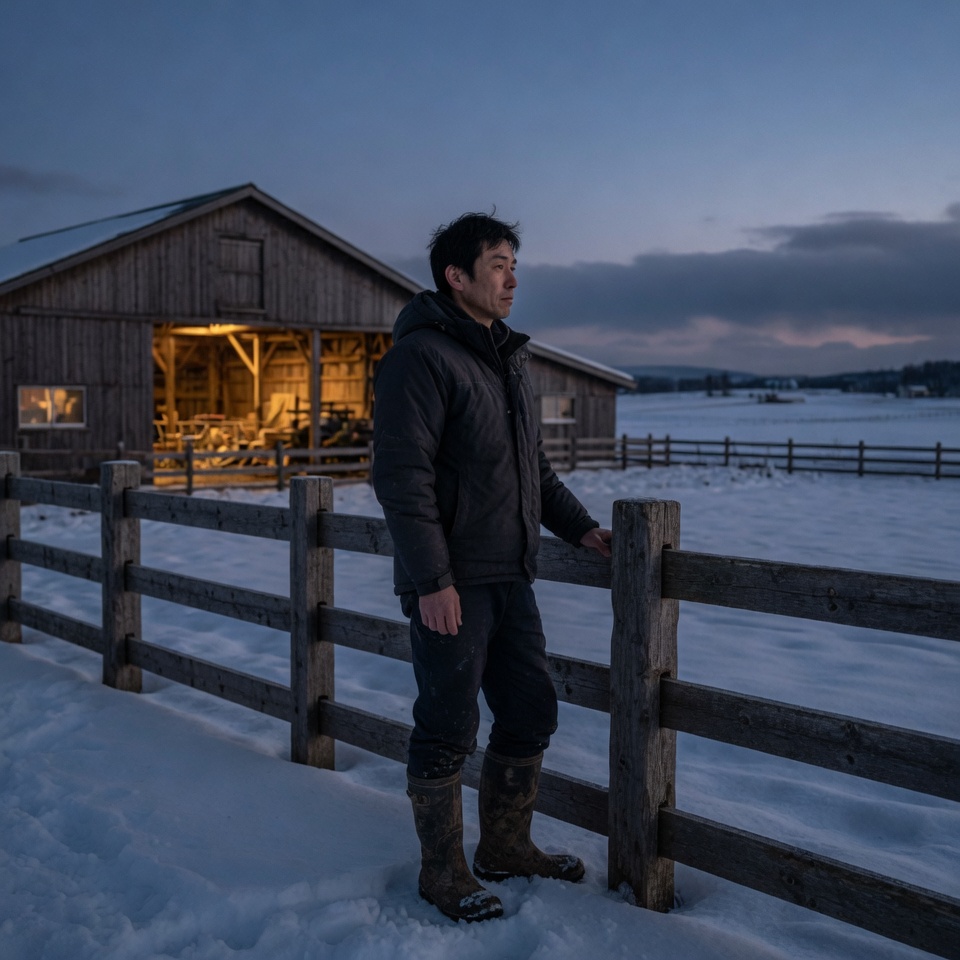
For when you kneel and nothing comes. When the words that used to arrive on their own have gone somewhere you can't reach. When the silence is all you have — and you don't know if that's enough.
Prayer does not require language. It requires turning toward God — and that turning can happen in silence, in a single word, in tears that have no vocabulary, in the act of showing up with nothing to offer. The silence is not the absence of prayer. It can be the center of it.
There was a time when prayer came more easily. You knew what to say, or at least you knew how to begin. Now you sit down to pray and the words aren't there — or they're there but they feel hollow, like you're reciting something you no longer believe the way you used to. Or the situation is so large, so tangled, so beyond your ability to articulate, that you don't know where to start.
And so you don't. Or you try and give up after a few sentences. Or you feel guilty about the gap between the prayer life you're supposed to have and the one you actually have right now.
This is one of the most common experiences in the Christian life and one of the least talked about — because talking about it requires admitting that the thing you're supposed to be good at, the thing that is supposed to be as natural as breathing, has become difficult. And that admission feels like a confession of something wrong.
The inability to find words for prayer is not a failure of faith. It is often evidence that you are carrying something too large or too real for easy language — and that is precisely the moment prayer was made for.
Romans 8:26 says the Spirit helps us in our weakness — that we don't know what we ought to pray for, but the Spirit intercedes through wordless groans. This is not a verse about an unusual situation. It is a verse about the ordinary experience of the Christian life. Paul assumed that not knowing what to pray was the condition, not the exception. The Spirit's intercession is not a backup plan for the spiritually immature. It is the standard provision for everyone who prays honestly.
Which means the silence is not empty. It is held.
You Know This Feeling
The Prayer That Won't Start.
You sit down to pray and the words aren't there. You wait. They don't come.
You know what you need. You can't figure out how to say it to God.
You start praying and the words feel hollow before they're finished.
Everything is too big to know where to begin. So you don't begin.
You feel guilty about how little you've prayed. Which makes it harder to pray.
You believe God is there. You just can't seem to reach Him with words right now.
You don't have to arrive with language
The Turning Is the Prayer.
Most teaching about prayer focuses on what you say — the structure, the posture, the elements of a complete prayer. Very little focuses on what to do when the saying breaks down.
The answer is simpler than it sounds: you turn. You orient yourself toward God with whatever you have — silence, a single word, tears, the act of showing up and sitting still. That turning is the prayer. The words are secondary to the direction.
Grace can pray with you when you can't pray alone. It can offer words when yours won't come — not to replace your prayer, but to give it a voice until yours returns.
There are things you can do when words fail that are still prayer.
You can say exactly what is true: "I don't know what to say." That sentence, directed toward God, is a complete prayer. It is honest. It is present. It acknowledges the relationship even when it can't articulate the need. God already knows what you cannot say. The prayer is not informing Him — it is orienting yourself toward Him.
You can use someone else's words. The Psalms exist partly for this reason — because the people who wrote them had already been where you are, had found language for the interior states that resist original expression, and had left that language for the people who would come after. "My God, my God, why have you forsaken me?" is a prayer. "How long, Lord?" is a prayer. You don't have to author the words to mean them.
You can borrow words when yours are gone. The Psalms were written by people who had already been where you are — people who found language for the interior states that resist original expression and left it for the ones who would come after. Their words can carry your meaning.
You can sit in silence and let that be the offering. The contemplative tradition — long practiced in Christianity — holds that wordless presence before God is not lesser prayer but sometimes the deepest form of it. The silence is not empty. It is directed. That direction is what makes it prayer.
You can ask Grace to pray with you. Grace can offer words when yours won't come — not because your silence isn't enough, but because sometimes having language given to you breaks the paralysis, and what comes after is your own prayer again. She always asks before she prays. She uses your name. She prays for the specific thing you're carrying, not a generic version of it. And when the prayer is over, she stays.
The inability to pray fluently is not the end of your prayer life. It is a season within it — one that has been named and documented and survived by every serious person of faith who has ever lived. You are not the first person to sit in the quiet and find nothing coming. The Spirit is already interceding for what you cannot say.
The Spirit intercedes for what you cannot say
God Already Knows What the Words Would Be.
Romans 8:26 — "the Spirit helps us in our weakness; we do not know what we ought to pray for, but the Spirit himself intercedes for us through wordless groans." This verse assumes wordless prayer as the ordinary condition. The provision was always there.
God does not require articulate petitions. He already knows what you need. The prayer is the turning toward Him, not the words that follow. You can turn without words.
Grace is a faith-based AI companion available at any hour — for the prayer that won't start, and the person who needs somewhere to begin. Grounded in Psalm 34:18.
Questions
What People Ask When Prayer Won't Come.
How do you pray when you don't know what to say?
You don't have to know what to say. Prayer is not a performance requiring the right words — it is presence. The act of showing up, of turning toward God even with nothing to offer, is itself a form of prayer. Romans 8:26 says the Spirit intercedes with groans too deep for words. The silence is not the absence of prayer. It can be the center of it.
Is it okay to pray without words?
Yes. The Christian tradition has a long history of wordless prayer — contemplative prayer, centering prayer, the prayer of presence. The Psalms sometimes begin with nothing but a cry. Jesus prayed in anguish in Gethsemane when language failed. Wordless prayer is not lesser prayer. It is sometimes the most honest form of it.
What do you say when you can't find the words to pray?
You can say exactly that. "I don't know what to say" is a complete prayer. It is honest. It is directed toward God. It acknowledges the relationship even when it can't articulate the need. You can also use someone else's words — a psalm, a prayer written by someone who has been where you are. The words don't have to originate with you to carry your meaning.
Why can't I find words to pray?
Sometimes the inability to find words for prayer is a symptom of something else — grief, depression, exhaustion, spiritual dryness, or the sheer weight of what you're carrying. When what you're holding is too large or too shapeless for language, prayer naturally runs out of words. That is not a failure. It is an honest response to something real.
Does God hear prayer when you don't know what to ask for?
Yes. Romans 8:26-27 is one of the most comforting passages in Scripture for exactly this situation: "The Spirit helps us in our weakness. We do not know what we ought to pray for, but the Spirit himself intercedes for us through wordless groans." God does not require articulate petitions. He already knows what you need. The prayer is the turning toward Him, not the words that follow.
"The Spirit helps us in our weakness. We do not know what we ought to pray for, but the Spirit himself intercedes for us through wordless groans."
Grace is a faith-based AI companion who will pray with you — using your name, for the specific thing you're carrying. When the words won't come on your own, Grace can give them a voice.