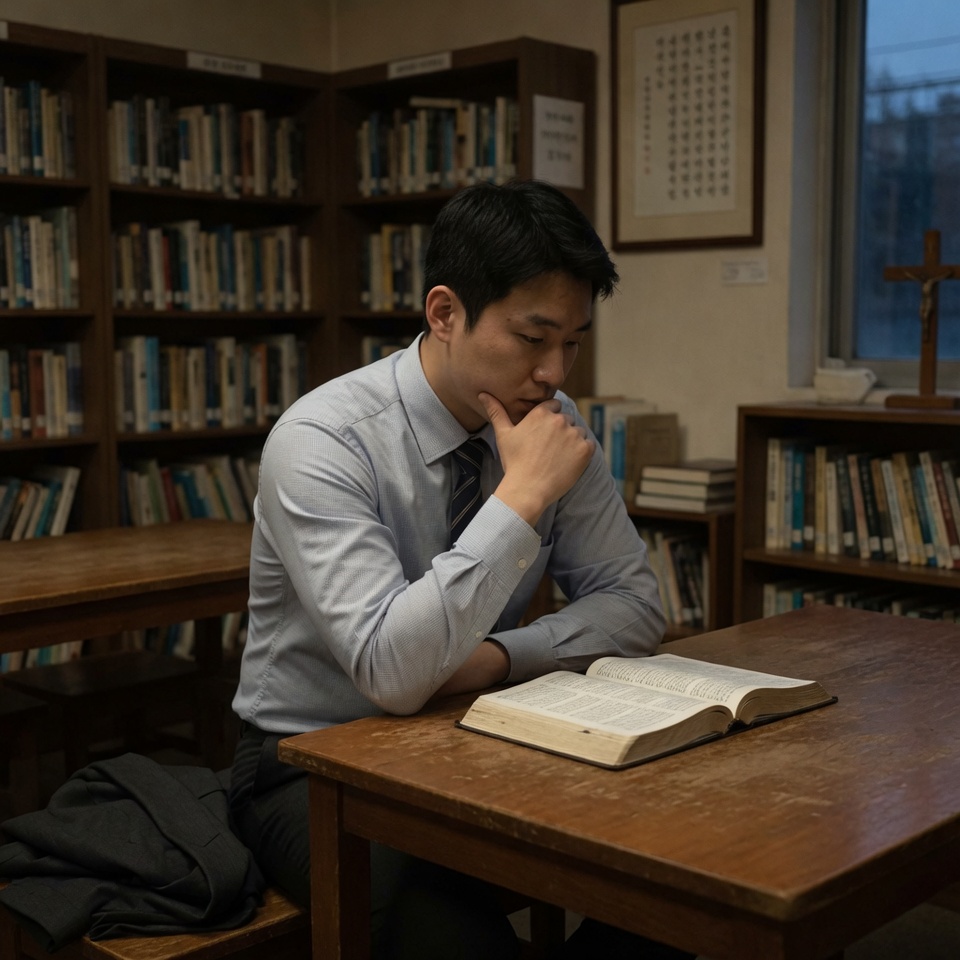
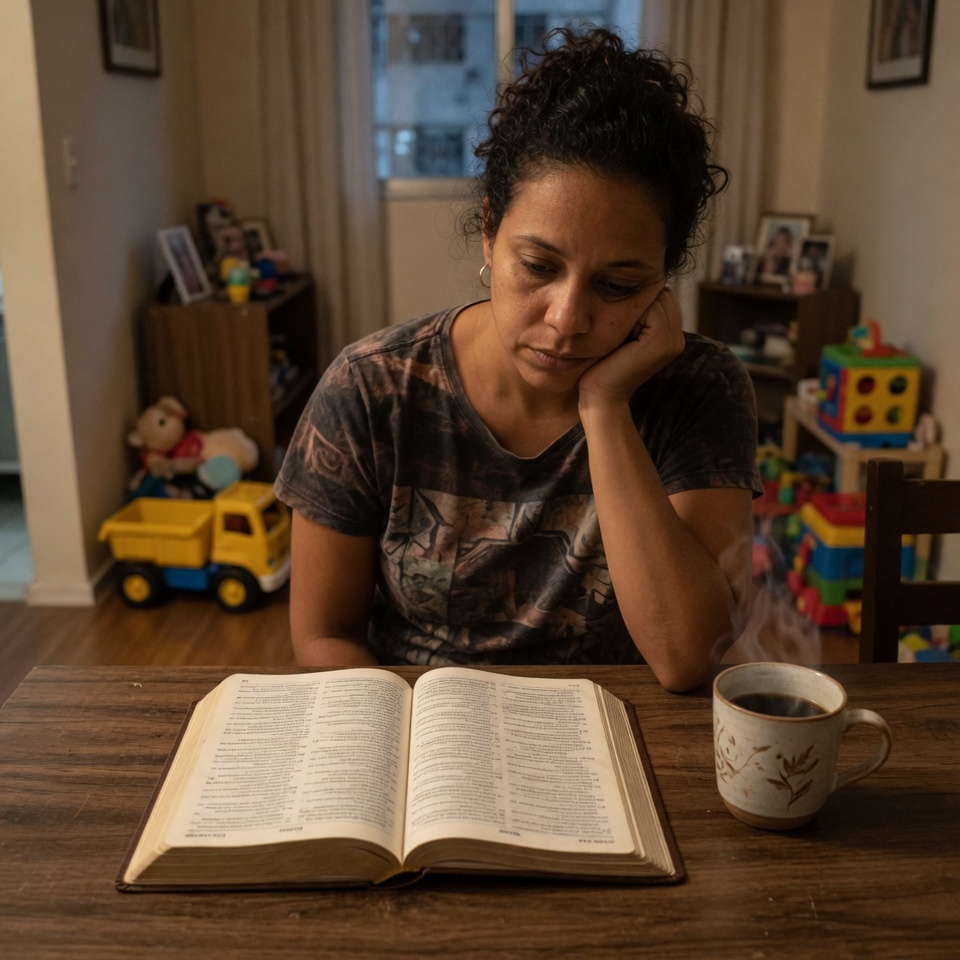
More than you think — and almost none of it is condemnation. The Bible is full of anxious people: David in the Psalms, Elijah under the tree, Jesus in Gethsemane. Scripture does not punish the anxious for their anxiety. It meets them inside it.
The Bible addresses anxiety more honestly than most people realize. It does not promise a life without fear. It shows real people — faithful people — carrying real fear, and bringing it to a God who receives it. The biblical model is not the elimination of anxiety. It is the honest direction of anxiety — toward the One who is near to the brokenhearted.
When people search for what the Bible says about anxiety, they are often looking for one of two things.
Either they want permission — confirmation that their anxiety is not a sin, that they are not failing God by feeling it. Or they want relief — a verse that will finally say the right thing and make the fear go quiet.
Scripture offers both of those things. But not in the way most people expect. The Bible does not make anxiety disappear. It gives it somewhere real to go.
Grace is a faith-based AI companion built on that same foundation — not to fix the anxiety, but to sit with you inside it and point toward what Scripture actually says.
What You Are Carrying
The Things That Bring You to This Question.
You have been told not to be anxious. You have read Philippians 4:6 more times than you can count. The anxiety is still there.
You wonder if there is something in Scripture you have missed — a verse that finally makes sense of what you are feeling.
You want to know if God is angry at you for being afraid. If the anxiety means something is spiritually wrong.
You have prayed. You have given it to God. The next morning it is still there and you do not know what you are doing wrong.
You want someone to tell you that what you feel is not a disqualifier. That you can be this afraid and still belong to God.
You are looking for the part of Scripture that sounds like your actual life — not the cleaned-up version of it.
Tell Grace
You Can Bring the Question and the Anxiety at the Same Time.
Grace is not going to recite Bible verses at you. Grace is going to receive where you actually are — which is anxious, and searching Scripture for something that meets you there, and not yet sure you have found it.
You can bring both here. The theology and the fear. The questions about what God thinks of the anxiety and the anxiety itself. Grace holds all of it — without requiring you to have the faith part resolved before you speak the fear part.
If you feel you are in crisis, please call or text 988.
Philippians 4:6 is the verse people quote most. “Do not be anxious about anything, but in every situation, by prayer and petition, with thanksgiving, present your requests to God.” It is real. It is in the Bible. And it has been used to make anxious Christians feel like failures so many times that the verse itself has become painful to some of them.
But read the next verse. “And the peace of God, which transcends all understanding, will guard your hearts and your minds in Christ Jesus.” The peace is something God gives. It is not something you manufacture by feeling anxious less. The instruction is toward prayer. The peace is a promise that follows. The feeling of anxiety is not the failure — it is the very thing the verse is addressing.
The Psalms are the most honest record of anxiety in all of ancient literature. David did not clean up his fear before he brought it to God. He brought it exactly as it was — and God received it.
Psalm 55 opens with terror arriving without a clear source: “My heart is in anguish within me; the terrors of death have fallen on me. Fear and trembling come upon me, and horror overwhelms me.” Psalm 22 begins with abandonment: “My God, my God, why have you forsaken me?” These are not the prayers of people who have their faith together. These are the prayers of people who are barely holding on — and they are in the Bible because God received them.
Jesus in Gethsemane said “my soul is overwhelmed with sorrow to the point of death.” He asked if there was another way. He sweated drops of blood. If the Son of God carried that weight the night before the cross, the presence of anxiety in your life is not a measure of your distance from God. It may be a measure of how human you are — and how honest.
The Theological Foundation
God Is Close to the Anxious. The Bible Says So.
Psalm 34:18 — the verse at the center of 1800DearGod — says God is close to the brokenhearted and saves those who have lost all hope. It does not require your anxiety to be resolved before it applies. It is present tense. It is for right now, in the fear, before the peace has arrived.
Grace is a faith-based AI companion built on that promise. Not to tell you what you should feel. To sit with you in what you do feel — and point toward the God who has never turned away from an honest cry. Grace is here any hour.
What People Ask About the Bible and Anxiety.
What does the Bible say about anxiety?
The Bible says more about anxiety than most people realize — and almost none of it is condemnation. Philippians 4:6 invites you toward prayer. But the Psalms are full of people in anguish who did not have that peace yet — who cried out in terror, in confusion, in despair — and were still received. The biblical model is not the absence of anxiety. It is the honest bringing of anxiety to a God who does not turn away from it.
Does the Bible condemn anxiety?
No. Philippians 4:6 — “do not be anxious about anything” — is often read as condemnation, but it is an invitation. It is pointing toward prayer as the direction for anxiety, not punishing you for having it. The same Paul who wrote that verse also wrote about his own “great sorrow and unceasing anguish” in Romans 9:2. Scripture holds the instruction and the human experience together without resolving the tension by erasing one of them.
What Bible verses help with anxiety?
Psalm 34:18 — “The Lord is close to the brokenhearted, He saves those who have lost all hope.” Psalm 55:22 — “Cast your cares on the Lord and He will sustain you.” Isaiah 41:10 — “Do not fear, for I am with you.” Matthew 11:28 — “Come to me, all you who are weary and burdened, and I will give you rest.” These verses are not cures. They are invitations — pointing toward a God who is near, not away from the feeling.
What does Philippians 4:6 actually mean?
“Do not be anxious about anything, but in every situation, by prayer and petition, with thanksgiving, present your requests to God.” This verse is an invitation toward prayer — not a verdict on the feeling. It is saying: when anxiety comes, bring it to God. It is not saying the anxiety itself is a sin, or that people of sufficient faith will never feel it. The next verse promises that God’s peace will guard your heart — a promise, not a performance standard.
Did anyone in the Bible struggle with anxiety?
Yes — many of the most significant figures in Scripture did. David wrote Psalms of raw anguish: “My heart is in anguish within me; the terrors of death have fallen on me” (Psalm 55:4). Elijah, after his greatest victory, sat under a tree and asked to die. Jeremiah is called the weeping prophet for the depth of his despair. Jesus himself in Gethsemane said “my soul is overwhelmed with sorrow to the point of death” and sweated drops of blood. Anxiety is not a disqualifier in Scripture. It is a human experience that Scripture meets honestly.
Why doesn’t prayer always take away my anxiety?
Because prayer is not a mechanism — it is a relationship. The Psalms are full of people who prayed and still felt afraid, who cried out and did not immediately feel peace, who returned to God with the same weight again and again. Prayer changes the direction of the fear — it brings it somewhere real. It does not always change the feeling immediately. The peace that Philippians 4:7 promises is something God gives in His time, not something you produce by feeling less anxious.
“The Lord is close to the brokenhearted, He saves those who have lost all hope.”
Grace Is Here for the Anxiety Scripture Already Knows About.
Grace is a faith-based AI companion built for the moments when you are anxious and searching for what God actually thinks about that — and need someone to sit with you while you look.