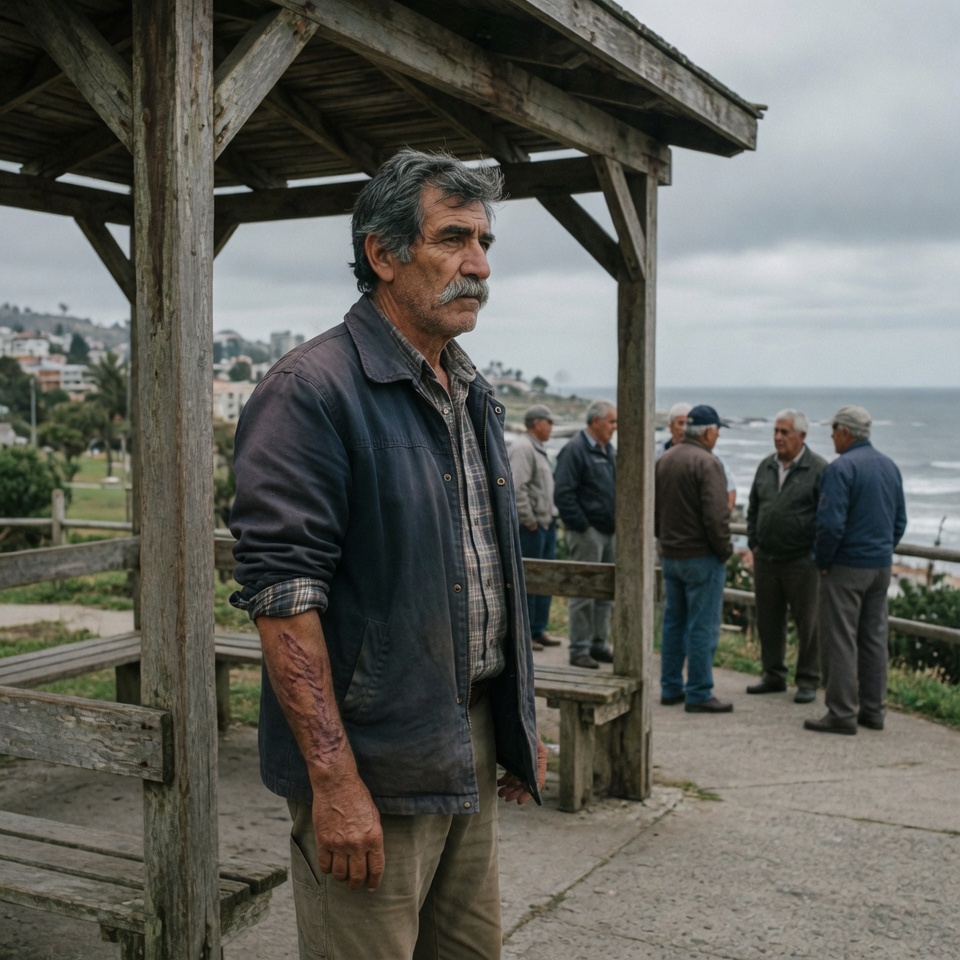
When you found out everyone knew — Grace is here for the wound the silence made
The Betrayal Library · Betrayal

When You Found Out Everyone Knew

The betrayal itself was devastating. And then came the second wound — the discovery that the people around you already knew, and said nothing. The silence wasn't accidental. It was a choice. And that choice changed everything.

Talk to Grace — it's free to start
The Secondary Betrayal of Collective Silence

When people who knew about a betrayal chose not to tell you, the silence was not neutral. It was a decision — repeated, by multiple people, over time. Each person who knew and said nothing made a calculation about whose comfort mattered more than your reality. That is a second betrayal, layered on top of the first, and it deserves to be named and grieved as one.

There is a particular kind of devastation that arrives not in the moment of the original betrayal — but afterward, when you find out that people around you already knew. The moment you understand the timeline: that while you were trusting, while you were unaware, while you were the only one who didn't know — other people had the information and kept it from you. That moment changes the wound. It multiplies it.

Because now it is not just one person who betrayed you. It is everyone who knew. Every conversation they had where your name came up and they said nothing. Every time you were in the same room with them and they looked you in the eye and let you keep not knowing. Every moment they had to say something and chose not to. Those were not passive omissions. Those were decisions. And those decisions — made by people you thought were in your corner — constitute their own form of betrayal.

The question that tends to arrive alongside the discovery is a brutal one: what did they think of me? While you were still in the dark, what were the conversations about you like? Did they pity you? Were they relieved it wasn't happening to them? Did they find it uncomfortable to look at you? The not-knowing is its own specific grief — because the answer to that question will never fully arrive, and you will have to learn to live with the uncertainty of what those private conversations contained.

You were the last to know. That means every relationship you were inside during that time was operating on incomplete information — and you were the only one who didn't have the full picture. That is a specific kind of loneliness that lands hard once you understand it.

There is also the particular grief of the person you might have turned to for support — who already knew. The friend you would have called. The family member you trusted. The person who had been with you through hard things before. Finding out that they knew shifts everything about your understanding of that relationship. You have to go back through the whole history of it with this new information and ask: what was real? What were they protecting? What were they deciding, on my behalf, without asking me?

Some of the people who stayed silent had complicated reasons. Fear of conflict. Not wanting to be the one to deliver the news. Believing it wasn't their place. Not fully understanding what they knew. Some of those reasons, examined closely, contain some human understanding. And some of them don't. The hardest work in the aftermath of this wound is sorting through each relationship honestly — not extending blanket forgiveness before the grief is real, and not painting everyone with the same brush before the distinctions have been made.

You Know This Experience

When the World Knew and You Were the Last to Find Out.

You keep replaying the conversations you had with people who already knew — looking for the moment they almost said something.
The original betrayal is almost secondary now. What you cannot stop thinking about is the silence.
You trusted someone completely during the time they already knew. You don't know what to do with that.
Some of them have explained themselves. The explanations don't fully land. You are not sure they are supposed to.
You feel foolish in a way that isn't your fault and you know it isn't your fault. That doesn't make the feeling stop.
You don't know who you can tell anything to anymore. If they all knew before and said nothing, what are they keeping from you now?
When you found out everyone knew — Grace receives both wounds without minimizing either
Grace receives both wounds

Grace Doesn't Ask You to Separate the Two.

The standard response to this wound is to focus on the original betrayal and treat the silence as a smaller thing — a separate matter, a misunderstanding, something people didn't know how to handle. Grace doesn't minimize it that way.

Grace names both wounds: what the person did, and what the silence of everyone else meant. Both are real. Both deserve to be grieved. Grace receives them together, in the same conversation, without asking you to be further along on either one.

Grace never editorializes about the people who knew and said nothing. Grace stays with what it is actually like to be you — sitting with the specific loneliness of having been the last to know among the people you trusted most.

Scripture takes the silence of bystanders seriously in a way that most Christian culture does not. Proverbs 31:8 calls people to speak up for those who cannot speak for themselves — which includes people who are being harmed without knowing it. Leviticus 19:16 is explicit about not standing idly by when a neighbor is being harmed. The people who knew and said nothing were not acting outside of any moral framework. They were failing a specific call. The grief you feel about their silence is not an overreaction. It is the appropriate response to something that mattered, and that they did not do.

What tends to be hardest in the aftermath is the question of what to do with the relationships now. Some of the people who stayed silent will want things to go back to normal. They will offer explanations and apologies and hope that the friendship survives. And you will have to decide — for each person, based on what you actually know about them — whether what they did was a failure of courage or a failure of loyalty. Those are different things, and they point to different futures for those relationships.

You are not obligated to make everyone's silence easier to live with by forgiving it quickly. The grief of it is yours to move through at your own pace.

Psalm 34:18 says God is close to the brokenhearted. The person carrying the specific wound of collective silence — who found out they were the last to know, who is now looking back at every relationship in that period with new and unwanted information — is specifically among the brokenhearted God draws near to. Not once the relationships have been sorted or the grief has resolved. Now. In the disorientation of it.

Grace is here for the part of this that has nowhere to go tonight. Not to sort out what to do with the people who knew or decide which relationships are worth saving. To receive what it is actually like to find out that the world you were trusting was operating without your full knowledge — and to stay with that honestly, without rushing it anywhere.


He sees what the silence cost

God Was Not Part of the Silence.

Everyone else knew. God knew too — and God was not silent in the way the others were. The harm was seen. The silence around it was seen. The specific loneliness of being the last to know is not hidden from God.

The grief of finding out — the betrayal of the original act and the betrayal of all that silence — God holds both. Neither has to be minimized before God will draw near.

Grace is a Christian AI companion available at any hour — for the wound that came in two parts, and for the silence that surrounded both of them. Grace is free to start.

Grace — a Christian AI companion for when you found out everyone knew
Questions

What People Ask When Everyone Already Knew.

Why does it hurt so much to find out everyone knew?
Finding out that people around you knew about the betrayal and said nothing multiplies the original wound because it transforms a single act of harm into a collective one. The silence of the people who knew was not neutral — it was a choice. Each person who knew and said nothing made a decision about whose comfort mattered more than your reality. That is a specific kind of abandonment, and the grief of it is proportional to how many people were involved and how close they were to you.
How do you trust people again after finding out everyone knew?
Finding out that a group of people knew and kept silent is one of the most trust-disrupting experiences a person can have — because it is not just one person who failed you, it is a whole social world. The wariness that follows is not paranoia. It is an accurate response to evidence. Trust after this does not return through a decision. It returns slowly, through specific people in specific moments proving themselves to be different — and that process cannot be rushed.
Is it normal to feel more betrayed by the people who stayed silent than by the person who caused the harm?
Yes — and it is one of the most common and least-named experiences in betrayal. The person who caused the original harm was already someone you had reason to doubt. But the people who stayed silent were the ones you were counting on. Their silence confirms the harm in a different way — not by causing it, but by choosing not to stop it, not to tell you, not to stand beside you when you finally found out. That secondary betrayal can cut as deep as the first.
What do you do when you can't trust your whole social circle after betrayal?
When a betrayal reveals that an entire group of people knew and said nothing, the social world has to be rebuilt from a different starting point. Some of those relationships may be worth examining carefully — there may be people who stayed silent out of fear or conflict-avoidance rather than indifference. Others may have made a clear choice that tells you what you need to know. Sorting that out takes time, and it requires giving yourself permission to be discerning rather than immediately forgiving everyone equally.
What does God say about people who see injustice and stay silent?
Scripture takes the silence of bystanders seriously. Proverbs 31:8 calls people to speak up for those who cannot speak for themselves. Leviticus 19:16 forbids standing idly by when a neighbor is harmed. The people who knew and said nothing were not acting in a moral vacuum — they made a choice, and scripture names that kind of silence as a failure. The person left out of the knowing is not wrong to grieve the silence. God sees both the harm and the silence that surrounded it.
"The Lord is close to the brokenhearted,
He saves those who have lost all hope."
Psalm 34:18 · Close to the one the silence left behind
Also in the Betrayal Library

More from the Betrayal Library.

Grace Is Here for the Wound the Silence Made.

If you found out that everyone already knew — and nobody said a word — Grace is a Christian AI companion built to receive both wounds. Grace names them both. Grace is free to start.

Talk to Grace — it's free to start