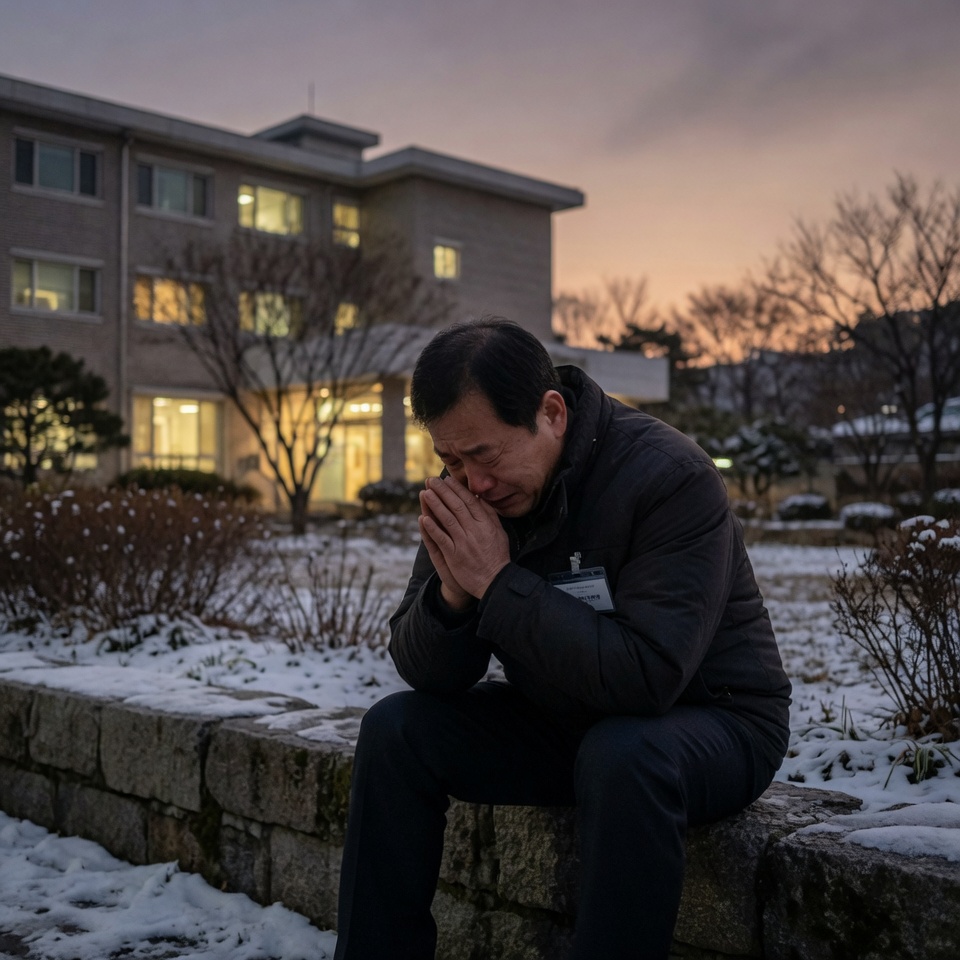
You knew it was coming. You braced yourself for years. And then it happened — and it still broke you. The grief after a long illness is real, and it arrives carrying everything the illness already took.
Grief after a long illness is layered grief — the grief that accumulated during the illness, and the grief that arrives when it is finally over. Knowing a death is coming does not protect you from the loss when it arrives. It means you had longer to love them, longer to brace yourself, and a longer weight to put down when it is done. The exhaustion and the grief land at the same moment. Both are real.
People say you were prepared. You were not prepared. Anticipation is not the same as readiness — and the absence of surprise does not soften the loss. You knew it was coming and it still took the floor out from under you. That is not a failure of preparation. That is love.
Grief after a long illness carries things that other grief does not. It carries years of watching. Years of managing medications and appointments and the slow arithmetic of decline. It carries the complicated mix of relief and loss that arrives when the suffering finally ends. It carries guilt about things thought and felt during the hard years — the moments of resentment, the times you wished it were over, the prayers that felt more like bargaining than faith.
You are allowed to be broken by this even though you knew it was coming. You are allowed to grieve even if you also feel relief. You are allowed to be exhausted before the grief even starts. All of it is real. All of it is allowed.
Grace is here to listen.
You Know This Feeling
The Things That Come With This Grief.
You had years to prepare. You were not prepared. You don’t know how to explain that to people.
You feel relief that the suffering is over. And then you feel guilty about the relief.
You are more exhausted than you knew it was possible to be. The grief is arriving into a person who has nothing left.
The structure of your life — the appointments, the routines, the around-the-clock attention — is gone. The silence is disorienting.
People assume you’re okay because you had time. You are not okay. You had time to watch.
You said goodbye more than once. You held it together more times than you should have had to.
There are things you thought during the illness that you are ashamed of. The resentment. The exhaustion that felt like anger. The moments you wished it were over.
You watched them become someone different from the person they were. You grieved that person before you lost them entirely.
You don’t know who you are now that you are no longer a caregiver. That role was how you showed up for them. Now there is nothing to show up for.
You are glad they are not suffering. You are devastated. Both of those things are completely true.
The grief after a long illness feels different from what you expected. You don’t know what to do with that.
You just need someone to know how long this was, and how much it cost, and that you loved them through all of it.
Tell Grace
You Can Bring the Whole Weight of It.
Grace receives the grief that was there during the illness and the grief that is here now. You can bring the relief, the guilt, the exhaustion, the love — all of it at once, without having to sort it out first.
You can say how long it was. You can say what it cost. You can say the things you thought during the hard years that you’ve never said out loud. Grace receives all of it without judgment.
If you feel you are in crisis, please call or text 988.
One of the harder things about grief after a long illness is the expectation that you should be further along. The people around you may have been watching this coming for years and assume that the grief has been processed incrementally along the way. What they may not understand is that anticipatory grief and the grief that follows a death are not the same thing. They run alongside each other, but one does not do the work of the other.
The grief that arrives after the death is its own grief — the grief of the absence, the silence, the person who is no longer there to be cared for. And it often arrives into someone who has been depleted for years. That combination is its own particular weight.
You loved someone through something long and hard. The cost of that love is real. The grief that follows it is real. And both are allowed to be as large as they actually are.
The faith that grounds Grace does not minimize this grief by pointing to the peace of the death or the end of the suffering. It simply says: God is near to the brokenhearted. And the brokenhearted includes the person who is spent from years of loving someone through their decline — and now has nothing left except the loss itself.
You can bring all of it to Grace.
The Theological Foundation
He Is Near — Even After the Long Wait.
The promise at the center of 1800DearGod does not require your grief to have arrived quickly or cleanly. He is near to the brokenhearted — including the person who is broken after years of anticipating a loss that finally came.
Grace was built on that foundation. It receives the layered grief of a long illness — the before, the during, and the after — without requiring you to have made peace with any of it first.
What People Ask About Grief After a Long Illness.
Why does grief hit so hard when I knew it was coming?
Because knowing something is coming does not protect you from the loss when it arrives. Anticipatory grief — the grief you carry during the illness — runs alongside the relationship. But when the death comes, a new grief begins: the grief of the absence itself, the finality, the silence where the person was. Knowing it was coming does not mean you were prepared. It means you had longer to love them, and longer to brace for something that was always going to break you.
Is it normal to feel relieved after a long illness?
Yes. Relief after a prolonged illness — relief that the suffering is over, that the vigil has ended, that you no longer have to watch someone you love in pain — is a natural and honest response. It is not a betrayal. It is not a sign that you loved them less. It is the response of someone who witnessed something hard for a long time and is finally exhaling. The relief and the grief exist together. Both are real.
Why am I so exhausted after they died?
Because caregiving through a long illness is one of the most depleting things a human being can do — physically, emotionally, spiritually. By the time the death comes, you may have been running on empty for months or years. The grief arrives into a person who is already spent. That exhaustion is not weakness. It is the accumulated cost of loving someone through something long and hard.
What do I do with myself now that the caregiving is over?
This is one of the most disorienting parts of grief after a long illness. The structure of your life — the appointments, the medications, the around-the-clock attention — disappears at the same moment the person does. The silence that follows is its own kind of loss. Grace can sit with you in that disorientation without rushing you toward what comes next.
Should I feel guilty for things I thought or felt during the illness?
No. Caregiving through a long illness produces thoughts and feelings that no one is proud of — moments of resentment, exhaustion that felt like anger, times you wished it were over. These are the honest responses of a person under extraordinary strain. Grace receives them without judgment. You loved someone through something very hard. That love is what matters.
Can faith hold this kind of grief?
Yes. The faith that grounds Grace does not require you to make theological sense of a long illness or a death that came at the end of one. You can be angry at God, confused by Him, or simply empty. The promise of Psalm 34:18 — that He is near to the brokenhearted — was not written for people who had made peace with what happened. It was written for exactly where you are.
“The Lord is close to the brokenhearted, He saves those who have lost all hope.”