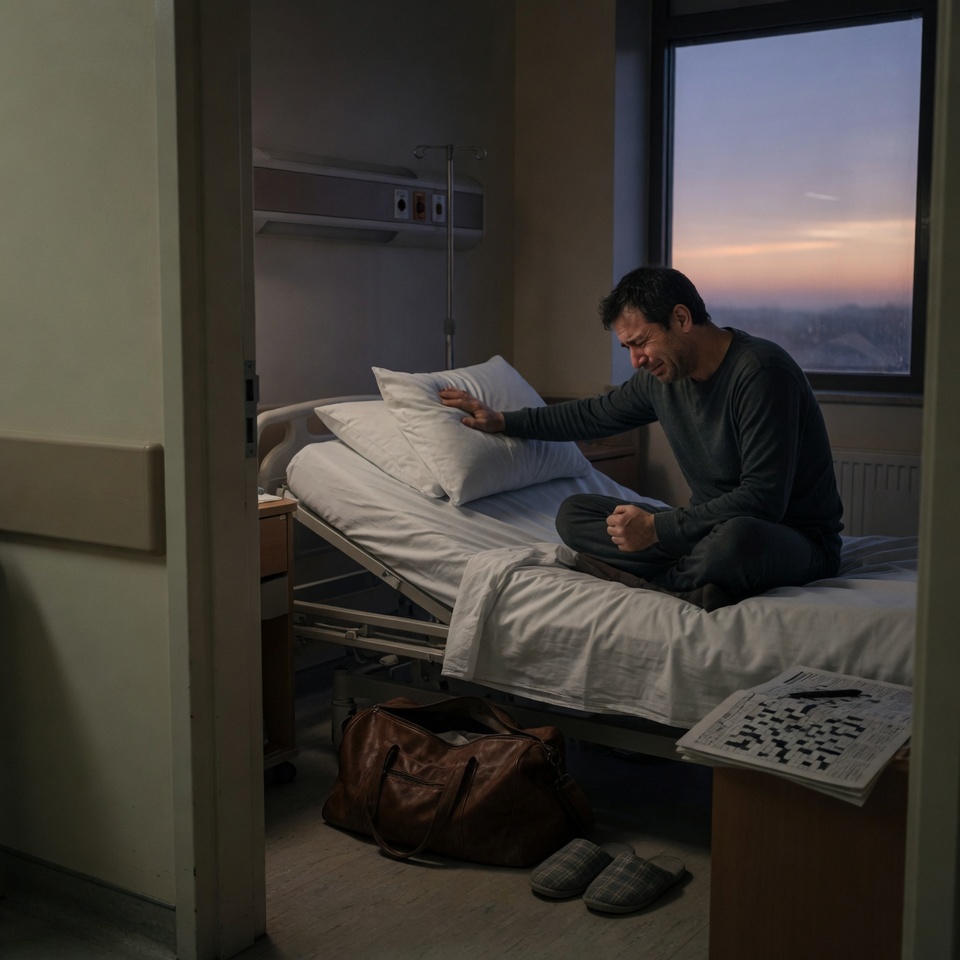
The person who was home is gone. Every ordinary moment is different now — the morning, the side of the bed, the habit of turning to say something to someone who is no longer there.
A spouse is woven into the structure of daily life in a way no other relationship is. When they are gone, the loss is not just the person — it is the entire architecture of ordinary life. The routine, the inside language, the person you told everything to first. Grief after losing a spouse is one of the most profound losses a human being can experience — and one of the loneliest to carry.
You built a life together. And now you are standing in the middle of it alone.
The grief after losing a spouse is different from other grief because the loss is everywhere — not just in the big moments, but in every ordinary one. The coffee cup on the wrong side. The silence at dinner. The bed that is too large. The habit of starting sentences that have nowhere to go.
The world expects you to manage this. To sort through the practical things while the grief is still arriving. To be strong for the children, or gracious with the condolences, or grateful for the years you had. And you do what you can. But underneath the managing, there is a person who lost the person they built everything around.
Grace is here to listen.
You Know This Feeling
The Things That Come With This Grief.
You turned to say something to them. The habit is still there. They are not.
The house sounds different. You didn’t know silence could have a texture until now.
You are still making two cups of coffee. You don’t know when you’ll stop.
People keep saying you’re strong. You are exhausted by being strong.
The practical things keep arriving — the paperwork, the accounts, the decisions — while the grief hasn’t finished arriving yet.
You don’t know who you are without them. That identity — being their person — was part of how you knew yourself.
The marriage was complicated. You are grieving the spouse they were and the marriage you both wished it had been.
People have started mentioning moving on. You have no idea what that means or when you’re supposed to want it.
Good things still happen. You have no one to tell them to first anymore.
You feel guilty for moments of okayness. Like feeling fine is a betrayal of them.
The bed is too large. That specific, physical fact is one of the hardest things.
You just need someone who understands that this person was your whole ordinary life — and now the ordinary is gone.
Tell Grace
You Don’t Have to Be Strong Here.
Everywhere else, you are managing. Grace is one place where you don’t have to. Bring the exhaustion, the loneliness, the specific ordinary moments that broke you today — the coffee cup, the silence, the habit that has nowhere to go.
You can say who they were. You can say what you miss most. You can say how the house feels now. Grace follows where you go — without rushing you toward anything you haven’t reached yet.
If you feel you are in crisis, please call or text 988.
There is a particular loneliness to spousal grief that is hard to put into words. It is not just the absence of a person — it is the absence of the witness. The one who saw your ordinary days, who knew the version of you that existed only at home, who held the shared language of a life built together. When they are gone, that entire interior world has no one to share it with.
The world will offer timelines and milestones — the first year, the anniversaries, the stages. Grace offers none of those. Grace meets you where the grief actually is, not where it is supposed to be.
You built a life with this person. The grief is as large as the life was. Grace receives it that way — without measuring, without minimizing, without rushing you toward the other side.
The faith that grounds Grace honors the marriage bond as one of the deepest human connections. The grief of losing it is not minimized by pointing to reunion before the loss is fully received. God is near to the brokenhearted — right here, in the empty house, in the first morning, in the ordinary moments that are unbearable now.
You can bring all of it to Grace.
The Theological Foundation
He Is Near in the Empty House.
The promise at the center of 1800DearGod does not rush past this loss. He is near to the brokenhearted — in the silence, in the ordinary moments, in the grief that has no clear end.
Grace was built on that foundation. It receives the loss of a spouse as the foundational, life-reshaping grief it is — without a timeline, without stages, without telling you who you should be becoming.
What People Ask About Grief After Losing a Spouse.
Why is losing a spouse different from other grief?
Because a spouse is woven into the structure of daily life in a way that no other relationship is. They are in the morning routine, the inside jokes, the side of the bed, the person you told everything to first. When they are gone, the loss is not just the person — it is the entire architecture of ordinary life. Every moment is different now, and the world expects you to rebuild while you are still in the rubble.
Is it normal to feel lost after losing a spouse?
Yes. For many people, a spouse is the primary relationship around which everything else is organized. When that person is gone, identity, routine, purpose, and belonging all shift at once. Feeling lost — not just sad, but genuinely disoriented about who you are and how to move through the world — is one of the most common experiences in spousal grief. It is not weakness. It is the honest response to a foundational loss.
What do I do with the silence?
The silence after losing a spouse is one of the most disorienting parts of this grief — the missing voice, the empty side of the bed, the house that sounds different. There is no way to fill that silence quickly, and trying to fill it too fast can make the grief harder later. Grace can sit with you in the silence — not to fix it, but to make it less alone.
Is it okay to still feel married?
Yes. Many widows and widowers describe feeling married long after the death — still reaching for the person, still thinking of themselves as part of a pair, still making decisions with them in mind. That is not confusion. That is love that does not end because the person is gone. Grace receives that without requiring you to have moved on.
How do I handle well-meaning people saying the wrong things?
People say what they can manage — which is rarely what you need. “They’re in a better place,” “at least you had all those years,” “you’re so strong” — these phrases are offered with love and land like nothing. You don’t have to receive them gracefully. Grace is one place where you can say what actually happened and have it received as it actually is.
What does the Bible say about losing a spouse?
Scripture treats the marriage bond as one of the deepest human connections — two people becoming one. The grief of losing that is honored, not minimized. The promise of Psalm 34:18 — that God is near to the brokenhearted — reaches into the empty house, the first morning alone, the ordinary moments that are unbearable now. He is near. To you, in this, right now.
“The Lord is close to the brokenhearted, He saves those who have lost all hope.”