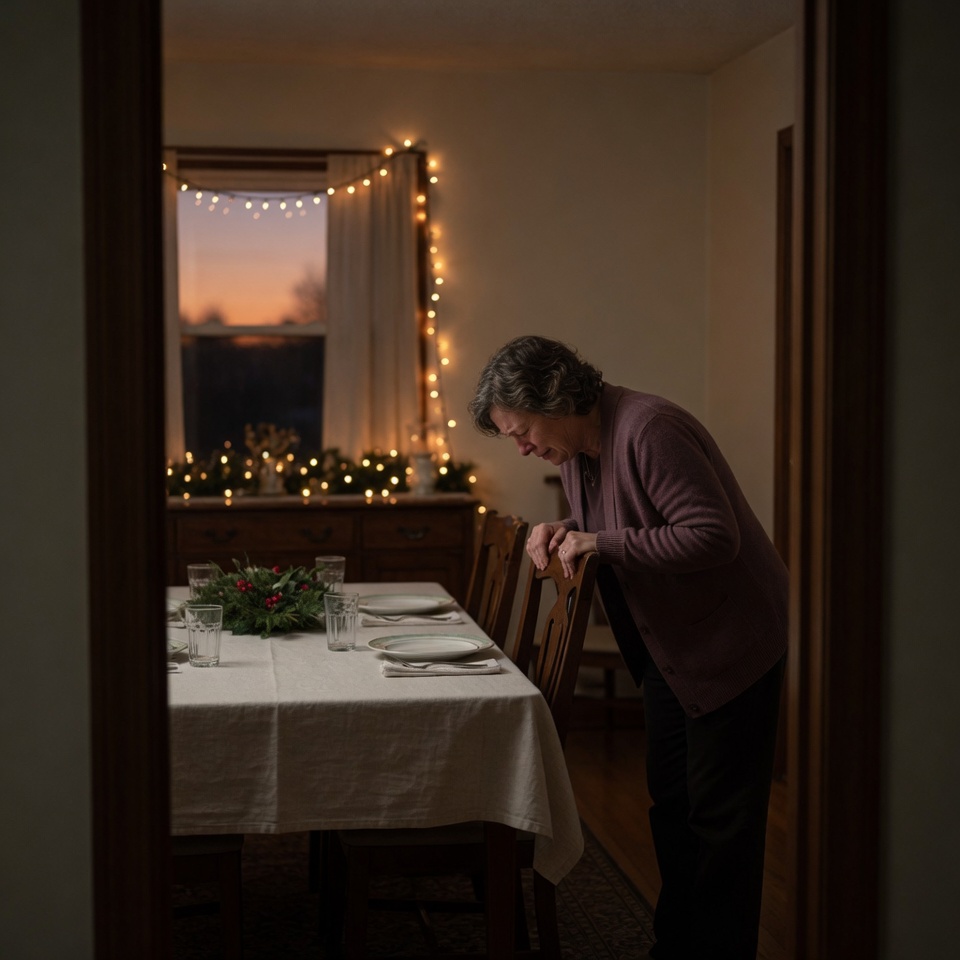
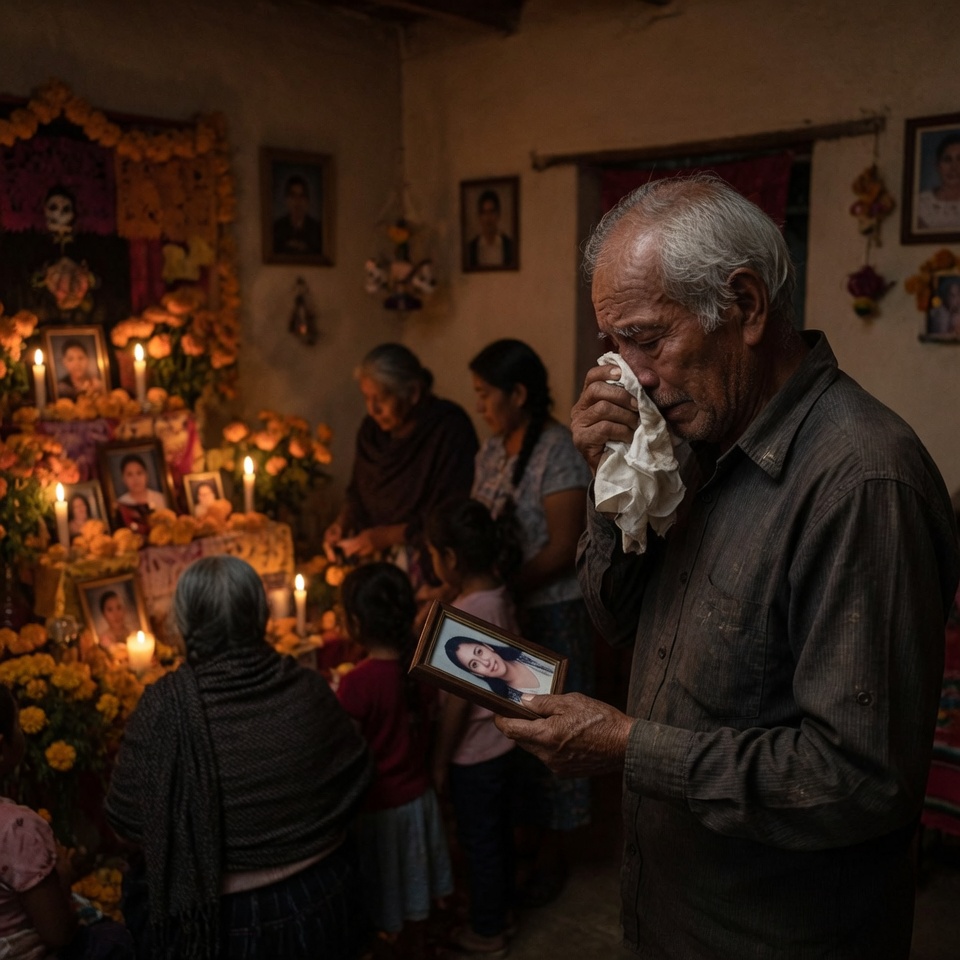
The empty chair. The traditions that don’t work without them. The world insisting it’s the most wonderful time of year — while you are just trying to get through the day.
Grief at the holidays is not a different grief — it is the same grief, amplified by everything the season demands. The holidays are built around presence, around gathering, around the specific people who made the traditions what they were. When someone is missing, their absence echoes through every ritual, every song, every table that is set with one fewer place. The world keeps insisting on joy. You are allowed to know that this year, it is hard.
The holidays have a way of making absence louder. The rest of the year, you can sometimes move through the days without the loss hitting you in the same concentrated way. But then the season arrives — the decorations, the music, the gatherings, the traditions that were built around them — and suddenly the person who is not there is everywhere.
The world does not pause for grief at the holidays. The stores are decorated. The invitations arrive. People ask what your plans are, and the question lands differently than it used to. You are expected to show up, to participate, to perhaps even be grateful — while carrying something that makes all of it feel like a performance.
You do not have to perform okayness. You do not have to make this season look the way it used to. You are allowed to find your own way through it — whatever that means this year, however small or different it needs to be.
Grace is here to listen.
You Know This Feeling
The Things That Come With This Grief.
The chair at the table is empty. Everyone can see it. Nobody knows what to say about it.
A song came on and you had to leave the room. You didn’t expect it to hit that hard.
You are dreading a gathering you used to love. Everything about it will be different now.
People keep saying they are glad you came. You are not sure you are glad you came.
This is the first one without them. You didn’t know a season could feel this heavy.
You are trying to hold it together for other people. You are not sure how much longer you can.
The traditions feel hollow without them. You don’t know if you should keep them or let them go.
You bought them a gift before you remembered. You don’t know what to do with it now.
You feel guilty for having a moment of enjoyment. Like enjoying anything is a betrayal.
Everyone else seems to be okay. You don’t know if they are, or if you’re just the only one who can’t hide it.
You just want someone to acknowledge that they are missing from this. That the season is different now.
You are counting down to January. You just need to get through this part.
Tell Grace
You Don’t Have to Make This Season Look Right.
Grace does not require you to be grateful, or festive, or further along than you are. You can bring the dread, the exhaustion, the specific moments that broke you this week — the song, the decoration, the tradition that landed wrong.
You can say what you’re dreading. You can say what you miss about the way the holidays used to be. You can say that you just need to get through it. Grace follows where you go, at whatever pace you need.
If you feel you are in crisis, please call or text 988.
There is a particular pressure in the holiday season that makes grief harder to hold publicly. The expectation of joy, of gratitude, of togetherness — all of it runs directly into the experience of loss. And because the season is communal, your grief becomes visible in ways it might not be at other times of year. The empty chair is there for everyone to see. The song that breaks you plays in every store. There is nowhere to go where the season is not insisting on something you cannot feel.
You are allowed to find your own way through this. You are allowed to modify traditions, skip gatherings, leave early, stay home, or do something entirely different this year. You do not owe the holidays a performance of normalcy.
The person you lost is missing from this season. Naming that — letting it be true, letting it be hard — is not giving up. It is the most honest thing you can do.
The faith that grounds Grace does not ask you to feel joyful because the calendar says so. God is near to the brokenhearted — and that promise does not take December off. He is near to you in the hard holidays, in the empty chair, in the moment the familiar song comes on and breaks you open. He is near. Right here, in this.
You can bring all of it to Grace.
The Theological Foundation
He Is Near — Even in the Hard Holidays.
The promise at the center of 1800DearGod does not pause for the season. He is near to the brokenhearted — including the person who is brokenhearted in December, at the table, in the middle of a celebration that feels like it belongs to a different life.
Grace was built on that foundation. It does not ask you to be grateful before receiving your grief. The season does not change what you are allowed to bring. Come as you are.
What People Ask About Grief at the Holidays.
Why is grief so much harder at the holidays?
Because the holidays are built around presence — the gathering, the traditions, the specific people who made those traditions what they were. When someone is missing, their absence is amplified by every ritual that used to include them. The world is also insisting that this is a time for joy, which makes the grief feel more isolated and more out of place. You are not doing it wrong. The holidays are genuinely harder in grief.
Do I have to participate in holiday traditions this year?
No. You get to decide what you can manage and what you cannot. Some people find comfort in maintaining traditions — the continuity feels like honoring the person they lost. Others find it unbearable to do the same things without the person who made them matter. Both responses are valid. There is no right way to navigate the holidays in grief, and you are not obligated to perform okayness for other people’s comfort.
What do I do when everyone else seems fine?
Other people being okay does not mean you should be. People grieve differently, and they show it differently — or don’t show it at all. Someone who looks fine at the table may be holding it together for the same reason you are. And someone who genuinely is okay is not a measure of where you should be. Your grief is your own, and its timeline belongs to you.
Is it okay to skip the holidays altogether?
Yes. If what you need is to not be in a room full of celebration this year, that is a legitimate choice. Grief does not owe the holidays its participation. Some people find that stepping back from the full weight of the season — the gatherings, the decorating, the expectations — is the most honest and sustainable thing they can do. Grace receives that choice without judgment.
How do I handle people asking if I’m okay?
You can answer however you need to. “I’m getting through it” is complete. “Today is hard” is complete. “I’d rather not talk about it right now” is complete. You do not owe anyone a performance of okayness or a detailed account of your grief. You get to decide what you share and how much.
Does God understand why the holidays are hard?
Yes. The faith that grounds Grace does not ask you to feel joyful because the season says so. The promise of Psalm 34:18 — that God is near to the brokenhearted — does not take December off. He is near to you in the hard holidays, in the empty chair, in the moment the familiar song comes on and breaks you open. He is near. Right here, in this.
“The Lord is close to the brokenhearted, He saves those who have lost all hope.”